
Image: from Evan X @StockMKTNewz
By Open Chronicle with agencies
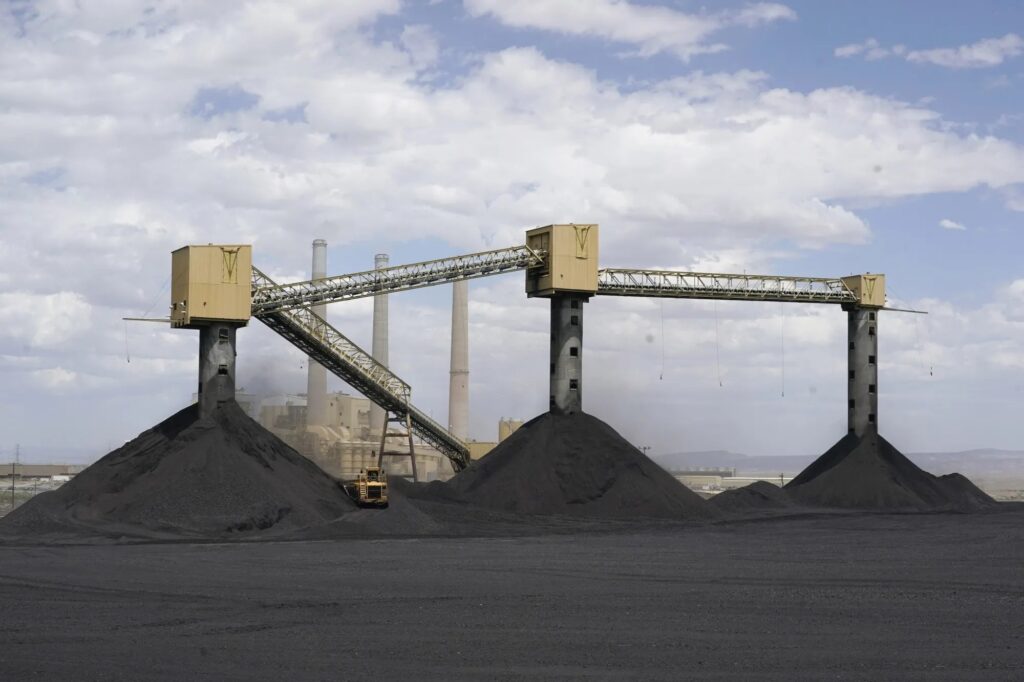
President Donald Trump is expected to unveil more than $700 million in federal support for the American coal industry, reinforcing his administration’s commitment to a sector that has steadily declined over the past two decades. The announcement, expected during an event at the White House, includes funding for coal-fired power plants, export infrastructure, and new coal generation projects.
According to administration officials, the package includes $425 million to upgrade 13 existing coal plants under the Defense Production Act, $75 million for a coal export terminal in California, and an additional $185 million in Energy Department grants aimed at constructing new coal facilities in Alaska and West Virginia while restarting a plant in Maryland.
The move represents one of the most significant federal interventions in support of coal since Trump returned to office. However, energy experts, environmental analysts, and climate researchers continue to challenge the administration’s repeated description of coal as “clean.”
🇺🇸 Trump tells officials coal may be mentioned only if preceded by “clean beautiful”pic.twitter.com/D5pTLBdBo4
— U.S.A.I. 🇺🇸 (@researchUSAI) June 4, 2026
Debate Over “Clean Coal”
The White House has consistently promoted what it calls “Beautiful, Clean Coal,” a phrase frequently used by Trump during public appearances. Yet scientists and energy specialists argue that the term is misleading.
Coal remains one of the most carbon-intensive energy sources in the world. When burned, it releases large quantities of carbon dioxide, the primary greenhouse gas linked to climate change. It also produces pollutants associated with respiratory illnesses, cardiovascular disease, acid rain, and environmental degradation.
While modern technologies can reduce certain emissions from coal-fired power plants, experts note that these systems do not eliminate carbon pollution.
Some technologies referred to as “clean coal” involve washing coal before combustion or using carbon capture and storage systems to trap emissions after they are produced. However, these technologies remain limited in deployment and are often costly to operate.
Energy analysts point out that carbon capture projects currently account for only a tiny fraction of total U.S. emissions reductions, with no major coal-fired power stations relying extensively on the technology.
Economic Challenges Facing Coal
The administration’s support comes at a time when coal faces mounting economic pressures.
Rising operational costs, aging infrastructure, and competition from natural gas and renewable energy have steadily reduced coal’s share of the U.S. electricity market. Coal generated more than half of the nation’s electricity at the start of the century. Today, it accounts for roughly 16 percent of power generation.
Industry data show that many existing coal plants are now more expensive to operate than building new renewable energy projects. Solar and wind power costs have fallen dramatically in recent years, making them increasingly competitive across global markets.
According to international energy organizations, more than 90 percent of newly built renewable energy projects are now cheaper than fossil fuel alternatives. Solar power, in particular, has become one of the least expensive sources of electricity worldwide.
Renewables Continue Global Expansion
The global energy transition continues to accelerate despite ongoing investment in fossil fuels.
International forecasts suggest renewable sources such as solar, wind, and hydropower will provide the vast majority of future electricity demand growth through the end of the decade. Nuclear energy is also expected to play an increasing role in reducing emissions while meeting rising consumption needs.
Analysts note that reductions in coal use have been one of the primary drivers behind declining carbon emissions in advanced economies. The replacement of coal-fired generation with cleaner alternatives has contributed significantly to emission reductions across North America and Europe.
Recent studies indicate that the deployment of renewable energy, electric vehicles, heat pumps, and nuclear power has prevented billions of metric tons of carbon dioxide from entering the atmosphere annually.
Trump Doubles Down on Coal
Despite these trends, the Trump administration argues that coal remains essential for energy security, grid reliability, and economic development in mining communities.
Earlier this year, Trump hosted coal executives and miners at the White House during what was branded as the “Champion of Coal Event,” where he received an award recognizing his support for the industry. During that gathering, he praised coal as a dependable energy source and pledged continued federal backing for existing plants.
The administration maintains that preserving coal capacity is necessary to strengthen domestic energy production and reduce reliance on foreign supply chains. Critics, however, argue that continued investment in aging coal infrastructure could divert resources from technologies that are already proving more economical and environmentally sustainable.
As the debate over America’s energy future continues, Trump’s latest funding package highlights a growing divide between supporters of traditional fossil fuels and advocates of the rapidly expanding renewable energy sector.