
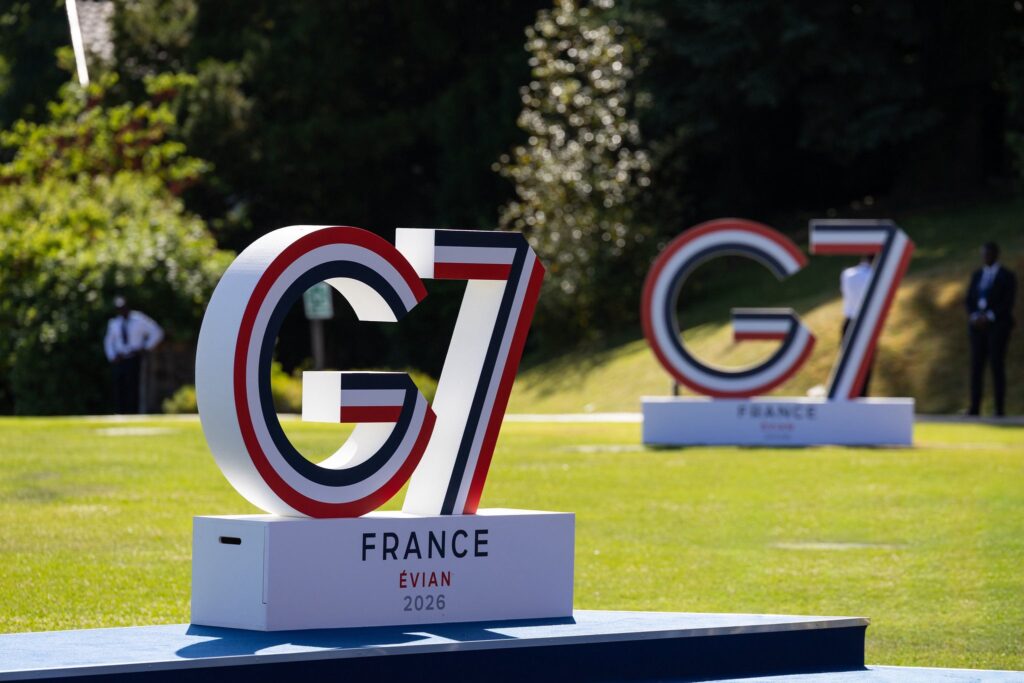
Image: from Hélène Duchêne X @AmbDuchene
By Open Chronicle with agencies
World leaders gathered for the second day of the G7 summit in the French lakeside town of Évian-les-Bains, where discussions have been dominated by the emerging United States-Iran framework agreement, the war in Ukraine, and concerns over global energy security.
The meeting comes at a pivotal moment for international diplomacy, with US President Donald Trump telling fellow leaders that he expects the Strait of Hormuz to be “fully open” by Friday, when a formal agreement aimed at ending the recent conflict with Iran is expected to be signed in Switzerland.
PM TAKAICHI attended the G7 Evian Summit working dinner session “Working together to address major international challenges.” During this session, G7 leaders held a candid exchange of views on major international challenges, including the situation in the Middle East, Ukraine,… pic.twitter.com/ndqSQS2tK1
— MOFA of Japan (@MofaJapan_en) June 16, 2026
The proposed deal has become the central topic of conversation among G7 members, many of whom are seeking greater clarity regarding its terms and its potential implications for regional stability, oil markets, and transatlantic security. European leaders are particularly focused on ensuring that any agreement contributes to lasting peace while safeguarding the free flow of energy supplies through one of the world’s most strategically important maritime corridors.
Alongside developments in the Middle East, the ongoing war in Ukraine remains high on the summit agenda. Leaders are continuing to coordinate military, economic, and diplomatic support for Kyiv while discussing the broader security challenges facing Europe.
In parallel with the G7 meeting, the European Union has officially opened accession negotiations with Ukraine and Moldova, marking a historic milestone in both countries’ long-term ambitions to join the bloc. The move is being viewed as a strong political signal of the EU’s commitment to the region despite the continuing conflict.
Security and defence have also taken centre stage elsewhere across Europe. NATO allies are currently conducting a large-scale air and missile defence exercise in Sweden involving 20 member states, underscoring the alliance’s focus on strengthening collective security amid rising geopolitical tensions.
European lawmakers and officials have also been assessing the possible impact of the US-Iran framework agreement on energy prices and the wider Middle East. Many believe the reopening of the Strait of Hormuz and a reduction in regional tensions could help stabilise global oil markets after months of uncertainty.
Beyond geopolitics, the World Cup has also provided a lighter topic of conversation around the continent. The latest round of matches saw Spain and Belgium held to surprise draws in their opening group stage fixtures, results that have sparked widespread debate among football fans and analysts. Meanwhile, FIFA President Gianni Infantino has continued to attract attention off the pitch as the tournament unfolds.
As the summit progresses, G7 leaders are expected to continue negotiations on key issues, including energy resilience, international security, economic cooperation, and support for Ukraine. The outcome of the discussions, combined with the anticipated US-Iran agreement, could shape the geopolitical landscape for months to come.