
Image: from Belsat in English X @Belsat_Eng
By Open Chronicle with agencies
Authorities in Russian-annexed Crimea have declared a regional state of emergency following an escalation in Ukrainian drone strikes that have disrupted fuel supplies, damaged infrastructure, and intensified pressure on the strategically important Black Sea peninsula.
The announcement was made on Friday by Moscow-appointed Crimean governor Sergey Aksyonov, who said the emergency measures would also apply to the city of Sevastopol.
According to Aksyonov, the emergency status is intended to accelerate government responses and ensure the continued operation of critical sectors as Crimea faces mounting logistical challenges.
“A decision has been made to declare a regional-level emergency situation in the Republic of Crimea and the city of Sevastopol,” Aksyonov said in a statement published on Telegram.
The declaration comes as Ukraine expands its long-range strike campaign against the Russian military and energy infrastructure. Kyiv says the attacks are a direct response to Russia’s continued missile and drone strikes against Ukrainian cities and civilian infrastructure since the full-scale invasion began in February 2022.
Fuel shortages and power disruptions
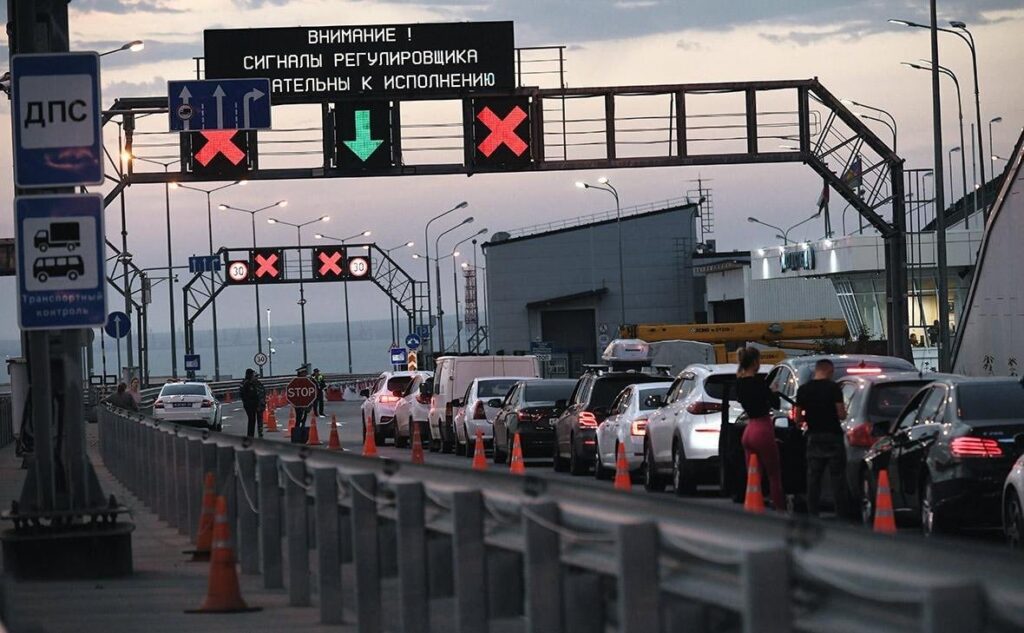
Crimean authorities acknowledged that the peninsula is experiencing shortages of fuel and intermittent power cuts after repeated attacks on oil depots, fuel logistics routes, and energy infrastructure across Crimea, occupied southern Ukraine, and parts of southern Russia.
Aksyonov described the fuel situation as the most serious challenge currently facing the peninsula, although he declined to provide details about the measures being taken to restore supplies.
He also admitted that no air defense system could provide complete protection against the growing scale of Ukrainian aerial attacks.
Russia’s Ministry of Defense said its air defense systems intercepted 660 Ukrainian drones overnight, including aircraft targeting Moscow and Crimea, making it one of the largest reported drone attacks since the war began.
Ukraine targets Russia’s war logistics
Ukraine has increasingly focused on oil refineries, fuel depots, military airfields, and export infrastructure, arguing that degrading Russia’s energy sector weakens the Kremlin’s ability to finance military operations.
Last week, a Ukrainian strike triggered a major fire at an oil refinery southeast of Moscow, sending thick black smoke over surrounding suburbs.
On Monday, Ukraine’s Ministry of Defense said its operations were effectively “closing the beach season in Crimea,” highlighting successful strikes against fuel depots, gas compressor stations, and air defense facilities.
The ministry also warned that the security situation on the peninsula was deteriorating and suggested tourists should reconsider travel plans.
Residents describe growing anxiety
Despite the ongoing conflict, Crimea has remained one of Russia’s most popular domestic holiday destinations since its annexation in 2014.
However, frequent drone attacks have increased concern among both residents and visitors.
A tourist from Moscow vacationing in Feodosia told AFP that repeated overnight attacks had left people fearing for their safety.
“We were afraid we’d never wake up again. The sky was like Star Wars,” she said, describing the constant flashes from air defense systems and explosions overhead.
Crimea remains central to the conflict
Russia annexed Crimea in 2014 following a disputed referendum that remains unrecognized by the vast majority of the international community.
Since then, Moscow has invested heavily in military facilities, transport infrastructure, and economic development on the peninsula, which President Vladimir Putin has repeatedly described as historically inseparable from Russia.
Ukraine continues to regard Crimea as sovereign Ukrainian territory under temporary Russian occupation and insists it will never formally recognize Russian control over the peninsula.
As Ukraine expands its long-range strike capabilities, Crimea has increasingly become one of the most strategically contested areas in the conflict, serving both as a vital Russian military hub and a primary target in Kyiv’s campaign to weaken Moscow’s operational capabilities.