
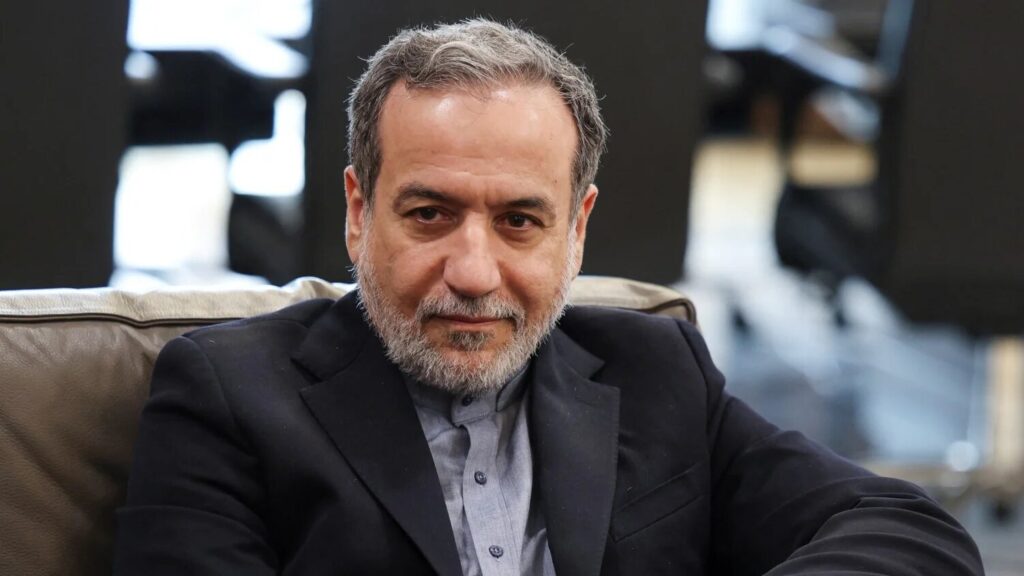
Image: from EyeWhales X @EyeWhales
By Open Chronicle News Desk with Agencies
Fresh diplomatic tensions have emerged between Iran and the United States after Tehran firmly denied claims that high-level negotiations are scheduled to take place in Doha, contradicting statements made by the White House and US President Donald Trump.
The disagreement comes as both countries continue to navigate the fragile implementation of a 14-point Memorandum of Understanding signed on June 17, aimed at ending months of regional conflict and restoring stability in the Persian Gulf.
Tehran Rejects White House Claims
Iran’s Foreign Ministry insisted on Monday that no meetings with US officials are planned in Qatar this week, dismissing reports that senior Iranian representatives would hold direct talks with American negotiators.
Officials in Tehran also clarified that the visit of an Iranian technical delegation to Qatar is unrelated to the presence of US officials in the country.
Iran reiterated that it will not return to the negotiating table until the Memorandum of Understanding is fully implemented, arguing that Washington must first fulfill all of its commitments under the agreement.
Trump Says Meeting Will Go Ahead
The Iranian denial directly contradicts comments from President Donald Trump, who announced on his Truth Social platform that Iran had requested a meeting and that discussions would take place in Doha on Tuesday.
Speaking later, Trump said the meeting “may be important, or it may not,” while expressing hope that diplomatic progress could still be achieved.
The White House also confirmed that Special Envoy Steve Witkoff and Jared Kushner would travel to Doha for what it described as high level meetings, alongside ongoing technical discussions related to the implementation of the agreement.
White House Press Secretary Karoline Leavitt told Fox News that negotiations would continue as both sides work through the provisions of the memorandum.
Ceasefire Remains Under Pressure
The Memorandum of Understanding, signed on June 17, established a temporary ceasefire following four months of escalating conflict and included provisions for reopening navigation through the Strait of Hormuz.
However, recent exchanges of military strikes and attacks on commercial shipping have placed the agreement under severe strain.
Washington has accused Iran of violating the ceasefire through attacks on maritime traffic, while Tehran argues that US military actions breached the terms of the agreement first.
Leavitt defended recent American military responses, stating that attacks against commercial vessels would continue to be answered while emphasizing that President Trump remains committed to advancing the peace process.
“As far as we are concerned, we are fulfilling our side of the ceasefire. Violence will be met with violence,” she said.
Uncertainty Over Future Diplomacy
The conflicting statements from Washington and Tehran underscore the fragile state of relations despite recent diplomatic efforts.
With both governments publicly contradicting each other over the existence of upcoming talks, uncertainty now surrounds whether meaningful negotiations can resume before the ceasefire deteriorates further.
The coming days are expected to be critical in determining whether the Memorandum of Understanding can survive continued military incidents and political mistrust.