
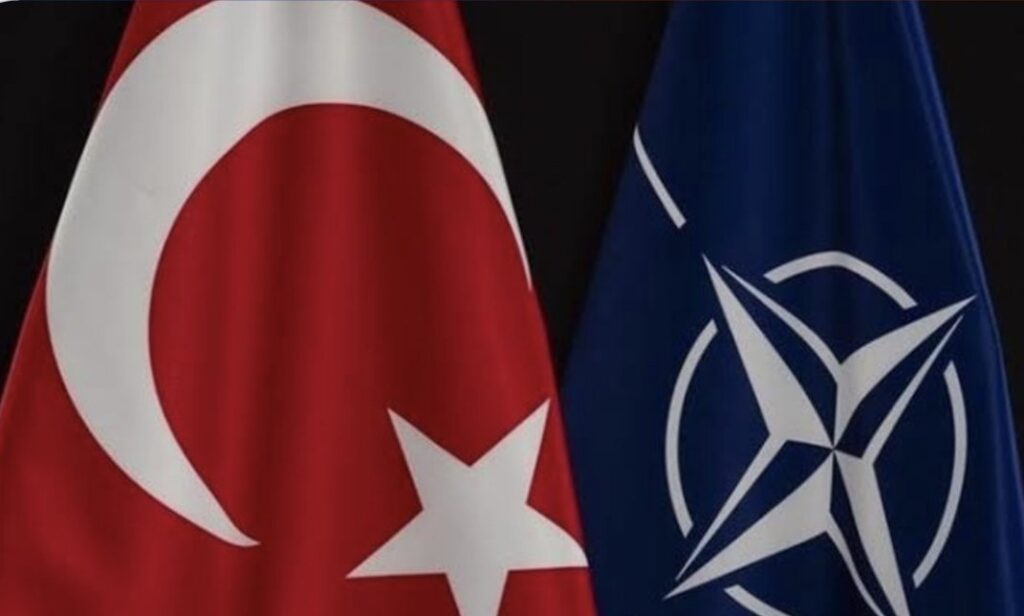
Image: from Juan Manuel Ríos P X @jmriosp
By Open Chronicle with Agencies
Global events continued to unfold at a rapid pace on July 7, with escalating tensions in the Middle East, major developments at the NATO Summit in Türkiye, renewed concerns over China’s military activities, and significant political and security stories spanning Europe, Asia and the Americas.
Middle East Tensions Intensify
The Strait of Hormuz became the latest flashpoint after reports that Iran fired missiles at commercial vessels, with at least one tanker catching fire after being struck. The attacks further heightened fears over global energy supplies and maritime security, sending oil prices sharply higher.
Meanwhile, in Damascus, two explosions near the hotel where French President Emmanuel Macron was holding meetings injured 18 people, including police officers. Macron continued his historic visit to Syria despite the blasts, insisting France would maintain its commitment to supporting the country’s reconstruction and political transition.
Millions of mourners also gathered in Tehran as Iran continued funeral ceremonies for former Supreme Leader Ali Khamenei, while senior Hamas representatives met Iranian officials during the commemorations.
NATO Summit Opens in Ankara
World leaders gathered in Ankara as the NATO Summit officially began, dominated by discussions on defence spending, Ukraine and the Alliance’s future capabilities.
Among the major announcements:
- NATO unveiled a $40 billion Drone Edge Initiative to strengthen anti-drone capabilities.
- Eleven allied nations agreed to jointly procure a new generation of airborne early warning aircraft.
- Sweden welcomed NATO’s selection of Saab GlobalEye surveillance aircraft.
- Lockheed Martin and Rheinmetall signed an agreement to co-produce ATACMS missiles in Europe.
- NATO announced several multinational projects aimed at expanding missile production, air defence and critical defence supply chains.
US President Donald Trump arrived in Ankara calling for greater military investment from allies, while NATO Secretary General Mark Rutte declared the alliance was entering what he described as a “transatlantic military industrial revolution.”
Ukraine and Russia
The war in Ukraine remained highly active.
Ukraine launched one of its largest drone operations of the war, targeting Moscow and multiple western Russian regions while also striking several vessels linked to Russia’s so-called shadow fleet.
Russia responded with another large-scale missile and drone attack against Kyiv, continuing a cycle of escalating strikes as President Volodymyr Zelenskyy urged NATO members to provide additional Patriot missile systems and advanced air defence capabilities.
China Faces International Pressure
China faced growing international criticism after confirming a strategic ballistic missile launch from a submarine into the Pacific Ocean.
The United States described the nuclear-capable missile test as deeply concerning, while Australia, New Zealand and several regional partners also expressed alarm over the launch.
Separately, a former senior Chinese official was sentenced to death after being convicted in a corruption case involving approximately $325 million in bribes.
Extreme weather continued to batter China, with storms, flooding and landslides leaving at least 20 people dead and hundreds injured across several provinces.
Europe
Political attention in France focused on Marine Le Pen, whose hopes of contesting the 2027 presidential election remained uncertain as a Paris court considered an appeal in her EU funds case.
France also continued battling a new heatwave, with temperatures exceeding 40 degrees Celsius in several regions, while more than 12,000 people remained evacuated because of major wildfires in southern France.
In Monaco-related developments, the woman suspected of carrying out the parcel bombing targeting Ukrainian businessman Vadym Yermolaiev was found dead near Kyiv, while Ukrainian authorities detained two suspects in connection with her killing.
Asia Pacific
India and Indonesia strengthened defence cooperation by signing a landmark agreement for the export of BrahMos supersonic cruise missiles, further expanding India’s defence exports in the Indo-Pacific.
Australia and Pacific partners continued expressing concern over China’s missile activities while reinforcing regional security partnerships.
Bangladesh and India also faced deadly monsoon disasters, with landslides and flooding causing multiple fatalities.
Americas
Recovery efforts continued in Venezuela after two devastating earthquakes, with the confirmed death toll rising to 3,535 while thousands remained displaced.
In the United States, officials voiced fresh concern over China’s Pacific missile test, while discussions continued regarding NATO commitments and security policy.
Other Key Developments
Additional headlines from around the world included:
- Nine police officers were killed in a militant attack in Pakistan.
- Sweden welcomed NATO’s airborne surveillance expansion.
- WHO warned that the Ebola outbreak in the Democratic Republic of the Congo remains in an expansion phase.
- Greece and European shipping companies faced renewed scrutiny over the continued transportation of Russian oil.
- The European Union announced a successful operation against a large counterfeit product network.
- Prince Harry appeared in London for another stage of his legal battle against the Daily Mail.
- San Fermín festivities officially began in Pamplona with the traditional bull run.
As July 7 unfolds, the international agenda continues to be dominated by military tensions, strategic alliances, geopolitical competition, humanitarian crises and rapidly evolving security challenges across multiple regions.