
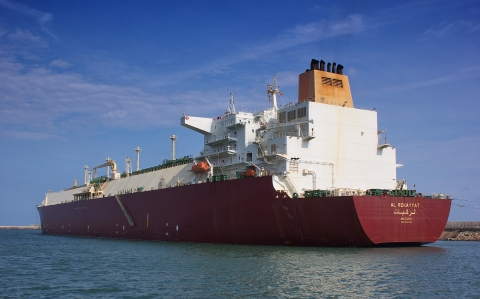
Image: from Amir Jafar X @AmirJafar0
By Open Chronicle with Agencies
Iran’s military fired at least two missiles at commercial vessels transiting the Strait of Hormuz overnight on Monday, striking at least one tanker and sharply escalating tensions in one of the world’s most important maritime corridors.
The attack was reported by US officials cited by Axios. At the same time, the United Kingdom Maritime Trade Operations confirmed that a southbound tanker had been hit by an unknown projectile about eight nautical miles east of Limah, Oman. The impact caused a fire on the vessel’s port side, but no casualties were reported.
Tanker Hit Near Oman
According to reports, one of the vessels targeted appears to have been Al Rekayyat, a liquefied natural gas tanker owned by Nakilat, the shipping arm of Qatar’s LNG industry.
Iranian state television said a gas tanker had come under attack after ignoring warnings issued by Iranian naval forces, but it stopped short of directly claiming responsibility for the strike.
The incident immediately raised alarm across energy markets and security circles because the Strait of Hormuz is a critical passage for global oil and gas shipments.
Agreement With Washington Expires
The strike came shortly after the expiration of a one-week agreement between Washington and Tehran to halt attacks in the Strait of Hormuz.
That arrangement had followed a broader 60-day memorandum of understanding signed in late June, with a deadline of August 17. The memorandum reportedly included provisions related to attacks in the waterway.
Iranian Foreign Minister Abbas Araghchi responded after the incident by warning that negotiations on a final deal would not begin if threats continued. His message to Washington was blunt: “Honor your signature.”
Hormuz Returns to the Center of the Crisis
The attack marks a dangerous new phase in the regional standoff.
The Strait of Hormuz carries a major share of the world’s seaborne oil and liquefied natural gas. Any sustained disruption could affect energy prices, shipping insurance, naval deployments, and diplomatic calculations across the Gulf.
Iran has repeatedly asserted what it describes as its sovereign right to inspect ships moving through the strait, while Western governments have warned against any threat to freedom of navigation.
Risk of Wider Escalation
The latest missile strike adds further pressure to already fragile US-Iran diplomacy.
With Washington seeking to keep maritime routes open and Tehran warning against foreign pressure, the risk of miscalculation remains high.
Regional states, energy exporters, and international shipping companies are now likely to reassess security procedures in the Gulf, especially for tankers passing close to Omani and Iranian waters.
For now, the absence of casualties may limit the immediate fallout. But the strike has again shown how quickly the Strait of Hormuz can move from diplomatic negotiation to military confrontation.