
By Open Chronicle News Desk with Agencies
Andy Burnham officially became Prime Minister of the United Kingdom on Monday, pledging to reshape British politics and introduce what he described as a “new political and economic model” aimed at restoring public confidence after years of instability.
The former Mayor of Greater Manchester succeeded Keir Starmer after the outgoing prime minister formally resigned and King Charles III invited Burnham to form a new government. Burnham’s appointment makes him the seventh British prime minister in the past decade, underscoring a prolonged period of political turbulence.
🚨 BREAKING: BURNHAM DECLARES THE BIGGEST POLITICAL SHIFT IN 40 YEARS
Andy Burnham has used his first speech as Prime Minister to set out an agenda that represents a clear break with the economic direction Britain has followed for decades.
Promising…
— Jim Ferguson (@JimFergusonUK) July 20, 2026
Promising a break from the past
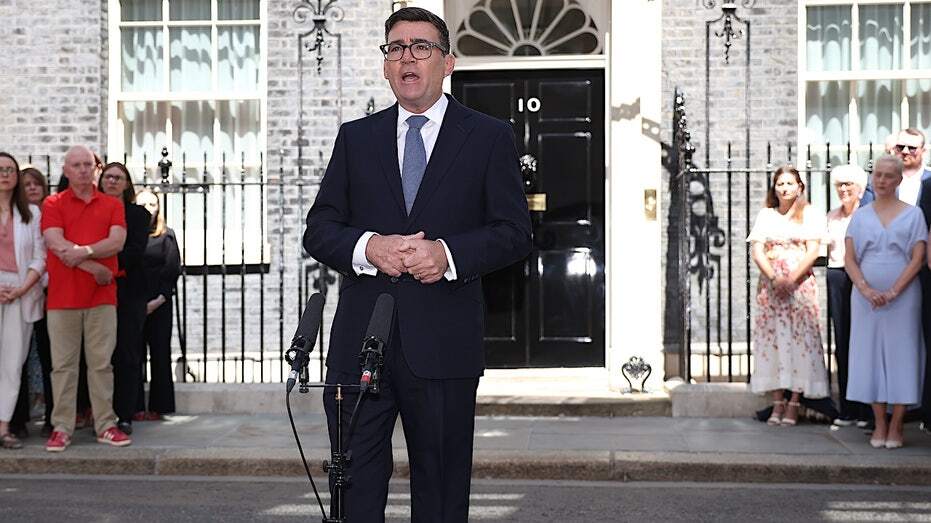
In his first speech outside 10 Downing Street, Burnham said Britain had reached a turning point and argued that the country needed a different approach to politics and governance.
He pledged to move beyond what he described as decades of centralized decision-making and promised a government focused on long-term planning rather than short-term political gains. Burnham said his administration would publish a comprehensive 10-year national strategy later this year, outlining reforms designed to improve living standards, strengthen public services and rebuild trust in government.
A new political and economic vision
Burnham argued that Britain requires a new political model capable of addressing challenges that have accumulated over several decades.
He said the country must regain greater public control over essential services, including housing, transport, energy and water, while also giving more authority to local communities outside Westminster.
The new prime minister has previously criticized the economic direction established during the 1980s, arguing that excessive centralization and privatization have contributed to rising living costs and growing regional inequalities.
Immediate priorities
Burnham outlined several immediate objectives for his government.
Among his priorities are measures to eliminate rough sleeping, tackle the cost-of-living crisis, expand affordable housing and improve access to public services.
He also pledged to strengthen Britain’s economy through long-term investment while maintaining support for Ukraine and preserving the country’s international alliances.
The prime minister is expected to announce his Cabinet shortly, with particular attention focused on the appointment of a Chancellor of the Exchequer to oversee the government’s economic agenda.
Political transition after Starmer
Burnham takes office following the resignation of Keir Starmer, who stepped down after facing mounting internal pressure within the Labour Party following disappointing election results.
Although Labour retains a parliamentary majority, the leadership change marks a significant shift in the party’s direction, with Burnham expected to pursue a more interventionist domestic agenda than his predecessor.
Challenges ahead
Despite the optimistic tone of his inaugural address, Burnham faces significant challenges from the outset.
Britain continues to grapple with sluggish economic growth, pressure on public finances, housing shortages, strained healthcare services and political polarization.
He must also respond to the growing popularity of opposition parties while demonstrating that Labour can deliver tangible improvements after two years in government.
Looking to the future
Burnham concluded his first address by calling for a renewed sense of national purpose, arguing that Britain can regain stability and confidence through long-term planning and a different style of leadership.
Whether his promise of a “new political model” will translate into lasting reforms is likely to become one of the defining questions of British politics in the years ahead.