

Image Credentials: Image Title: Technological Developments in Formula One Source: (sora.chatgpt) Date: May 2025 Attribution: Created by AI-generated imagery (sora.chatgpt), it does not depict a real-world scene.
Technological innovation has been a defining characteristic of Formula One (F1) since its inception, with continual advances in design, materials, and performance. From revolutionary changes in engine placement to groundbreaking developments in chassis construction and aerodynamics, the sport has consistently pushed the boundaries of automotive engineering.
Mid-Engined Revolution


The first major technological milestone in Formula One came with the introduction of mid-engined cars, initially pioneered by Bugatti and later proven dominant by Jack Brabham. Brabham, who won the World Championship in 1959, 1960, and 1966, demonstrated the clear advantages of the mid-engine configuration, which improved weight distribution and handling dynamics. By the start of the 1961 season, every Formula One team had adopted the mid-engined layout.
The 1961 British Grand Prix marked the end of an era with the participation of the Ferguson P99, the last front-engined car to compete in a Formula One World Championship race. This four-wheel drive car was a technological curiosity but underscored the industry’s rapid move toward more efficient designs.

Monocoque Chassis
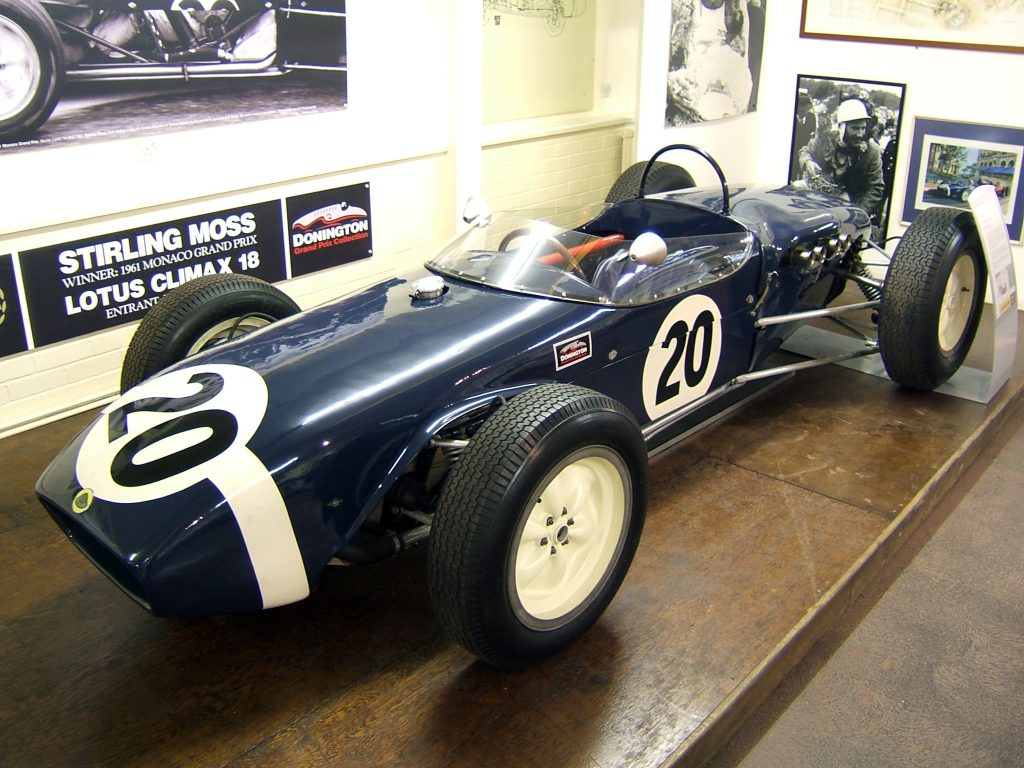
In 1962, Lotus introduced a revolutionary innovation in chassis design: the aluminium-sheet monocoque. Replacing the traditional space-frame, the monocoque construction drastically improved structural rigidity and reduced weight. This innovation not only enhanced performance but also set a new standard for future Formula One car design. The introduction of the monocoque is widely considered the most significant technological advancement in the sport since the switch to mid-engined cars.
Commercial Sponsorship
Another major transformation in the sport came in 1968 with the advent of commercial sponsorship. Team Gunston broke new ground by entering cars in the colours of Gunston cigarettes during the 1968 South African Grand Prix. This marked the beginning of non-traditional, commercial liveries in F1.
Just months later, the works Lotus team adopted the red, gold, and white livery of Imperial Tobacco’s Gold Leaf brand at the 1968 Spanish Grand Prix, abandoning the traditional British racing green. This set a precedent for sponsorship that would become integral to the business model of Formula One.
Aerodynamics and Downforce
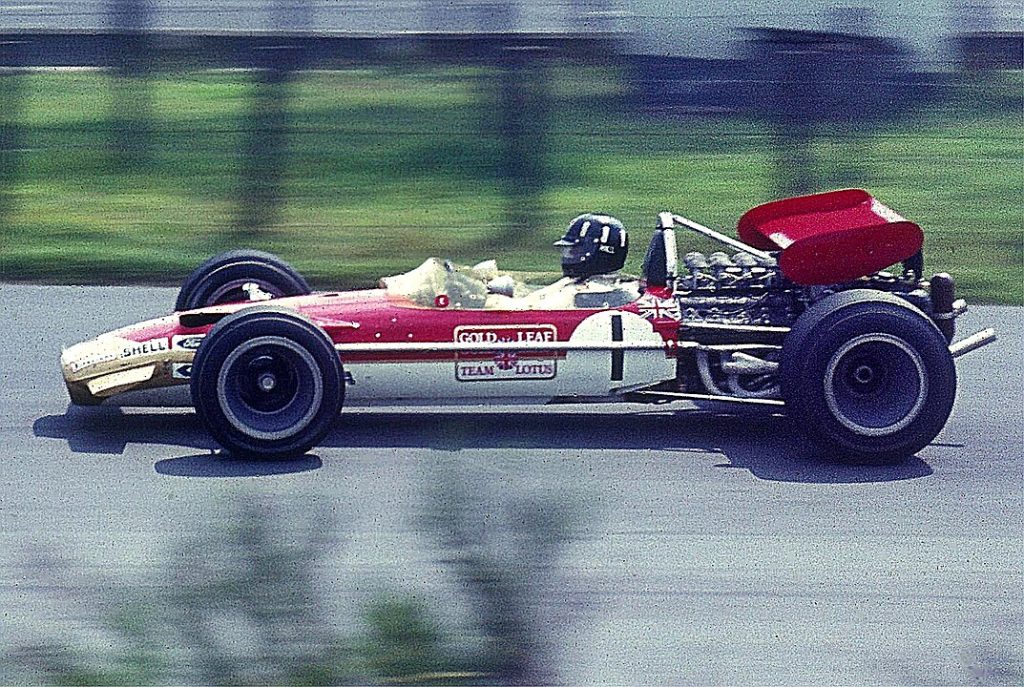
The late 1960s also witnessed the increasing importance of aerodynamics. In 1968, Lotus founder Colin Chapman pioneered the use of aerofoils by adding modest front wings and a rear spoiler to the Lotus 49B, first seen at the Monaco Grand Prix. These features marked the beginning of the use of aerodynamic downforce to improve grip and stability.
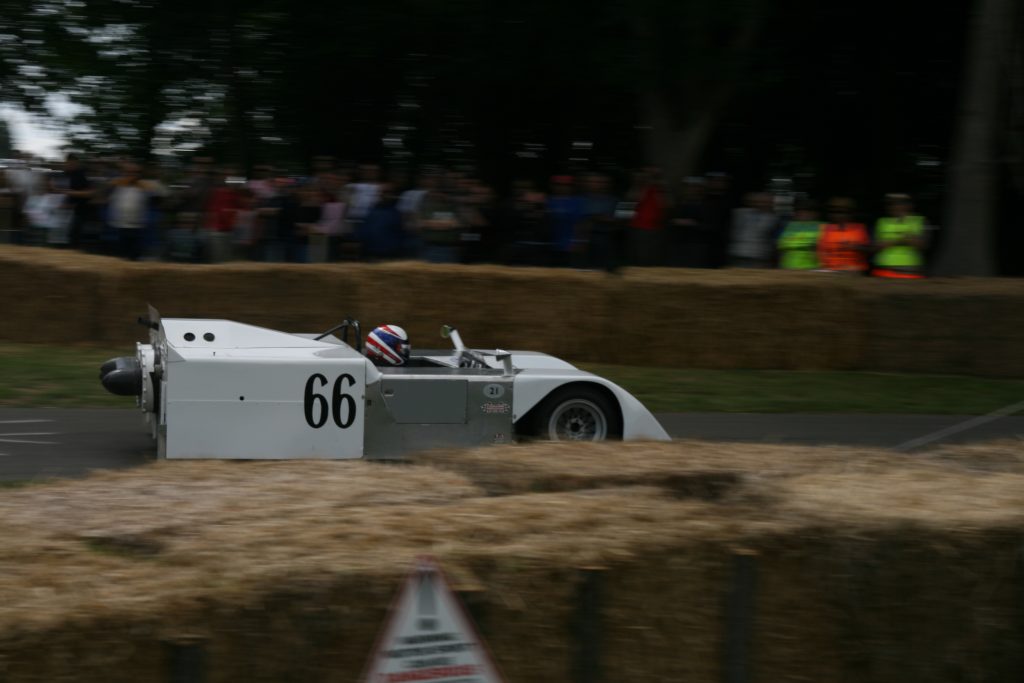
By the late 1970s, Lotus once again led innovation by introducing ground-effect aerodynamics, a concept borrowed from Jim Hall’s Chaparral 2J sports car. Ground-effect dramatically increased downforce by channeling air through sculpted underbodies, pressing the cars to the track with forces up to five times their weight. To maintain a consistent ride height, teams employed extremely stiff suspension systems, effectively making the cars’ suspensions rigid. Consequently, drivers relied entirely on tyre compliance for comfort and control over uneven surfaces.
References
-
Nye, D. (1986). The Story of Formula One. Foulis/Haynes.
-
Hilton, C. (2004). Grand Prix Century: The First 100 Years of the World’s Most Glamorous and Dangerous Sport. Haynes Publishing.
-
Henry, A. (1985). Brabham: The Grand Prix Cars. Osprey Publishing.
-
Hodges, D. (2001). A–Z of Grand Prix Cars. Crowood Press.
-
Saward, J. (1993). The World Atlas of Formula One. Paragon Publishing.
-
Tremayne, D. (1997). The Science of F1 Design. Motorbooks International.
-
FIA Formula One Archives – Technical Regulations and Innovations.
-
Formula1.com – “Technology Timeline of F1.”
-
Motorsport Magazine Archive – “The Rise of the Monocoque.”
-
Chapman, C. (1968). Aerodynamics in Formula One Racing, Lotus Engineering Notes.
Back to Formula One Encyclopedia
Explore this subject
Continue exploring related Open Chronicle Encyclopedia entries through the categories associated with this article.

Staff Writers at Open Chronicle produce trusted journalism, strategic analysis and authoritative reference content across global affairs, geopolitics, defense, science, history, technology, business, culture and sport. Their work combines accurate reporting with historical perspective and analytical depth, helping readers understand not only what is happening, but why it matters. Beyond daily news coverage, Staff Writers contribute to the Open Chronicle Encyclopedia, investigative features, original research projects and long-form reports, building a comprehensive knowledge platform designed to inform, educate and preserve reliable information for a global audience.