
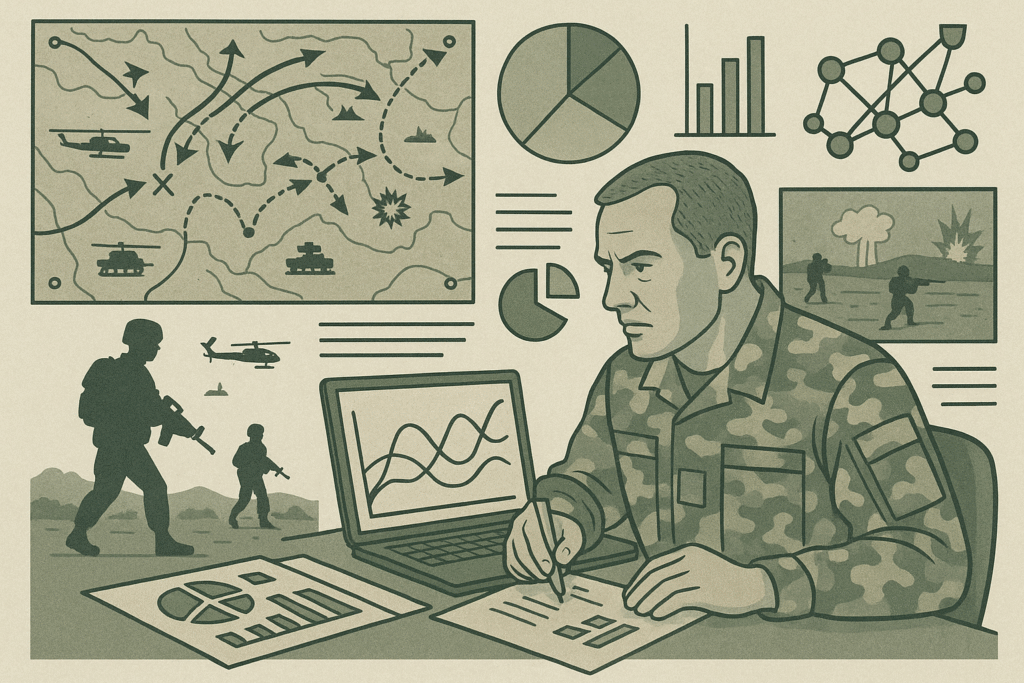
Image Credentials: Image Title: Military Operations Research Source: (sora.openai) Date: October 2025. Attribution: Created using AI-generated imagery (sora.openai), this does not depict a real-world scene.
Military Operations Research (MOR) is a specialized field that applies quantitative and qualitative techniques to the analysis of military operations. This interdisciplinary field aims to optimize military strategy, tactics, logistics, and resource allocation, utilizing advanced mathematical modeling, simulations, and data analysis. By improving decision-making and operational effectiveness, MOR plays a key role in shaping modern military strategies and enhancing combat readiness.
Key Aspects of Military Operations Research

1. Quantitative Analysis and Modeling
MOR involves the use of mathematical models to simulate military scenarios, helping to understand and predict outcomes in areas such as combat, logistics, and resource management. Techniques like linear programming, dynamic programming, and game theory are employed to model military dynamics and optimize operational decisions.
2. Simulation and Computer-Aided Tools
MOR also leverages simulation-based tools for mission planning and execution:
-
Combat Simulations: These simulate battlefield conditions to evaluate military strategies and tactics before real-world implementation.
-
Decision Support Systems (DSS): These systems assist in making complex decisions by providing real-time data analysis and modeling potential outcomes of different courses of action.
3. Tactical and Operational Planning
MOR aids military planners in developing effective combat strategies by evaluating troop movements, supply chain management, and logistical needs. It helps determine the optimal use of available resources to achieve mission success under varying conditions.
4. Data Analysis and Intelligence
The use of operational data, such as intelligence reports, surveillance data, and battlefield metrics, is central to MOR. Advanced data analytics and artificial intelligence (AI) are increasingly being used to provide insights into military operations and support decision-making.
5. Wargaming and Scenario Planning
MOR employs wargaming techniques where military planners simulate different conflict scenarios to evaluate the effectiveness of different strategies. These simulations help to identify strengths, weaknesses, and potential outcomes, assisting in long-term military planning.
Applications of Military Operations Research
-
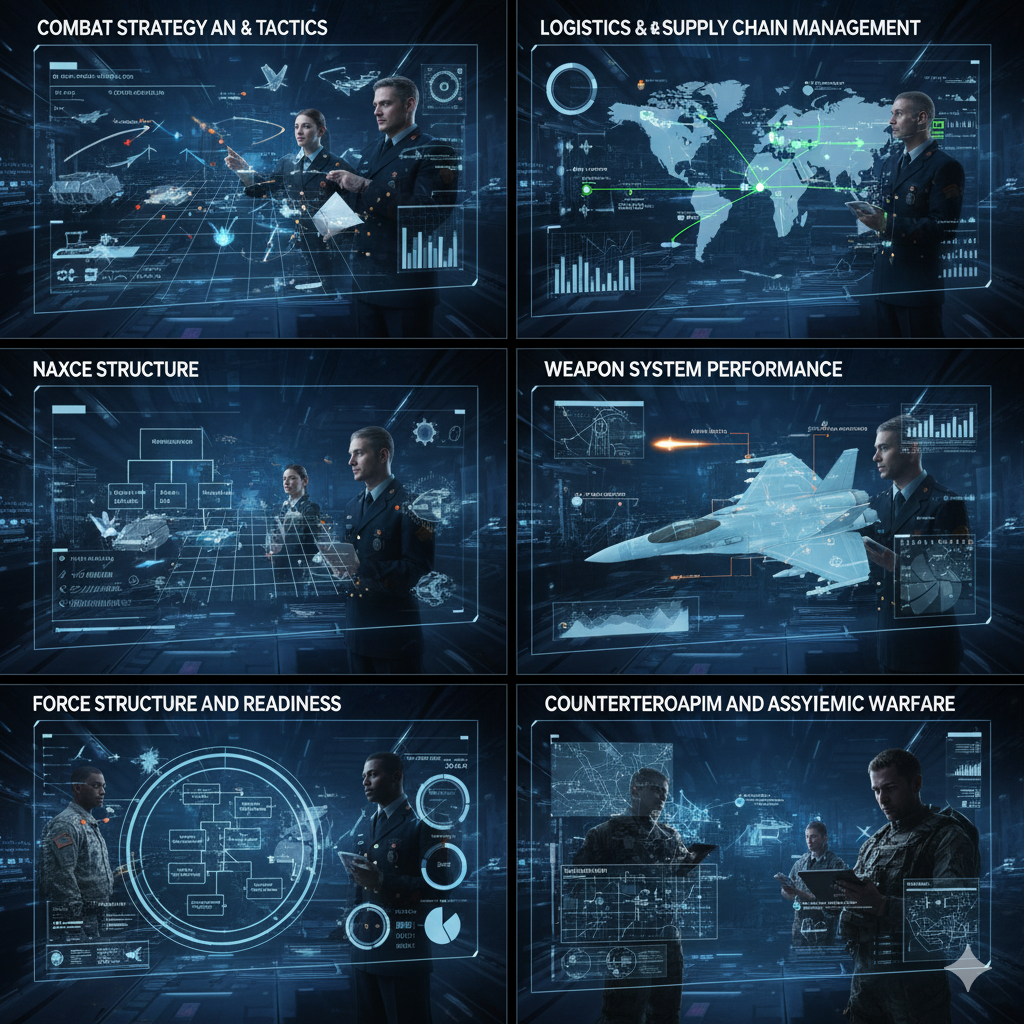
Combat Strategy and Tactics
MOR is extensively used to analyze and develop combat strategies, such as military maneuvers, air strikes, and naval engagements. Historical battle analyses and modern military campaigns are used to predict the most effective methods of achieving objectives with minimal loss. -
Logistics and Supply Chain Management
The efficiency of military logistics is crucial for mission success. MOR is used to optimize the supply and transportation of military assets, ensuring that troops are adequately supported with ammunition, food, and medical supplies. -
Force Structure and Readiness
MOR helps determine the ideal force composition, assessing how different units, from infantry to specialized teams, can be organized to meet strategic goals. It also supports the assessment of military readiness and the optimal allocation of resources. -
Weapon System Performance
Military technology and weapon systems are subject to continuous analysis. MOR helps assess the performance of these systems in various combat environments and aids in identifying upgrades or improvements for maximizing effectiveness. -
Counterterrorism and Asymmetric Warfare
Asymmetric warfare, where smaller or non-state actors engage in unconventional combat, presents unique challenges. MOR techniques are vital in developing strategies to counter terrorist activities and unconventional threats.
The Role of Military Operations Research in Modern Warfare
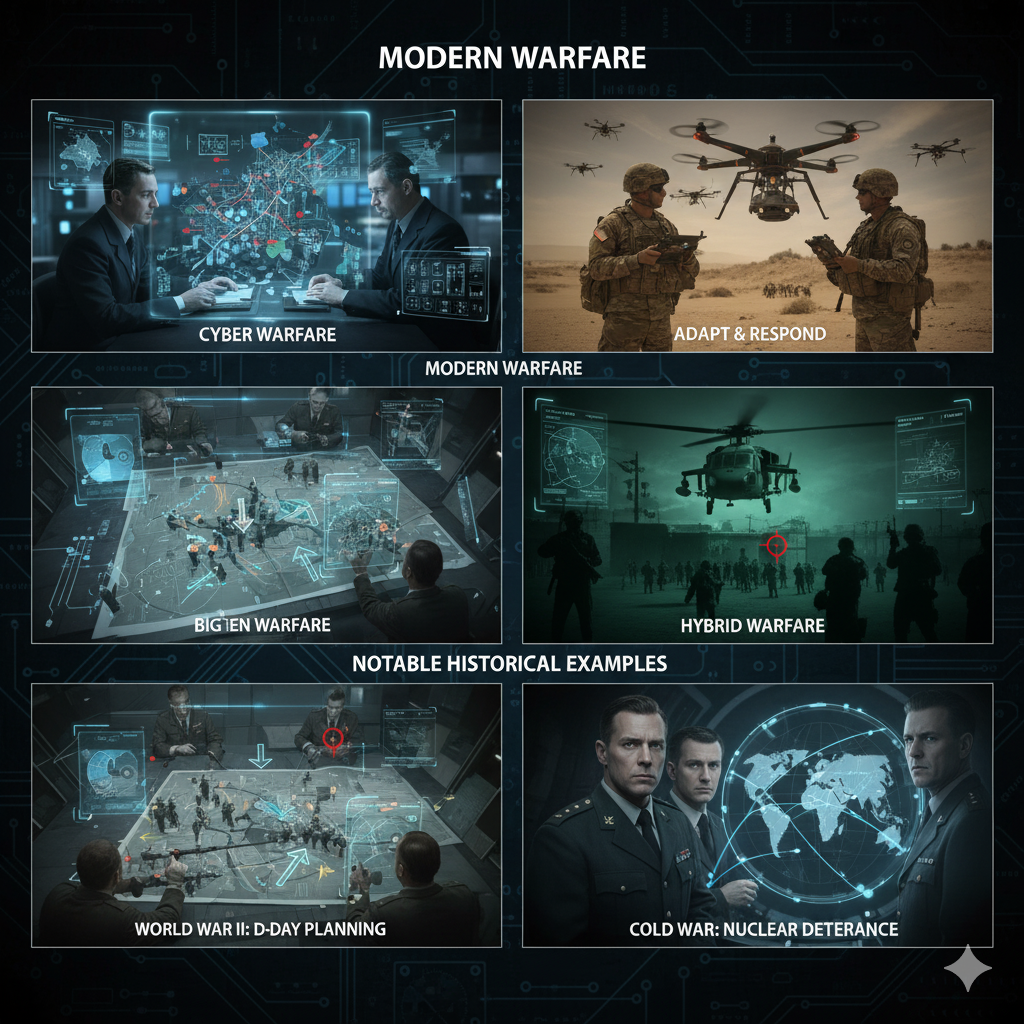
With the advent of cyber warfare, drone technologies, and hybrid warfare strategies, MOR has evolved to meet new threats. By employing modern technologies such as big data, AI, and machine learning, MOR helps military forces adapt to the rapidly changing landscape of modern conflict. The ability to predict, adapt, and swiftly respond to these evolving challenges is crucial for maintaining operational superiority.
Notable Historical Examples
MOR has been applied in various significant military conflicts:
-
World War II: Special operations research was critical in planning large-scale operations such as D-Day, ensuring that forces were optimally deployed for success.
-
Global War on Terrorism (GWOT): The U.S. military relied heavily on MOR in the early 21st century to identify and eliminate terrorist threats, most notably in the raid that killed Osama bin Laden.
-
Cold War and Beyond: During the Cold War, MOR helped analyze nuclear strategies, ensuring that both the U.S. and Soviet Union maintained credible deterrence.
Advantages of Military Operations Research
-
Improved Decision-Making:
MOR provides military leaders with the tools to make data-driven, informed decisions, optimizing outcomes with minimal resource expenditure. -
Resource Efficiency:
The optimization of logistics, manpower, and material resources ensures that operations are carried out efficiently and economically, reducing waste and increasing the effectiveness of military campaigns. -
Adapting to Technological Advancements:
As military technology continues to advance, MOR incorporates AI, machine learning, and autonomous systems to predict battlefield outcomes and aid in tactical decision-making.
Challenges and Criticisms
-
Complexity of Modeling:
Some military scenarios, especially those involving unpredictable human behavior, are difficult to model accurately, posing challenges for simulation-based analysis. -
Ethical Considerations:
The use of advanced technologies such as drones and cyber warfare raises ethical questions. MOR must continually adapt to address these concerns, balancing operational effectiveness with human rights and international law.
Conclusion
Military Operations Research remains a crucial discipline in modern military strategy, helping to optimize the performance of military forces in complex and dynamic operational environments. By combining data analysis, mathematical modeling, and simulation techniques, MOR enhances decision-making and ensures that military operations are conducted with maximum effectiveness. As warfare continues to evolve with new technologies, MOR will continue to play a pivotal role in adapting military strategies to address emerging threats.
References
-
NATO Standard Allied Joint Publication, “Allied Joint Doctrine for Special Operations”, AJP-3.5, Brussels: NATO Standardization Agency, 13 December 2013.
-
Robinson, Linda. “One Hundred Victories: Special Ops and the Future of American Warfare”, New York: Public Affairs, 2013. ISBN 978-1-61039-149-8.
-
McRaven, William H. “Spec Ops: Case Studies of Special Operations Warfare; Theory and Practice”, Novato, CA: Presidio, 1995.
-
Wirtz, James J. “The Abbottabad Raid and the Theory of Special Operations”, Journal of Strategic Studies, 45 (6–7), 2021.
-
Robinson, Linda. “The Future of Special Operations: Beyond Kill and Capture”, Foreign Affairs, November–December 2012.
Categories: Operational | Operations research
Explore this subject
Continue exploring related Open Chronicle Encyclopedia entries through the categories associated with this article.

Staff Writers at Open Chronicle produce trusted journalism, strategic analysis and authoritative reference content across global affairs, geopolitics, defense, science, history, technology, business, culture and sport. Their work combines accurate reporting with historical perspective and analytical depth, helping readers understand not only what is happening, but why it matters. Beyond daily news coverage, Staff Writers contribute to the Open Chronicle Encyclopedia, investigative features, original research projects and long-form reports, building a comprehensive knowledge platform designed to inform, educate and preserve reliable information for a global audience.