
Image: from BioMedic X @ShaffiofKe
By Benjamin Foster | Staff Writer with Agencies
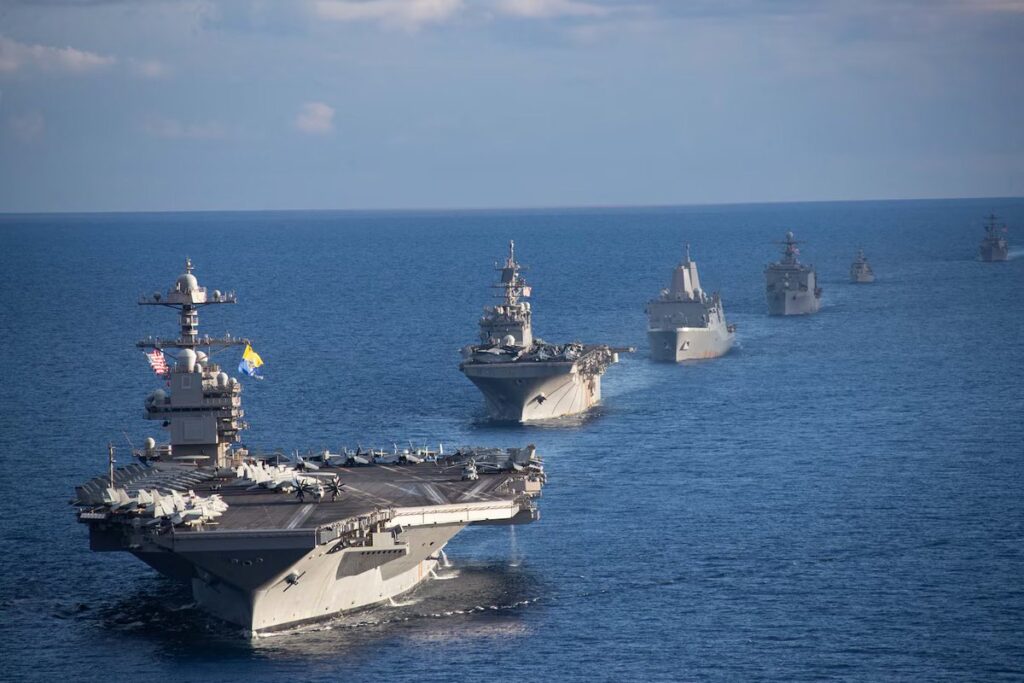
In a significant escalation of its military presence in the Caribbean, the United States has deployed the world’s largest warship, the USS Gerald R. Ford, to target drug trafficking networks in the region. This move is part of the Trump administration’s broader campaign to combat narcotics smuggling and disrupt the operations of transnational criminal organisations (TCOs), particularly those believed to be operating from Venezuela.
USS Gerald R. Ford: A Strategic Move
🚨 On Friday Pentagon says US is deploying a carrier strike group to the #Caribbean. "They killed 300 thousand people last year." There is "a legal authority to do that". https://t.co/fofLFmxwxv pic.twitter.com/eANM1judm1
— The Knight News (@Knight981311) October 24, 2025
The USS Gerald R. Ford, an aircraft carrier capable of carrying up to 90 aircraft, was ordered by US Defence Secretary Pete Hegseth to shift its position from the Mediterranean Sea towards the Caribbean on Friday. The deployment marks a notable shift in the US military’s focus and presence in the region, as the country seeks to curb the influence of criminal organisations involved in drug trafficking.
Along with the carrier, the US military has sent additional forces to bolster its efforts. The USS Gerald R. Ford is now accompanied by eight other warships, a nuclear submarine, and F-35 aircraft as part of an intensified push against narcotics operations. The move is seen as an extension of the administration’s “war on drugs” and part of a larger strategy to target drug cartels, particularly those operating from Venezuela, which has long been a point of contention between the US and the regime of President Nicolás Maduro.
Increased Military Strikes on Drug Traffickers
The escalation has already led to military actions in the Caribbean Sea, where the US military carried out airstrikes against alleged drug traffickers. On Friday, Hegseth confirmed that six narco-terrorists had been killed in an operation targeting a ship linked to the Tren de Aragua criminal organisation. This marked the latest in a series of strikes, which have been ongoing since September, aimed at disabling drug smuggling operations.
The Trump administration claims that these airstrikes are essential for halting the flow of illegal drugs into the United States, but the legality of such strikes has raised significant concerns. Experts and critics, including members of the US Congress, have questioned whether the military’s actions are authorized, especially when it comes to operations that involve extrajudicial killings without sufficient evidence or due process.
The Controversial Build-Up in the Caribbean
The build-up of US military forces in the Caribbean is also seen by some analysts as a signal directed at Venezuela. The deployment of the USS Gerald R. Ford, in particular, is likely to increase tensions with Maduro’s government, which has been accused by the US of harboring drug traffickers and facilitating the operations of criminal groups.
Dr. Christopher Sabatini, a senior fellow for Latin America at the Chatham House think tank, suggested that the US military presence in the region is as much about political messaging as it is about combating drug trafficking. According to Sabatini, the presence of such a powerful warship is intended to “strike fear” into the Venezuelan military and its leadership, signaling potential intervention and escalating tensions with the Maduro regime.
“The hope is this is about signaling,” Sabatini told the BBC. “It’s not about an immediate invasion, but it is about regime change through external pressure.”
Trump’s Plans for Further Action
US President Donald Trump has made it clear that the military’s actions are part of a larger plan to curtail drug trafficking, but there are indications that the Trump administration is considering further aggressive moves, including potential land strikes inside Venezuela. The president has repeatedly mentioned the possibility of targeting drug facilities and trafficking routes within Venezuela’s borders, although no official decisions have been made.
In addition to the USS Gerald R. Ford’s deployment, Trump has discussed using additional resources to carry out land operations, citing a desire to increase pressure on the Venezuelan government. However, critics argue that such a move would require congressional approval, which is far from guaranteed.
The USS Gerald R. Ford is also notable for its size and capabilities. As one of the most advanced warships in the US fleet, it can operate as part of a strike group, which includes missile destroyers and other naval assets capable of projecting power in a wide range of military operations. The ship’s aircraft load, including jets and reconnaissance planes, will provide the necessary resources for both aerial and ground-based operations, should the US choose to escalate its campaign further.
International and Domestic Reactions
The increased US military presence in the Caribbean, especially in proximity to Venezuela, has provoked mixed reactions from both domestic and international stakeholders. Members of Congress—from both parties—have raised concerns about the legality and authority behind such strikes. A group of 25 Democratic senators wrote to the White House in September, questioning the evidence behind the strikes, particularly the targeting of vessels without clear threats to the US.
Senator Rand Paul of Kentucky, a Republican, has also expressed concerns, arguing that military strikes of this nature should require Congressional approval. “Such actions, particularly strikes against vessels, should not be taken lightly,” Paul said.
In contrast, the Trump administration maintains that these actions are necessary to combat the global drug trade. Trump has also stated that the US has the legal authority to take action against criminal organisations, even going so far as to designate Tren de Aragua, a powerful criminal group operating in Venezuela, as a terrorist organisation.
In response to critics, US Secretary of State Marco Rubio stated, “If people want to stop seeing drug boats blow up, stop sending drugs to the United States.”
Looking Ahead: Escalating Tensions
As the USS Gerald R. Ford and its accompanying strike group continue their deployment in the Caribbean, the situation remains tense. The US military’s actions have highlighted the country’s broader geopolitical interests in the region, with the campaign against drug trafficking serving as a potential cover for more significant political and military objectives related to Venezuela.
As these events unfold, it is clear that the military escalation in the Caribbean will continue to shape US-Venezuela relations and potentially have broader implications for the stability of the region as a whole.
The question of whether the US is willing to take more aggressive action in Venezuela, and how other regional powers—such as Russia and China, both of which have interests in Venezuela—will respond, remains to be seen. However, one thing is certain: the presence of the USS Gerald R. Ford in the Caribbean is a powerful symbol of the US’s strategic intent in the region, and it will likely play a central role in the coming months.