
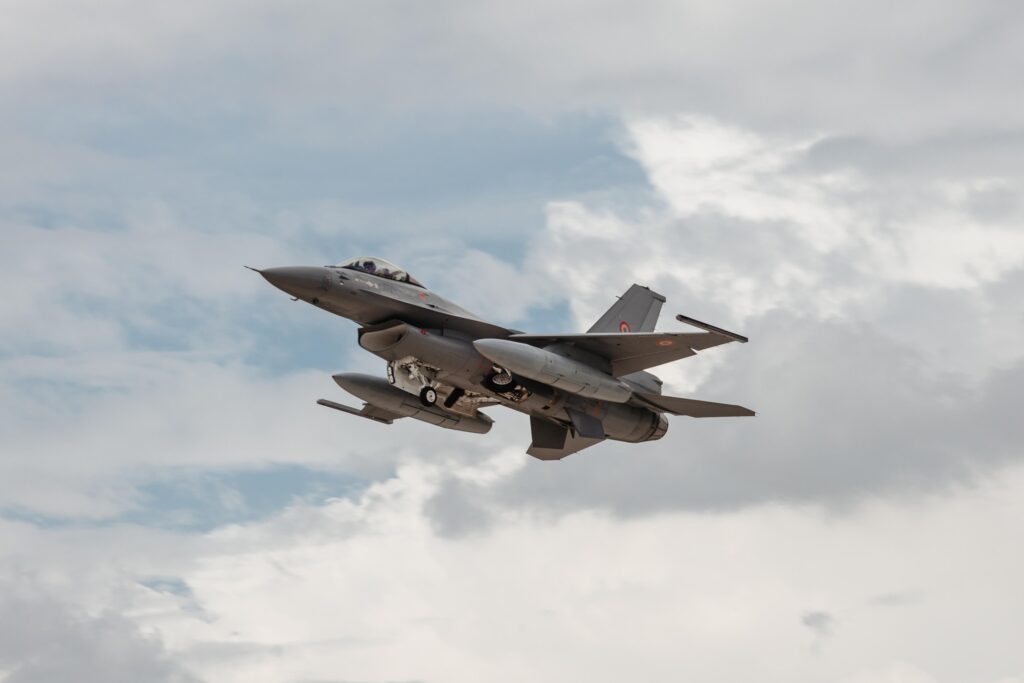
Image: from MApN X@MApNRomania
By Benjamin Foster | Staff Writer with Agencies
Romania has strengthened its contribution to NATO’s collective defense by launching a second F-16 squadron to participate in the Alliance’s air policing operations, according to a statement from NATO’s Allied Air Command.
The newly operational 48th Fighter Squadron, stationed at the 71st “General Emanoil Ionescu” Air Base in Câmpia Turzii, carried out its first NATO-led sorties on October 20, 2025. The squadron’s deployment marks a significant expansion of Romania’s role in securing the Alliance’s eastern flank, an area of growing strategic importance amid ongoing regional tensions.
NATO officials described the certification of the new squadron as “a major milestone” in reinforcing the Alliance’s integrated air and missile defense network. The move enhances the interoperability and readiness of the Romanian Air Force, which now operates a fully NATO-compatible fleet of F-16 fighter jets.
🇷🇴 Romania swaps its MiG-21s for F-16Cs – boosting NATO Air Policing from Câmpia Turzii ✈️
This adds to the 53rd Fighter Squadron at Fetești and the 🇩🇪 German Air Force Eurofighter detachment from Mihail Kogălniceanu
🔗 https://t.co/7PHKganyKp pic.twitter.com/OUQ8a53tTz
— NATO Air Command (@NATO_AIRCOM) October 28, 2025
The 48th Squadron joins the 53rd Fighter Squadron, based at Fetești Air Base, as Romania’s second operational F-16 unit. Together, they bolster the country’s air policing capabilities and readiness to respond to aerial threats along NATO’s southeastern borders.
In addition to Romania’s contributions, the mission also includes a German Air Force detachment from Tactical Air Wing 71 “Richthofen”, which is currently flying Eurofighter Typhoons from Mihail Kogălniceanu Air Base. These combined forces form a crucial part of NATO’s 24/7 air policing mission, which continuously monitors Allied airspace and intercepts potential incursions.
The activation of the new squadron comes as NATO continues to adapt its air defense posture in response to the ongoing war in Ukraine, increased Russian military activity in the Black Sea region, and the heightened importance of the Alliance’s eastern and southeastern flanks.
Romania’s investment in its air capabilities underscores its commitment to NATO’s collective security framework and its role as a frontline state in safeguarding European airspace.