
Image: from {Matt} $XRPatriot X@matttttt187
By Liam Scott | Staff Writer with Agencies
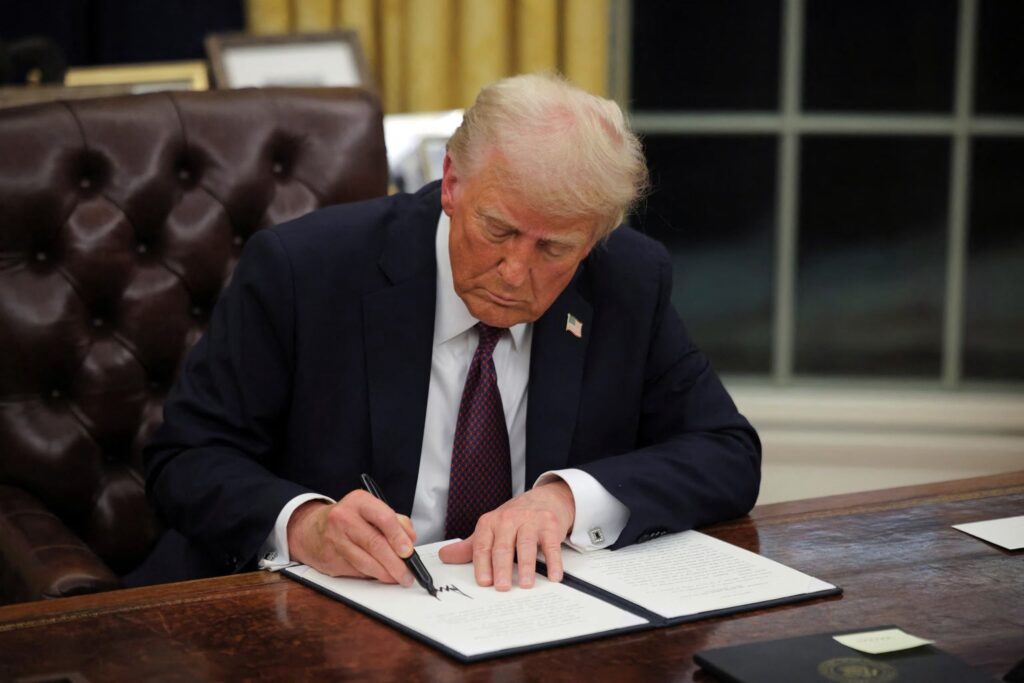
The United States is preparing for the public release of sensitive government documents related to the late convicted sex offender Jeffrey Epstein, after President Donald Trump signed a bill requiring the Justice Department to publish files from federal investigations. The decision marks a dramatic reversal by Trump, who for months resisted pressure from victims, lawmakers, and even members of his own party to make the records public.
Under the new law, Attorney General Pam Bondi has 30 days to release the material, although documents tied to active criminal investigations or those that would violate personal privacy may be withheld. The files include transcripts of interviews with victims and witnesses, internal Justice Department communications, seized materials from Epstein’s residences, and flight logs associated with his private aircraft.
The legislation passed with near-unanimous support. The House approved it 427 to 1, with only Republican Congressman Clay Higgins voting against the measure on the grounds that releasing the files risked exposing “thousands of innocent people” who had provided information to investigators. The Senate approved the bill by unanimous consent.
Trump, who previously dismissed the push for disclosure as a “Democrat hoax”, reversed course at the end of last week following intense public pressure. In announcing his support, he framed the release as potentially damaging to political opponents, stating that “the truth about these Democrats and their associations with Jeffrey Epstein” would now come to light.
Although Trump could have ordered the release without Congress, the bipartisan resolution forced a legal deadline on the administration. Some lawmakers involved in drafting the measure voiced concerns that the Justice Department might launch new investigations to justify withholding parts of the file, citing provisions that allow exemptions for ongoing inquiries.
Bondi is also permitted to redact information that would identify victims. Analysts expect portions of the release to be heavily blacked out, though the White House has not given any indication of the anticipated scope.
The move follows the publication of more than 20,000 pages of Epstein estate documents released separately by Congress last week, some of which contained remarks about Trump. Epstein, once a friend of Trump’s, claimed in 2018 that he could “take him down”, assertions Trump has dismissed while repeatedly denying any wrongdoing.
Trump said on Monday that his party had “nothing to do with Epstein”, insisting the scandal was “a Democrat problem” despite Epstein’s years-long connections to prominent figures in both parties, as well as celebrities, academics and members of royalty. The fallout has already prompted consequences for some, including former Harvard president Larry Summers, who stepped back from teaching duties while the university reviews his email exchanges with Epstein.
For survivors, the bill marks a significant milestone. The family of Virginia Giuffre, who died earlier this year, called the legislation “nothing short of monumental”. They stressed that accountability must apply to everyone, “regardless of power, wealth, or party affiliation”.
As the clock begins on the 30-day release window, Washington braces for the political and legal ramifications of a cache of documents that could reshape public understanding of one of the most far-reaching criminal networks of the past several decades.