
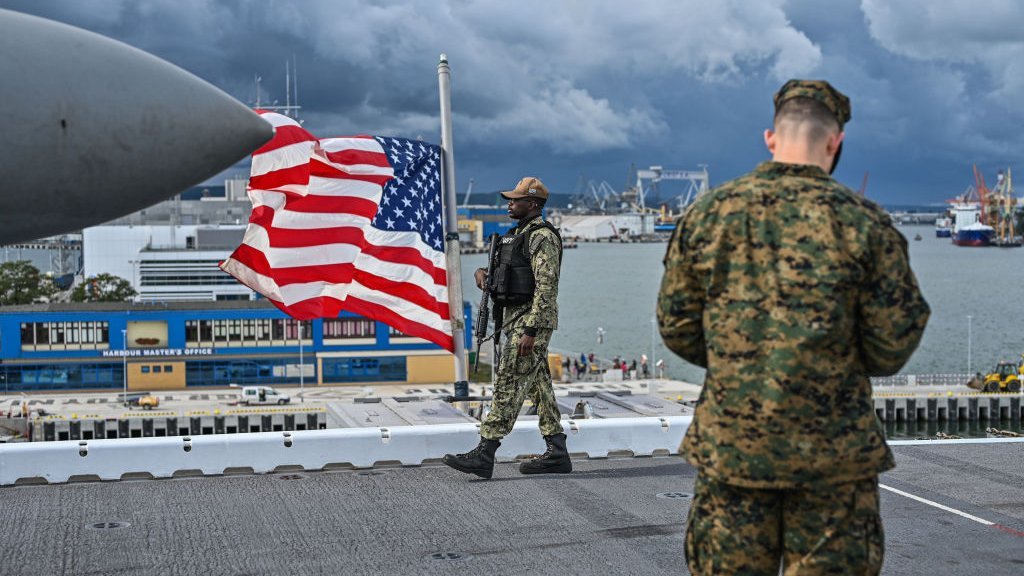
Image: from Defence24com X@Defence24eng
By Open Chronicle Staff with Agencies
In a decisive 77-20 bipartisan vote, the United States Senate has approved the National Defense Authorization Act (NDAA) for the 2026 fiscal year. The bill, which authorizes an unprecedented $901 billion (€830 billion) in military spending, now moves to the White House for President Donald Trump’s signature.
The legislation represents a critical compromise between the administration’s domestic priorities and a congressional mandate to maintain long-standing strategic alliances.
🚨 JUST IN: U.S. Senate EASILY PASSES $900 BILLION "military" spending bill – (77-20)
🇺🇦 Ukraine gets $800M
🇮🇱 Israel gets $692.5M
ARE YOU OK WITH THIS? pic.twitter.com/TolNIgSQj0
— Publius (@OcrazioCornPop) December 17, 2025
The 2026 NDAA focuses heavily on modernizing the U.S. military to counter global competition from China and Russia. Key highlights of the funding include:
- Personnel Support: A 4% salary increase for all members of the armed forces.
- Modernization: Significant investment in new equipment and military hardware.
- Social Policies: In a move tied to the current administration’s “culture war” focus, the bill includes a ban on transgender women participating in female sports competitions at U.S. military academies.
Despite President Trump’s recent National Security Strategy, which suggested a more favorable stance toward Russia and a re-evaluation of European alliances, the approved bill contains several provisions that explicitly safeguard European security.
To ensure stability on the continent, the NDAA:
- Limits Troop Reductions: Prevents the Department of Defense from reducing the U.S. troop contingent in Europe to fewer than 76,000 personnel.
- Protects NATO Leadership: Prohibits the commander of U.S. forces in Europe from relinquishing their role as the Supreme Allied Commander of NATO.
A cornerstone of the bill is the continued support for allies bordering Russia. The legislation allocates:
- Ukraine Assistance: $800 million (€735 million) over two years through the Ukraine Security Assistance Initiative, specifically for U.S.-produced weaponry.
- Baltic Security: $175 million (€160 million) for the Baltic Security Initiative to bolster the defenses of Latvia, Lithuania, and Estonia.
While the bill passed with broad support, it reflects the ongoing tension between the White House and Congress. For example:
- Department Name Change: The bill did not include funding for President Trump’s ambition to rename the Department of Defense to the “Department of War,” a change that requires explicit congressional authorization.
- Safety Concerns: Pressure to include stricter military helicopter safety measures—following a tragic collision between a Black Hawk and a commercial airliner that killed 67 people—did not stall the final passage of the bill, though the issue remains a point of intense debate.
The 2026 NDAA stands as a testament to the dual-track nature of current American foreign policy. While it incorporates several of the administration’s social and strategic shifts, it remains anchored by a congressional commitment to traditional transatlantic security and the containment of Russian influence in Eastern Europe.