
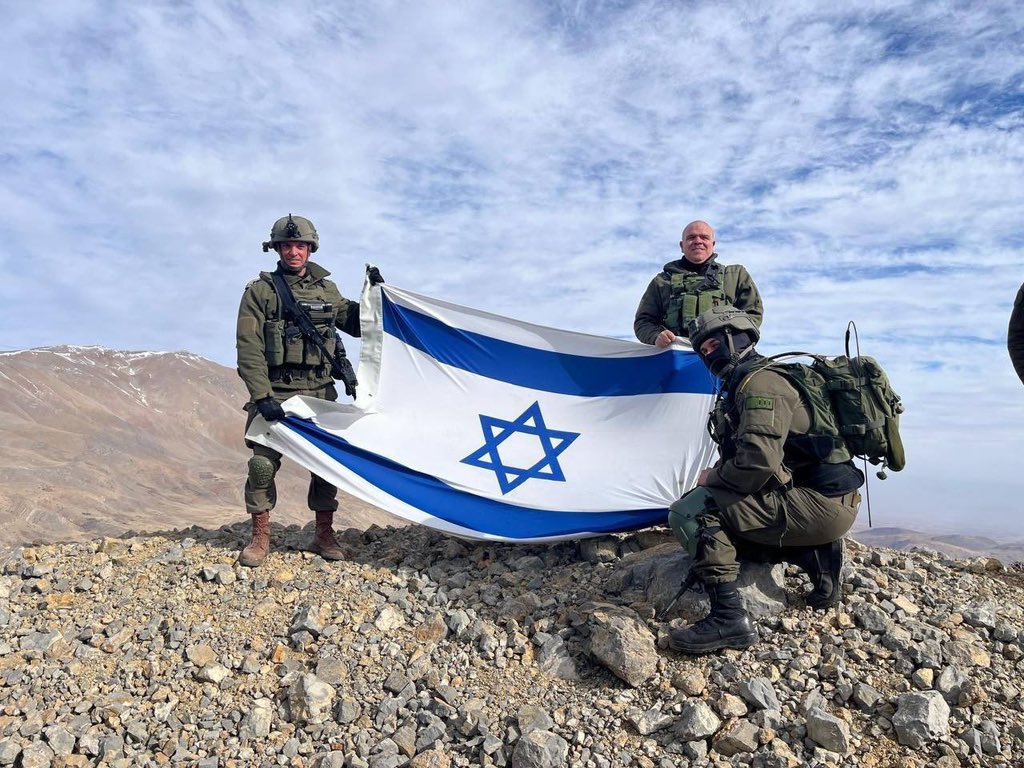
Image: from Hadi X@HadiNasral
By Open Chronicle Staff with Agencies
One year after the collapse of the Bashar al-Assad regime, tensions in southwestern Syria have reached a new flashpoint.1 On Saturday, Israeli military forces expanded their ground incursions into the Quneitra province, establishing new checkpoints and intensifying search operations in what Syrian officials describe as a “flagrant violation of sovereignty.”
According to reports from state-run Al-Ikhbariya TV and local sources, Israeli military vehicles moved deep into several villages within the Quneitra countryside. Key incidents reported on December 20, 2025, include:
-
Ain Ziwan: Five Israeli military vehicles entered the village to establish a temporary checkpoint.
-
Al-Ajraf: Four military vehicles moved into the central countryside, where troops set up checkpoints to search passersby and vehicles.
-
Samdaniya al-Sharqiya: Witnesses reported the entry of two tanks and ten military vehicles into this southern village earlier in the week.
These movements follow a period of intense local resistance. Just 24 hours prior, dozens of Syrians gathered in the city of al-Salam to protest the ongoing Israeli military activity, citing the destruction of property and the harassment of residents.
The roots of the current escalation trace back to December 8, 2024, when the fall of the Assad regime led Israel to declare the 1974 Disengagement of Forces Agreement void. Claiming a security vacuum, the Israeli Defense Forces (IDF) moved to occupy the demilitarized buffer zone and strategic peaks like Mount Hermon.
| Key Metric | Status Since December 2024 |
| Airstrikes | Over 1,000 recorded strikes on Syrian territory |
| Ground Raids | Over 400 cross-border incursions |
| Territorial Control | Approximately 346 sq km of Syrian land is currently held |
| Military Bases | 9 established bases within Syrian territory |
“The enemy is exploiting the transition to fragment our land,” stated a representative of the new Syrian administration. “These violations undermine our efforts to attract the investment needed for economic recovery.”
Stalled Negotiations and Economic Fallout
While Damascus and Tel Aviv are reportedly engaged in indirect negotiations for a new security pact, the talks have hit a significant impasse.
-
Syria’s Condition: The transitional government, led by Ahmed al-Sharaa, has demanded a full return to the pre-December 2024 borders as a prerequisite for any formal agreement.
-
Israel’s Stance: Jerusalem maintains that the buffer zone is essential to prevent “hostile actors” and former extremist factions from embedding themselves near the border.
-
Diplomatic Vacuum: Recent reports suggest that talks have been further complicated by the departure of key Israeli negotiators, leaving a leadership gap in the peace process.
Beyond the military friction, the incursions have severe economic consequences. The Quneitra and Daraa regions are vital for agricultural stability. Locals report that the network of nearly 260 temporary checkpoints has fragmented civilian movement, making it nearly impossible for farmers to bring goods to market or for the government to implement reconstruction plans.