
Image: from Sane Lunatic X@1people1future
By Open Chronicle News Desk
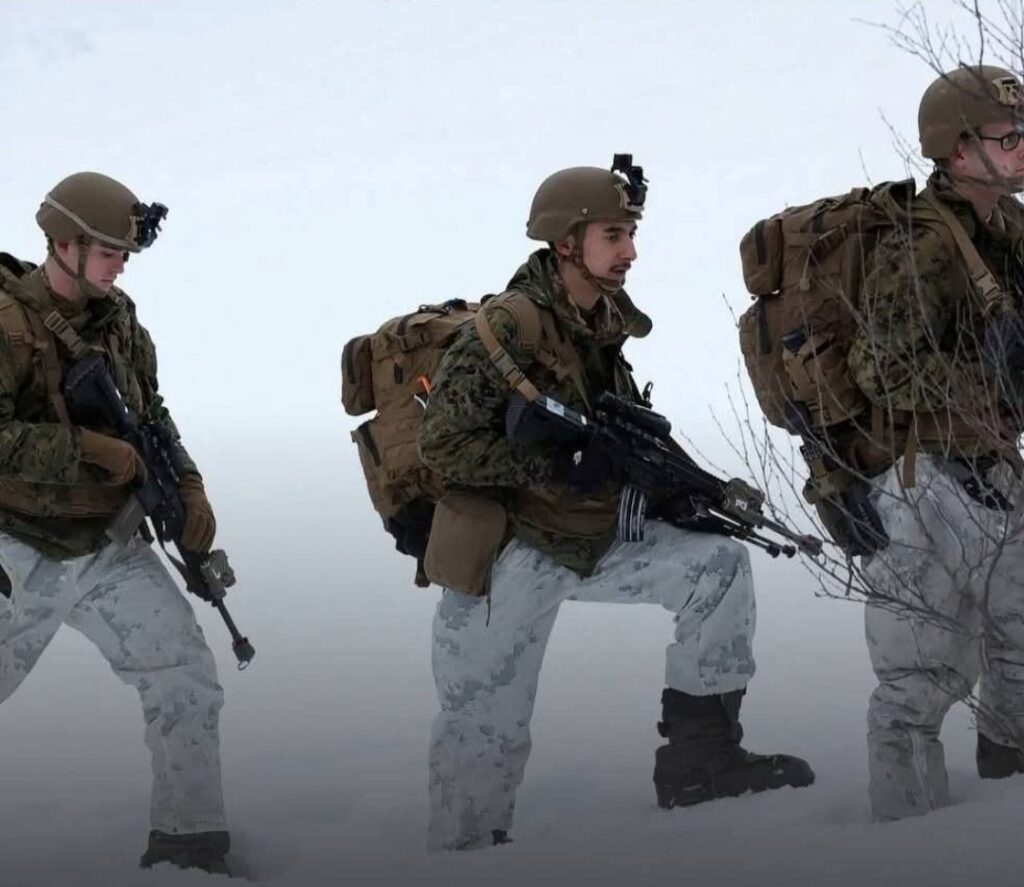
TROMSØ, Norway — A series of recent military exercises in the high north has exposed significant gaps in the U.S. Army’s readiness for extreme cold-weather combat. During high-stakes maneuvers in Norway, Finnish defense forces reportedly outmaneuvered and “captured” a contingent of U.S. soldiers, highlighting the stark contrast in preparation between Arctic-native forces and American units.
The exercises, part of a larger NATO effort to bolster defenses in the Arctic Circle, aimed to test troop mobility and survival in sub-zero temperatures and deep snow. However, according to reports from participants and observers, U.S. troops struggled with equipment malfunctions, logistics, and basic Arctic survival tactics. Finnish soldiers, who are trained extensively in winter warfare from day one, utilized their superior ski-mobility and camouflage to surround the American unit, leading to a simulated surrender.
At a NATO winter exercise in Norway, Finnish reservists defeated U.S. troops so decisively that commanders asked them to ease off.
A military source said Finns were “asked to stop beating the Americans” because the losses were too humiliating and demoralising.
Source: The Times pic.twitter.com/Ku7sbGjgZK
— BB | Middle East & Geopolitics (@BBMedia23) January 25, 2026
The Challenges of the High North
Military analysts point to several factors that hampered the U.S. performance:
-
Equipment Failures: Standard-issue batteries, communication devices, and vehicle lubricants often fail or lose efficiency once temperatures drop below -20°C.
-
Mobility Issues: While Finnish troops moved swiftly on skis and specialized snow vehicles, U.S. forces often found themselves bogged down by heavy gear and a lack of experience in traversing deep, uncompacted snow.
-
Acclimatization: The physiological toll of the Arctic environment proved to be a major hurdle for troops more accustomed to temperate or desert climates.
American soldiers training in Finland showcase a tent where the snow camouflage is too small, touching the tent canvas and the tent roof is sagging. This command post will look like a waterfall in two days and light up like the sun in thermals. pic.twitter.com/gJ1tzrUykx
— Birch Brother 🪓 (@BjorkBrodern) January 24, 2026
Strategic Implications
The “defeat” in these drills serves as a wake-up call for the Pentagon as the Arctic becomes a new frontier for geopolitical competition. With Russia and China increasing their presence in the North, the U.S. Army has recognized that “Arctic dominance” requires more than just high-tech weaponry; it requires specialized training and hardware that can withstand the harshest conditions on Earth.
In response to these findings, the U.S. Army is expected to increase its collaboration with Nordic allies like Finland and Sweden, seeking to adopt their “total defense” strategies and winter survival techniques.