
Image: UNODC Terrorism Prevention X@UNODC_TPB
By Open Chronicle News Desk
GENEVA – In a move to strengthen the global framework against radiological threats, the United Nations Office on Drugs and Crime (UNODC) held high-level discussions with representatives of the Republic of the Marshall Islands to advocate for the country’s adherence to the International Convention for the Suppression of Acts of Nuclear Terrorism (ICSANT).
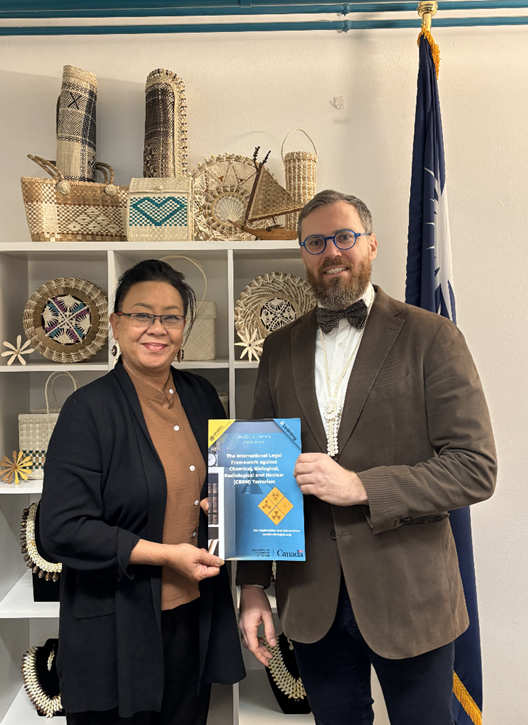
The meeting, held on January 22, 2026, featured H.E. Ms. Doreen Debrum, Permanent Representative of the Marshall Islands, alongside UNODC experts. The dialogue focused on how small island developing states can benefit from the internationally recognized legal framework, even if they do not possess nuclear power programs.
#ICSANT is crucial for all States, including #SIDS. Delighted to discuss this Convention and #UNODC_CBRN Terrorism Prevention Programme’s assistance (supported by 🇨🇦) with HE Ms. Doreen Debrum and her colleagues of the Marshall Islands 🇲🇭at @RMIGeneva.
👉 https://t.co/plEmaZh35b pic.twitter.com/2IVhoKiJUr— UNODC Terrorism Prevention (@UNODC_TPB) January 28, 2026
UNODC officials emphasized that while nuclear energy is limited to a few nations, millions of radioactive sources are transported globally for use in medicine, industry, agriculture, and research. This widespread presence of radioactive material makes all nations, regardless of size, potential targets or transit points for illicit activities.
“ICSANT remains a vital instrument for all states,” a UNODC spokesperson noted during the session. “It offers a comprehensive framework to support nations in strengthening their national legislation to prevent, detect, and investigate offenses involving radioactive material.”
The Marshall Islands, which has a unique and painful history regarding nuclear testing, has not yet become a party to the convention. UNODC outlined the specific advantages of joining the treaty, including access to tailored legal and technical assistance provided under ongoing international projects.
The engagement follows the Marshall Islands’ participation in the UNODC’s “Youth Academy to Promote Universalization of ICSANT,” signaling a growing interest from the Pacific nation in international counter-terrorism cooperation. The initiative was made possible through financial support from the Government of Canada, as part of a broader effort to ensure no region is left vulnerable to nuclear security risks.