
Image: from UD€°¢hü $. ‽hìlí‽ X@udeochusp
By Open Chronicle News Desk
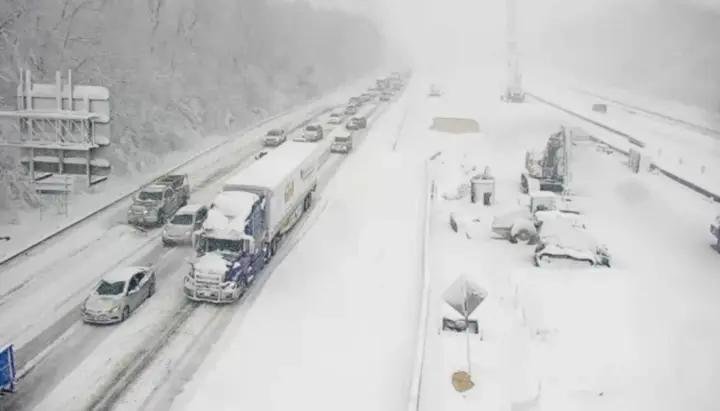
NEW YORK — A “potentially historic” winter storm has carved a path of destruction and freezing misery across nearly 2,000 miles of North America, leaving at least 22 people dead and over a million customers without power. The massive system, which stretched from the Mexico-United States border deep into Canada, has forced 24 U.S. governors to declare states of emergency as record-breaking snowfall and “crippling” ice accumulations continue to threaten lives.
The storm originated in mid-January after a shift in the polar vortex sent Arctic air southward, colliding with moisture from the Gulf of Mexico. What followed was a relentless barrage of sleet, freezing rain, and heavy snow that impacted upward of 230 million people.
Millions of Americans hunkered down or ventured out to help neighbors under bitter cold, blizzards of snow and lashings of freezing rain from a huge winter storm that paralyzed the eastern United States https://t.co/c1yA4tdDyG pic.twitter.com/jRbrllHHz3
— Reuters (@Reuters) January 26, 2026
A Deadly Deep Freeze
The human cost of the storm has been severe. Officials have confirmed 22 fatalities across several states. In Louisiana’s Caddo Parish, at least two individuals succumbed to hypothermia as temperatures plummeted. The cold has been extreme, with Seagull, Minnesota, recording a bone-chilling low of −43°F (−42°C).
In the South, a devastating ice storm caused widespread infrastructure failure. Heavy ice accretion, reaching up to an inch in multiple states, caused trees and power lines to snap, leaving entire communities in the dark. Meanwhile, in the West, nearly 31 inches of snow fell near Bonito Lake, New Mexico, marking some of the highest totals of the event.
Travel Chaos and Infrastructure Collapse
Transportation across the continental United States has ground to a near-halt. More than 10,000 flights have been cancelled or postponed nationwide. In the Northeast, major hubs like LaGuardia Airport were forced to close as the system transitioned into a powerful nor’easter.
Public transit has not been spared; NJ Transit, NYC Ferry, and Philadelphia’s SEPTA suspended services as the storm moved into the Atlantic corridor. Travel bans remain in effect in numerous states where “whiteout” conditions and black ice have made roads impassable.
Emergency Response
Meteorologists have described the storm’s scale as unprecedented in recent years, noting its immense length and the sheer variety of winter hazards it produced—ranging from 6.7 inches of sleet in Arkansas to record daily snowfall in Maine.
Emergency crews and utility workers are working in sub-zero conditions to restore power, though officials warn that in some southern regions, the damage to the grid is so extensive that repairs could take days. Residents are urged to stay indoors and avoid travel as the tail end of the nor’easter continues to lash the coast with high winds and lingering snow.