
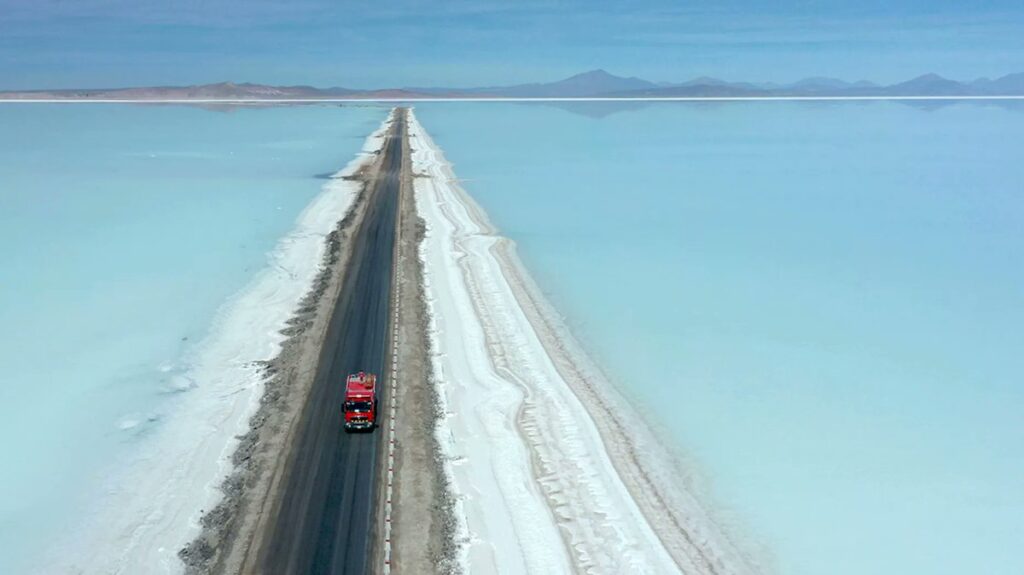
Image: from Mario Nawfal X@MarioNawfal
By Open Chronicle News Desk
LA PAZ – Bolivia’s newly inaugurated President Rodrigo Paz is launching an ambitious, albeit controversial, campaign to overhaul the nation’s protectionist lithium policies. Facing a staggering 20% inflation rate and chronic fuel shortages, the administration is betting on foreign direct investment (FDI) to finally unlock the “white gold” buried beneath the Salar de Uyuni.
Paz, who took office last November after two decades of MAS party rule, is signaling a sharp departure from the resource nationalism of his predecessors. His strategy focuses on transitioning from state-monopolized extraction to public-private partnerships, a move aimed at revitalizing an economy currently paralyzed by political gridlock and nationwide strikes.
𝐏𝐫𝐞𝐬𝐢𝐝𝐞𝐧𝐭𝐞 𝐏𝐚𝐳 𝐚𝐧𝐮𝐧𝐜𝐢𝐚 𝐧𝐮𝐞𝐯𝐚 𝐥𝐞𝐲 𝐝𝐞𝐥 𝐥𝐢𝐭𝐢𝐨 𝐭𝐫𝐚𝐧𝐬𝐩𝐚𝐫𝐞𝐧𝐭𝐞 𝐲 𝐚𝐭𝐫𝐚𝐜𝐭𝐢𝐯𝐚 𝐩𝐚𝐫𝐚 𝐢𝐧𝐯𝐞𝐫𝐬𝐢𝐨𝐧𝐢𝐬𝐭𝐚𝐬
Lee la nota aquí 👉 https://t.co/3MrLsMgbwW#SiempreBolivia#LitioBoliviano pic.twitter.com/8f8qOdU79J— Yacimientos de Litio Bolivianos (@litio_boliviano) January 27, 2026
Breaking the State Monopoly
The Salar de Uyuni holds an estimated 23 million tonnes of lithium—the largest reserves in the world—yet Bolivia has struggled to achieve commercial viability. Under current constitutional law, only the state can extract these minerals. While a full constitutional reform is considered a long-term goal, analysts suggest the Paz administration may introduce short-term legal exceptions to bypass these hurdles and attract international operators.
A key step in this liberalization was the approval of Supreme Decree N.º 5503, which eliminates fuel subsidies and offers a 15-year fiscal stability period for large-scale “strategic” projects. However, the move has triggered a wave of strikes by trade unions and mining cooperatives, as fuel prices are expected to surge by up to 160%.
Geopolitical Rebalancing
In a significant geopolitical shift, the Paz government is reviewing opaque lithium contracts previously signed with Russian and Chinese firms, including Russia’s Uranium One and China’s CATL. Simultaneously, the administration is looking toward Washington for financial backing. Foreign Minister Fernando Aramayo recently visited the U.S. to discuss investment incentives similar to Argentina’s “RIGI” scheme, which provides legal protections for major foreign investors.
“There is appetite for investing in Bolivia,” noted Federico Gaston Gay, principal lithium analyst at Benchmark Mineral Intelligence, “but companies need assurances to mitigate the high risks currently associated with the country’s turbulent political landscape.”
A Competitive Region
Bolivia faces stiff competition from its neighbors in the “Lithium Triangle.” Argentina has already fully liberalized its sector, and Chile, following the recent election of far-right candidate José Antonio Kast, is expected to push for further economic growth and privatization.
For President Paz, the challenge remains twofold: he must convince the international community that Bolivia is a safe harbor for capital while navigating the domestic unrest caused by his austerity measures. Whether lithium can become the catalyst for a national recovery remains the defining question of his early presidency.