
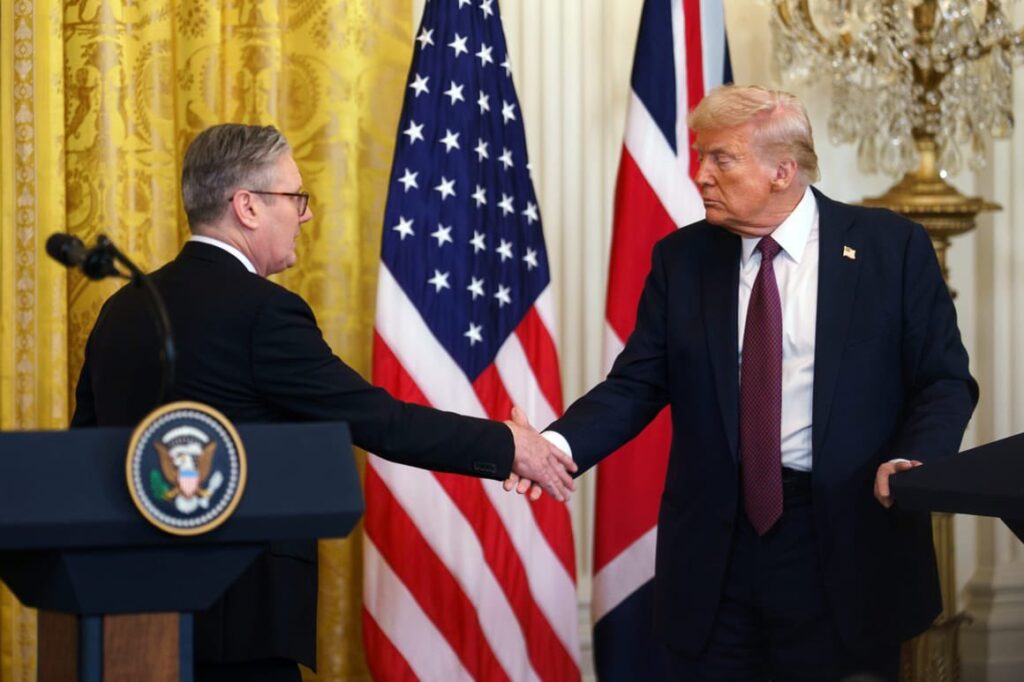
Image: Dzis Maksym X@DzisMaksym
By Open Chronicle Staff
LONDON / WASHINGTON — In a high-stakes Tuesday phone call, British Prime Minister Keir Starmer and U.S. President Donald Trump addressed the escalating humanitarian crisis in Ukraine and the future of the strategically vital Diego Garcia military base.
Located in the middle of the Indian Ocean, the military base at Diego Garcia in the Chagos Islands is one of the most important assets for extending the global reach of British and US forces.
So why is Keir Starmer’s government so intent on giving it up?
Read why at The Biggar… pic.twitter.com/fzckp9kgYt
— nigel biggar (@NigelBiggar) January 12, 2026
The conversation, taking place amidst a brutal winter surge, focused on what Starmer described as “particularly depraved” Russian strikes on Ukraine’s energy infrastructure as temperatures plummeted below -20°C (-4°F). The dialogue comes at a critical juncture, as the White House prepares for a new round of trilateral peace negotiations involving U.S., Russian, and Ukrainian representatives in Abu Dhabi this week.
DIEGO GARCIA: UK PM Keir Starmer did his level best to give away our military base, Diego Garcia, in the Indian Ocean. Watch John Kennedy rip the deal to shreds. pic.twitter.com/IDz523mQwE
— @amuse (@amuse) January 23, 2025
The Chagos Paradox
A major focal point of the call was the contentious 99-year lease agreement for the Chagos Islands. The deal, which cedes sovereignty of the archipelago to Mauritius while retaining joint U.S.-UK control over the Diego Garcia base, has faced a rocky road in Washington.
While President Trump had previously labeled the handover an “act of great stupidity” and a sign of “total weakness,” the latest call suggested a move toward pragmatism. According to a statement from 10 Downing Street, both leaders “recognized the strategic importance” of the facility and “agreed their governments would continue working closely to guarantee the future operation of the base.”
Strategic Alignment
The shift in tone follows a reported three-month “agency-level review” by the Trump administration, which Starmer noted had initially concluded with U.S. support for the deal. Despite the President’s public “U-turns” and social media criticism, the British government appears to be holding firm, insisting the treaty provides a stable legal foundation for the next century.
The leaders also discussed the broader Euro-Atlantic security landscape, including efforts to deter Russian assertiveness in the “High North” and the Arctic.
Eyes on Abu Dhabi
As the phone call concluded, the focus shifted to the United Arab Emirates. With Trump’s son-in-law, Jared Kushner, and special envoy Steve Witkoff heading to Abu Dhabi for trilateral talks, the UK has expressed its intention to participate in any resulting monitoring or verification of a potential ceasefire.
For the Starmer government, maintaining the “Special Relationship” while navigating Trump’s transactional approach to foreign policy remains the defining challenge of 2026. Whether the “Tech Prosperity Deal” signed at Chequers last year and this latest security coordination can withstand the pressures of a fragmenting global order remains to be seen.