
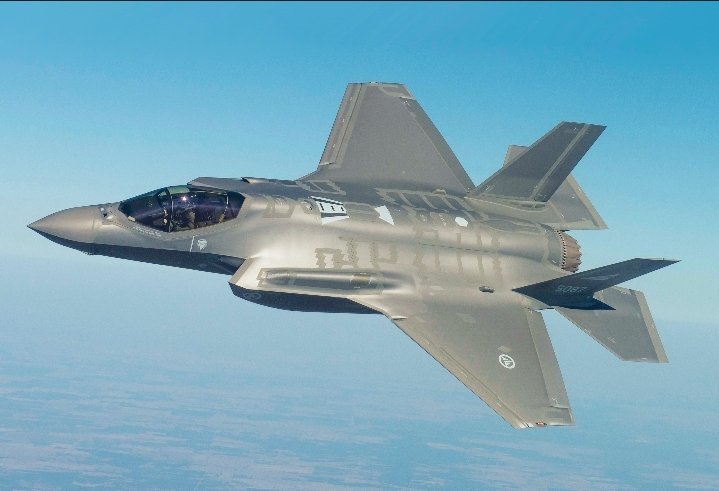
Image: from ConflictX X@ConflictXtweets
By Open Chronicle Staff
ABOARD THE USS ABRAHAM LINCOLN — In a dramatic escalation of the military standoff in the Middle East, a U.S. Navy F-35C Lightning II fighter jet shot down an Iranian drone on Tuesday after it “aggressively” approached the aircraft carrier USS Abraham Lincoln in the Arabian Sea.
The incident, occurring roughly 500 miles off the southern coast of Iran, marks the first direct combat engagement between the two nations since the U.S. began a massive naval buildup in response to Tehran’s violent crackdown on anti-government protests.
BREAKING:
🇺🇸🇮🇷 The U.S. Navy has shot down an Iranian drone that approached the USS Abraham Lincoln in the Arabian Sea – Reuters pic.twitter.com/bUBVLv1oyO
— Commentary: Trump Truth Social Posts On X (@TrumpTruthOnX) February 3, 2026
“Unclear Intent” and Defensive Fire
According to U.S. Central Command (CENTCOM), the Iranian drone, identified as a Shahed-139, ignored multiple de-escalatory warnings and “unnecessarily maneuvered” toward the aircraft carrier.
“The drone continued to fly toward the ship despite measures taken by U.S. forces operating in international waters,” said Navy Captain Tim Hawkins, a CENTCOM spokesperson. “The F-35C acted in self-defense to protect the carrier and the 5,000 personnel on board.”
While no American service members were harmed, the shootdown sent oil prices soaring by more than $1 per barrel. Iranian state media later claimed the drone was on a “surveillance mission in international waters” and asserted that it successfully transmitted images back to base before being “interrupted.”
Chaos in the Strait
The drone engagement was only part of a tense 24 hours in the region. Just hours earlier, in the narrow Strait of Hormuz, Islamic Revolutionary Guard Corps (IRGC) fast-attack boats and a Mohajer drone harassed the M/V Stena Imperative, a U.S.-flagged oil tanker.
The IRGC vessels reportedly threatened to board and seize the tanker, leading the guided-missile destroyer USS McFaul to intervene. Supported by U.S. Air Force F-16s, the McFaul escorted the tanker to safety, narrowly avoiding a repeat of past tanker seizures.
Diplomacy Under Duress
The violence at sea comes at a delicate moment for the Trump administration. Even as the “massive armada” looms off Iran’s coast, the White House confirmed that special envoy Steve Witkoff is still scheduled to hold nuclear negotiations with Iranian officials in Turkey later this week.
President Trump, speaking from the Oval Office, maintained a characteristic blend of threat and invitation. “We have talks going on with Iran. We’ll see how it all works out,” the President said. “If we could work something out, that’d be great. And if we can’t, probably bad things would happen.”
For Tehran, the stakes are existential. The regime is reeling from the collapse of the rial and the deadliest domestic unrest since the 1979 revolution. Analysts suggest the maritime provocations may be a desperate attempt to gain leverage before the Turkey talks, or a sign of internal friction within a regime struggling to maintain control of its own paramilitary forces.