
Image: from Kingsley Chukwuka X@profilopolitics
By Open Chronicle Staff with Agencies
Wednesday, February 11, 2026
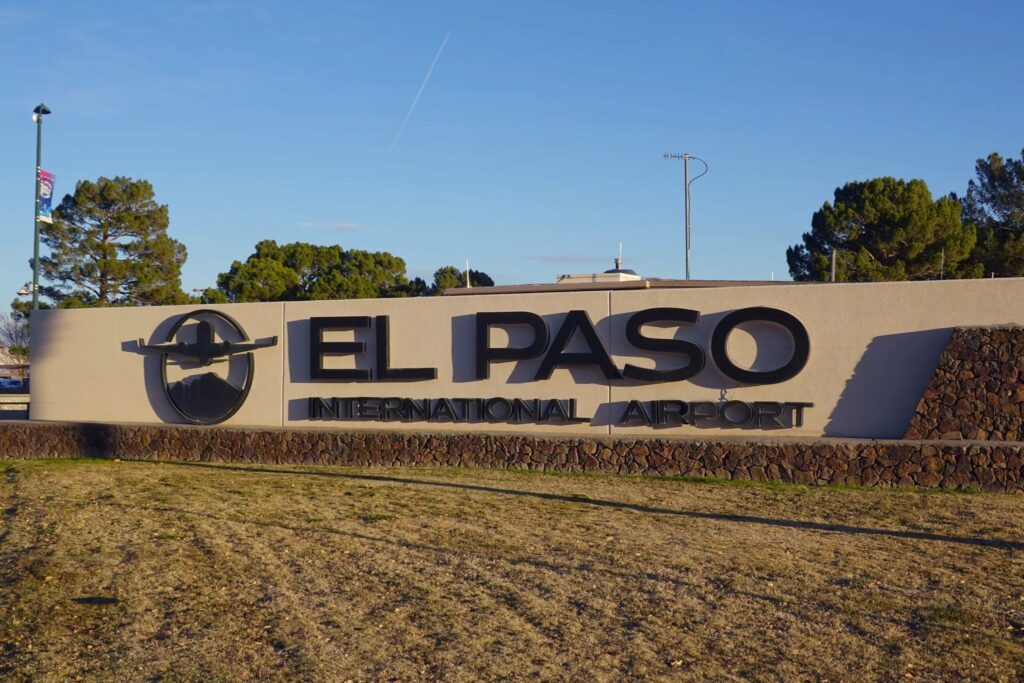
WASHINGTON, D.C. — The sudden grounding of thousands of flights in El Paso this week has exposed a burgeoning conflict between the Pentagon’s race to deploy futuristic weaponry and the safety of the American civilian aviation system. While federal officials initially blamed a “cartel drone incursion,” a deeper investigation reveals a more technical and terrifying culprit: a high-energy laser system that “doesn’t mix well” with crowded commercial corridors.
On Tuesday night, the FAA issued a 10-day “National Defense Airspace” order over El Paso, a move so rare it signaled an imminent kinetic threat. However, sources familiar with the operation now confirm the shutdown was triggered when the Department of Defense (DoD) prepared to activate a sophisticated directed-energy weapon at Fort Bliss without sufficient coordination with air traffic controllers.
Unverified footage shows aerial activity over El Paso as cartel drones 🅱️reached US airspace
FAA issued first shutdown since 9/11, Department of War disabled the drones
Laser countermeasures deployed from Fort Bliss near civilian flights
10-day ban lifted hours after it began pic.twitter.com/r2fklSbgWr
— Boi Agent One (@boiagentone) February 11, 2026
A New Kind of Collateral Damage
Unlike traditional anti-aircraft fire, which involves visible projectiles, the new generation of counter-drone lasers operates on invisible wavelengths that can travel for miles. These beams, designed to melt the internal circuitry of a cartel drone or ignite its battery, pose a unique threat to civilian pilots.
“If a commercial pilot flies through a high-energy laser beam, the result isn’t a Hollywood explosion; it’s instant, permanent blindness,” said an FAA official speaking on the condition of anonymity. “In a cockpit during a critical phase like landing, that is a catastrophic safety failure. The weapons being tested against the cartels are effectively invisible walls in the sky.”
The Pentagon has been under immense pressure from the White House to “neutralize” the surge of FPV (first-person view) drones used by Mexican cartels to ferry fentanyl and monitor Border Patrol movements. But the proximity of Fort Bliss to El Paso International Airport, one of the busiest hubs in the Southwest, creates a geographic nightmare for military planners.
Balloons and Blind Spots
Compounding the controversy is the revelation that the military’s “successful” neutralization of threats earlier this week may have been less than surgical. Reports indicate that at least one “threat” intercepted by the laser system was actually a stray mylar party balloon.
The incident highlights the “identification gap” in current counter-UAS (Unmanned Aircraft Systems) technology. While the lasers are capable of precision strikes, the sensors used to distinguish between a hostile cartel drone and a harmless hobbyist craft—or even a weather balloon—remain prone to error.
The Coordination Crisis
Industry experts warn that the El Paso incident is a harbinger of things to come as “Operation Southern Spear” intensifies. The U.S. military is increasingly looking to deploy “non-kinetic” interceptors—including high-powered microwaves and lasers, to secure the southern border. However, the lack of an integrated communication system between the DoD and the FAA means that “hot” zones can be declared at a moment’s notice, leaving airlines and passengers in the lurch.
“We are essentially testing experimental combat technology in the middle of a major metropolitan area,” said a senior aviation analyst. “The FAA did the only thing they could do when they realized the military was going ‘hot’ next to a runway: they pulled the plug on the city.”
As the ground stop is lifted and flights resume, the debate over how to protect the border without blinding the flying public is only beginning. For now, the “friendly skies” over El Paso remain a battlefield where the lines between security and safety are increasingly blurred.