
Image: from Insider Paper X@TheInsiderPaper
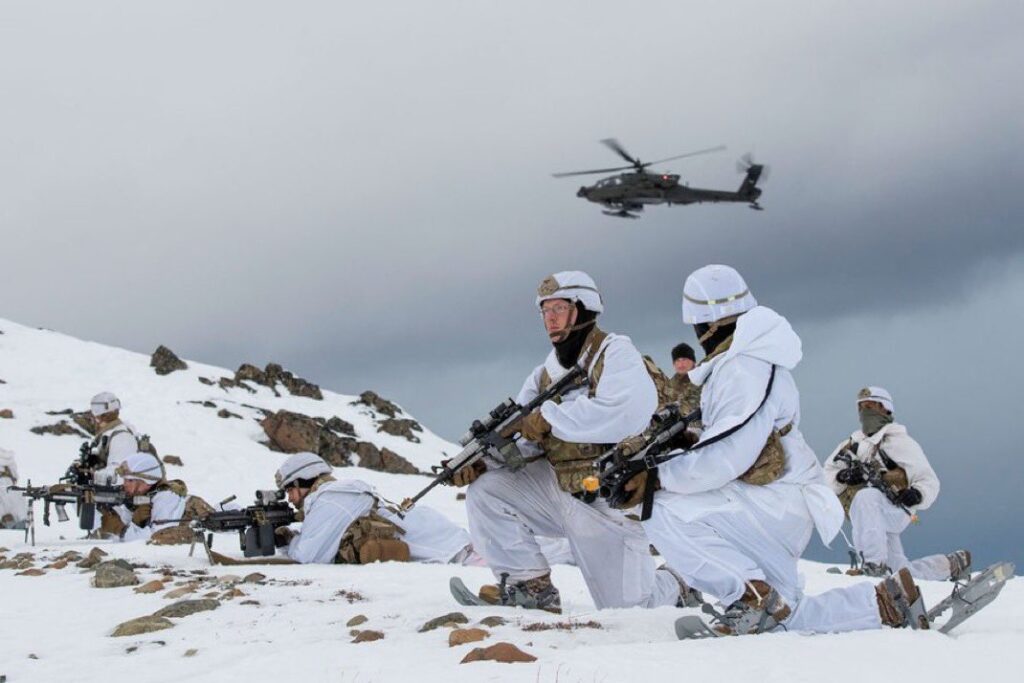
BRUSSELS — The North Atlantic Treaty Organization (NATO) officially launched a new military mission on Wednesday, dubbed Operation Arctic Sentry, in a strategic move to stabilize the alliance following a month of unprecedented diplomatic friction sparked by U.S. President Donald Trump’s renewed interest in acquiring Greenland.
The mission represents a compromise brokered between NATO Secretary General Mark Rutte and President Trump during the World Economic Forum in Davos last month. It aims to satisfy Washington’s demands for heightened security in the High North while firmly upholding the sovereignty of the Kingdom of Denmark over its autonomous territory.
A New Command for the High North
For the first time in the alliance’s history, all military activities in the Arctic will be unified under a single operational command. Led by Joint Force Command Norfolk, based in the United States, Arctic Sentry will coordinate national exercises that were previously decentralized, such as Denmark’s “Arctic Endurance” and Norway’s “Cold Response.”
“Arctic Sentry underscores the alliance’s commitment to safeguard its members in one of the world’s most strategically significant areas,” stated U.S. General Alexus Grynkewich, NATO’s Supreme Allied Commander Europe. “What is truly new is that we are bringing everything under one umbrella to close security gaps that Russia and China might look to exploit.”
NATO Launches Arctic Sentry: Security, Signaling, and Alliance Cohesion
NATO has unveiled Arctic Sentry, a new mission aimed at coordinating allied military activity across the Arctic and High North. Officially framed as a move to enhance stability, the initiative comes amid… pic.twitter.com/CjnT0JMciY
— Beyond the Horizon (@BehorizonOrg) February 12, 2026
Resolution of the “Greenland Brouhaha”
The mission follows a turbulent start to 2026, during which President Trump intensified pressure on Denmark, suggesting that the U.S. needed to “take control” of Greenland for national security reasons. The crisis reached a boiling point in mid-January when Trump threatened to impose 10% tariffs on Denmark and several European allies, including the UK, France, and Germany, unless a “deal” was reached.
Under the new “framework deal,” Trump has backed off from threats of forced annexation in exchange for a significantly expanded NATO and U.S. presence on the island. This includes the potential integration of Greenland into the “Golden Dome”, a proposed U.S. integrated air and missile defense system.
🆕 NATO launches Arctic Sentry to ensure security in the Arctic and High North
❝Arctic Sentry underscores the Alliance’s commitment to safeguard its members and maintain stability in one of the world’s most strategically significant areas❞ – Supreme Allied Commander Europe pic.twitter.com/rcoU747mXp
— NATO (@NATO) February 11, 2026
Allied Contributions and Russian Reaction
European allies have moved quickly to demonstrate their commitment to the region:
-
Denmark: Has pledged “substantial” contributions, including a new Arctic special forces team.
-
The United Kingdom: Announced it will double its troop presence in Norway to 2,000 personnel over the next three years.
-
Germany: Deployed four Eurofighter jets as an initial contribution to the mission’s air policing component.
The Kremlin has responded with caution and hostility. Russian Foreign Minister Sergey Lavrov warned that any “creation of military capabilities directed against Russia” in the Arctic would be met with “adequate technical-military measures,” signaling that the High North, once a zone of Arctic exceptionalism and cooperation, is now a primary theater of global competition.
The Resource Race
Beyond security, the dispute has highlighted the growing value of Greenland’s vast, untapped reserves of critical minerals. As global warming thins the Arctic ice, access to these resources—and the opening of new shipping lanes—has turned the territory into the world’s most valuable geopolitical real estate.