
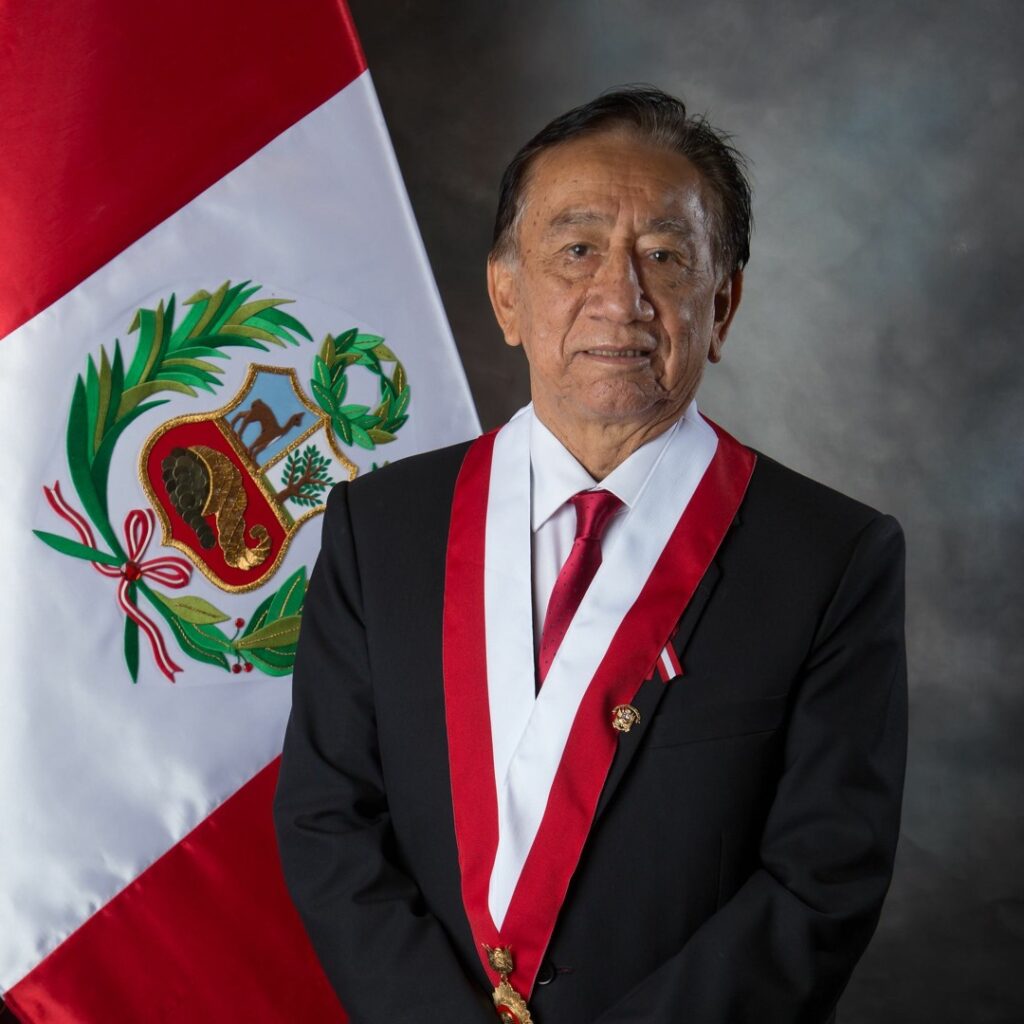
Image: from Jorge Madico X @Chicodelchullo
By Open Chronicle with Agencies
LIMA — In a move that has become a hallmark of Peruvian politics, Congress late Wednesday elected 83-year-old legislator and former judge José María Balcázar as the nation’s new interim president. The appointment comes less than 24 hours after his predecessor, José Jerí, was ousted in a swift impeachment vote, further plunging the Andean nation into a cycle of leadership crises just weeks before a general election.
Balcázar, a member of the leftist Perú Libre party with nearly three decades of judicial experience, secured the presidency after defeating three other candidates in the 130-member legislature. He is slated to serve a short but high-stakes five-month term, with the primary objective of overseeing the upcoming April 12 presidential and congressional elections.
“In these few months that remain, we will guarantee the people of Peru a peaceful and transparent democratic and electoral transition,” Balcázar stated in his inaugural address to Parliament. He also pledged to maintain macroeconomic stability and refocus government efforts on the nation’s spiraling crime rates, which remain a primary concern for the electorate.
The removal of José Jerí, 39, marked the end of a brief and controversial four-month tenure. Jerí, who took office in October 2025 following the removal of Dina Boluarte, became embroiled in a scandal dubbed “Chifagate” after security footage surfaced showing him in undisclosed meetings with Chinese businessmen. Prosecutors have since initiated preliminary investigations into allegations of influence peddling and illegal sponsorship of private interests.
Jerí’s exit underscores the persistent friction between the executive branch and a fragmented, powerful Congress. Utilizing the constitution’s “permanent moral incapacity” clause, a vague provision that has become a potent political weapon, lawmakers have successfully removed three heads of state since 2021: Pedro Castillo, Dina Boluarte, and now Jerí.
The political volatility comes at a sensitive time for Peru’s international relations. The U.S. State Department recently issued warnings regarding the country’s “sovereignty” in light of Chinese investments in critical infrastructure, specifically the Chancay mega-port. Meanwhile, domestic unrest remains high as citizens face a surge in violent crime and extortion.
As Balcázar takes the helm, he inherits a country where “uncertainty” has become the status quo. With only 53 days until the first round of voting, the interim leader must navigate a polarized political landscape to ensure a stable handoff to the winner on July 28. Whether this eighth president in ten years can break the cycle of instability remains to be seen.