
Image: from
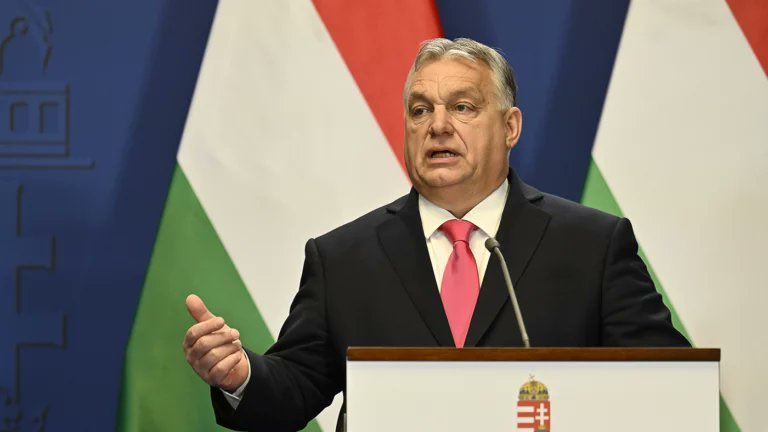
BRUSSELS — On the eve of the fourth anniversary of Russia’s full-scale invasion of Ukraine, the European Union has been plunged into a diplomatic deadlock. Hungary, led by Prime Minister Viktor Orbán, on Monday blocked a major new sanctions package against Moscow and obstructed a critical €90 billion ($106 billion) loan intended to sustain Kyiv’s war effort and economy through the next two years.
The stalemate emerged during a high-stakes meeting of EU foreign ministers in Brussels, where officials had hoped to project a front of unwavering unity. Instead, the 20th sanctions package—designed to target Russia’s “shadow fleet” and energy revenues—was shelved after Budapest refused to grant the necessary unanimous approval.
Hungary blocks the €90 billion aid package for Ukraine.
Hungary also blocks the 20th sanctions package against Russia.
Slovakia no longer supplies electricity to Ukraine.
The EU, this bureaucratic behemoth with feet of clay, is sinking into helpless rhetoric while Orbán and… pic.twitter.com/V5DCKhWDSV
— Jürgen Nauditt 🇩🇪🇺🇦 (@jurgen_nauditt) February 23, 2026
The Energy Leverage
Hungarian Foreign Minister Péter Szijjártó made it clear that Budapest’s cooperation is contingent on the resumption of Russian oil flows through the Druzhba pipeline. Shipments to Hungary and Slovakia were interrupted in late January following reported drone strikes on the infrastructure.
Prime Minister Orbán has accused Kyiv of a “deliberate blockade” and even alleged that the Ukrainian government is seeking to destabilize his administration. “No one has the right to put our energy security at risk,” Szijjártó told reporters, framing the veto as a necessary defense of national interests.
A “Shocking” Setback
The timing of the veto has sparked outrage across the bloc. EU foreign policy chief Kaja Kallas expressed deep regret over the failure to reach a deal before the February 24 anniversary. “This is a setback and a message we did not want to send today,” Kallas said, noting that reneging on the €90 billion loan, which Hungary had tentatively agreed to in December, could constitute a breach of EU treaties.
The €90 billion loan is vital for Kyiv, with two-thirds of the funds earmarked for military assistance. While European Commissioner Valdis Dombrovskis suggested that certain technical aspects of the loan could still move forward without unanimity, the political signaling remains a blow to the EU’s credibility.
European leaders, including French President Emmanuel Macron and Polish Foreign Minister Radoslaw Sikorski, condemned the move. Sikorski labeled Hungary’s stance “shocking,” suggesting that the Orbán government is stoking anti-Ukrainian sentiment for domestic gain ahead of Hungary’s parliamentary elections in April.
Looking Ahead
Despite the impasse, EU officials insist that the sanctions will eventually pass. French Foreign Minister Jean-Noël Barrot stated that adoption is a “certainty,” though the “when” remains the operative question.
As Commission President Ursula von der Leyen prepares to travel to Kyiv for the anniversary, she does so without the legislative “gift” of a finalized aid package, highlighting the growing fractures within a bloc struggling to maintain a cohesive strategy against Russian aggression.