
Image: from Fun 107 X @Fun107
By Open Chronicle with Agencies
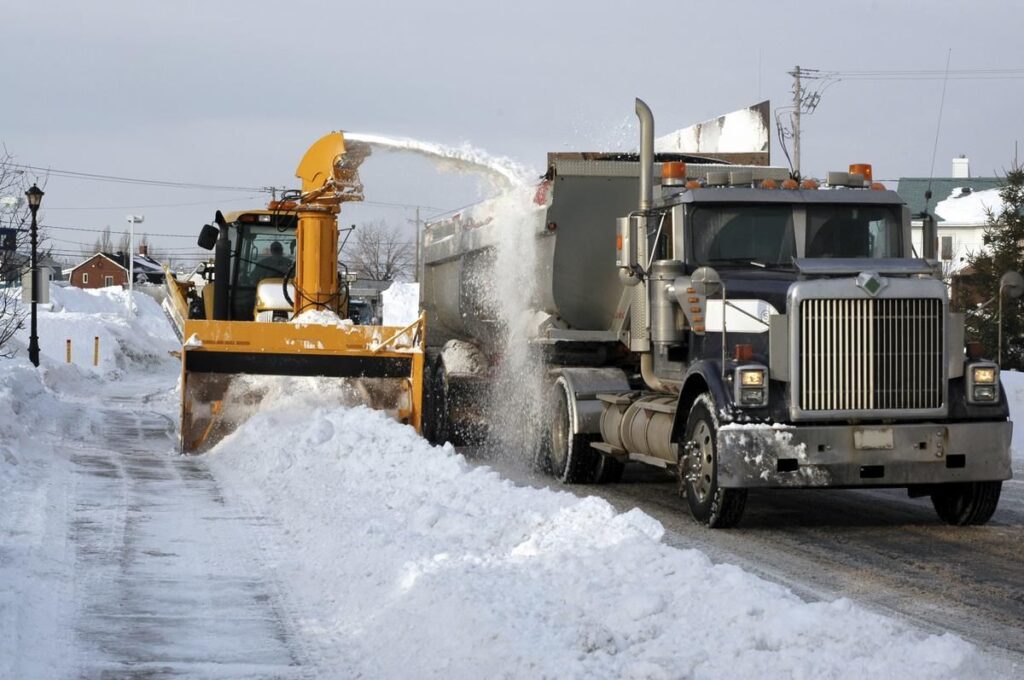
NEW YORK — A ferocious winter storm, characterized by meteorologists as a “bomb cyclone,” has brought the Northeast megalopolis to a grinding halt, burying major cities under up to two feet of snow and forcing an unprecedented suspension of daily life for over 40 million people.
From Washington, D.C., to Boston, the Monday commute was replaced by a landscape of whiteouts and ghost-town streets. The storm intensified with startling speed, with barometric pressure dropping 24 millibars in less than 12 hours, a phenomenon known as “bombogenesis.” The result has been a relentless onslaught of heavy, wet snow and hurricane-force wind gusts reaching up to 70 mph.
Air Travel Grounded, Trains Halted: The aviation sector faced a near-total collapse across the region. According to flight-tracking service FlightAware, more than 5,600 flights were canceled on Monday alone, following over 4,000 cancellations on Sunday. New York’s John F. Kennedy International and LaGuardia airports, along with Boston Logan, effectively ceased operations. Major carriers, including Delta, United, and American Airlines, have issued extensive travel waivers, with some suspending all regional flights through Tuesday.
On the rails, Amtrak suspended all service between New York’s Moynihan Train Hall and Boston South Station, while commuter lines like the Long Island Rail Road and NJ Transit faced widespread shutdowns.
Travel Bans and Emergency Measures: In New York City, Mayor Zohran Mamdani implemented a strict ban on non-emergency travel, including cars, scooters, and e-bikes, which remained in effect through Monday afternoon. “This is a storm of a magnitude we haven’t seen in a decade,” Mamdani warned, noting that parts of the city could see historic snowfall totals approaching 28 inches. Similar travel restrictions were enacted in Rhode Island and New Jersey as governors in eight states declared states of emergency.
The storm’s weight has taken a toll on the region’s infrastructure. More than 500,000 homes and businesses were reported without power as of midday Monday, with the most severe outages concentrated in Massachusetts and New Jersey. Utility companies warned that restoration could take several days due to “impossible” travel conditions for repair crews.
A Historic Winter: This blizzard marks the second major winter event to strike the East Coast in less than a month, following a January storm linked to more than 100 deaths. In New York’s Central Park, over 15 inches of snow had accumulated by Monday afternoon, marking the highest single-storm total in over five years.
As the system moves toward Maine, officials are urging residents to remain indoors, even as travel bans begin to lift. With temperatures expected to remain below freezing through the end of the week, the recovery from this “blizzard bomb” is expected to be a prolonged and grueling endeavor.