
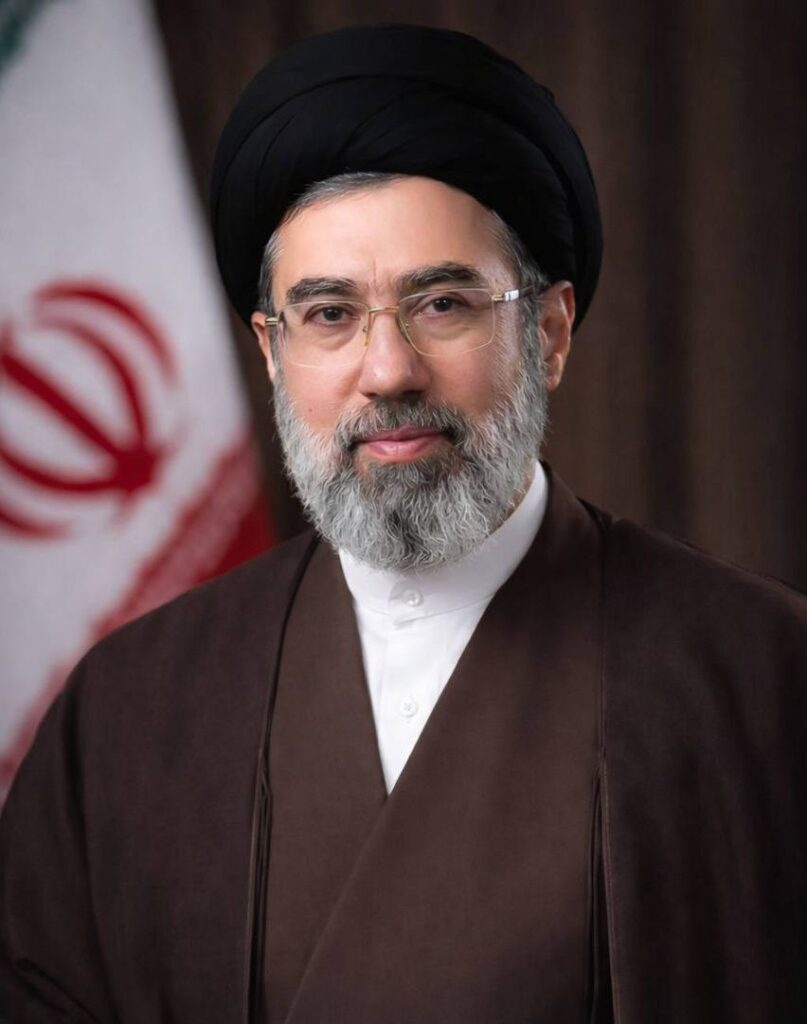
Image: from Mossad Commentary X @MOSSADil
By Elliot Hayes | The Grand Strategy Institute
The appointment of Mojtaba Khamenei as Iran’s new supreme leader marks one of the most consequential political transitions in the history of the Islamic Republic. It follows the death of his father, Ali Khamenei, in a joint US-Israeli airstrike, an event that has pushed Iran into its most dangerous moment since the Iranian Revolution of 1979.
At first glance, the succession appears designed to project stability. By replacing one Khamenei with another, the ruling establishment is attempting to signal continuity in the midst of war. The message is clear. Even after the assassination of its highest authority, the system remains intact.
Yet beneath that display of continuity lies a deeper transformation. Mojtaba Khamenei’s rise is likely to accelerate the consolidation of power among Iran’s hardline factions, particularly those connected to the country’s powerful military institutions.
The succession unfolded during an expanding regional conflict. The war launched by the United States and Israel against Iran has already triggered retaliatory strikes across the region, drawing in armed groups aligned with Tehran and raising the risk of a broader confrontation.
In this environment, leadership succession is not merely a matter of internal politics. It is a strategic decision made under the pressure of military escalation and regime survival.
Iran’s governing institutions chose continuity rather than experimentation. The 88-member Assembly of Experts, the clerical body responsible for selecting the supreme leader, moved quickly to appoint Mojtaba. Speed was essential. Any prolonged uncertainty could have triggered elite fragmentation or public unrest.
Instead, the regime opted for a familiar figure whose influence had been quietly growing for years behind the scenes.
Unlike his father, Mojtaba Khamenei never held a major public office. His influence developed informally through networks within the political and security establishment.
For years, he worked closely inside his father’s office, cultivating ties with the Islamic Revolutionary Guard Corps and the Basij paramilitary forces. Those relationships helped build his reputation as a powerful but discreet political operator.
Critics inside and outside Iran have long associated him with some of the most controversial episodes in the country’s recent history, particularly the suppression of protests following the disputed 2009 presidential election. Whether those accusations are fully accurate or not, they contributed to the perception of Mojtaba as a figure aligned with the regime’s most uncompromising elements.
Now that he has emerged from the shadows to assume the highest office in the state, those connections may define the character of the next phase of Iranian politics.
One of the most significant consequences of Mojtaba Khamenei’s rise could be the growing political weight of the Islamic Revolutionary Guard Corps.
The Guard has long been central to the Islamic Republic’s survival. It controls major segments of Iran’s economy, commands powerful military forces, and maintains influence over regional proxy networks.
Under Mojtaba’s leadership, that relationship may deepen further. Analysts believe he will depend heavily on the Guard to consolidate his authority, particularly because he lacks the religious stature that his father accumulated during decades of leadership.
This dynamic could reinforce a trend that has been developing for years: the gradual transformation of Iran into a more overtly security-driven state.
The political institutions that selected Mojtaba Khamenei are themselves dominated by conservative factions.
The Assembly of Experts that confirmed his appointment was elected in 2024 in a process that heavily favored hardline candidates. Similarly, the Iranian parliament has increasingly been filled with politicians who oppose political liberalization and favor confrontation with Western powers.
That institutional landscape was shaped deliberately during the final years of Ali Khamenei’s rule. Anticipating the possibility of succession or instability, the leadership gradually positioned loyalists across key institutions.
The result is a political system structurally inclined toward hardline policies both at home and abroad.
Mojtaba Khamenei assumes power at a moment when Iran faces multiple crises simultaneously.
Externally, the country is engaged in a growing regional conflict with the United States and Israel. Internally, it confronts economic instability, energy shortages, environmental stress, and declining public trust in political institutions.
Recent protests revealed deep frustration among many Iranians, particularly younger generations who feel increasingly disconnected from the ruling establishment.
These pressures raise an uncomfortable question for the new leadership. Can the Islamic Republic maintain cohesion through repression and security control alone, or will it eventually need broader legitimacy within society?
For now, the answer appears to favor consolidation rather than reform.
If the Islamic Republic survives the current war, Mojtaba Khamenei’s rule may usher in a more centralized and securitized political order.
Hardline factions are likely to expand their influence, political space for dissent may narrow further, and the role of military institutions in governance could deepen.
At the same time, the war itself may strengthen the regime’s narrative of resistance against foreign aggression. External pressure has historically allowed Iranian leaders to rally nationalist sentiment and reinforce internal unity.
Yet the longer the conflict lasts, the more unpredictable the consequences become.
The rise of Mojtaba Khamenei may have been intended to stabilize the system during wartime. Instead, it could mark the beginning of a new and uncertain chapter in Iran’s political evolution, one shaped by war, generational change, and the enduring struggle between authority and legitimacy.
The Grand Strategy Institute
Continue Exploring Strategic Analysis
Return to The Grand Strategy Institute for strategic assessments, long-form analysis and research examining geopolitics, military affairs, international security, emerging technologies and the changing international order.
← Back to The Grand Strategy Institute