
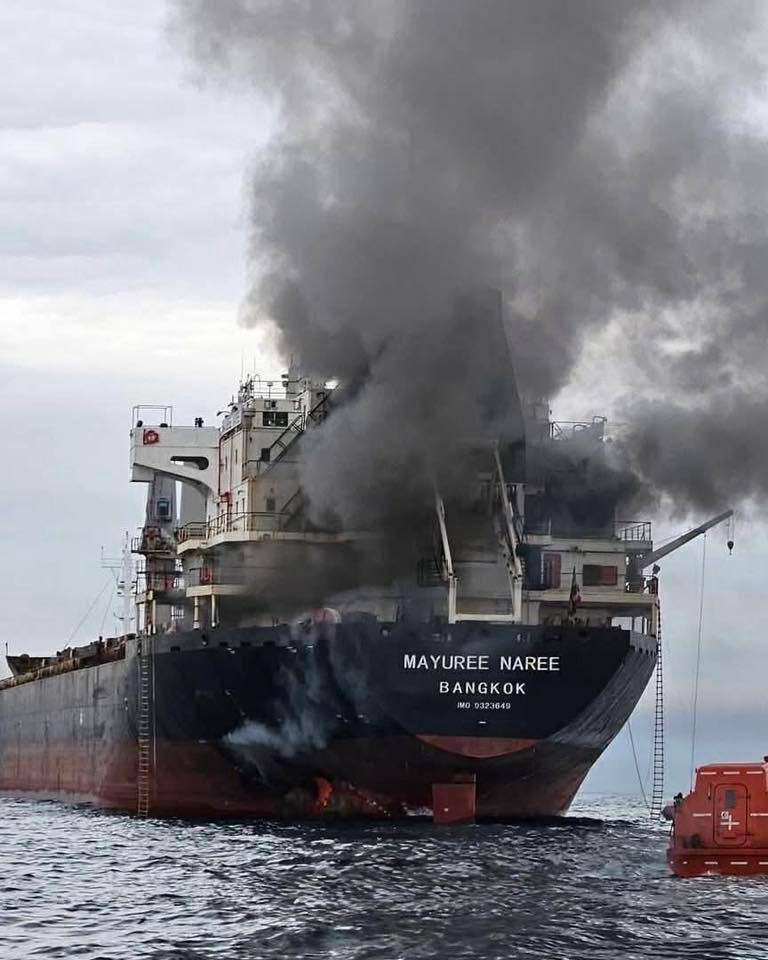
Image: from NEXTA X @nexta_tv
By Open Chronicle Staff with Agencies | March 11, 2026
DUBAI / TEL AVIV — The global economy is standing on a “razor’s edge” today as Iran’s military command issued a harrowing ultimatum to the West: prepare for $200-a-barrel oil and a scorched-earth campaign against international financial institutions.
As the U.S.-Israeli air campaign enters its twelfth day, Tehran has demonstrated a resilient and increasingly desperate ability to strike back. On Wednesday, three more merchant ships were hit by projectiles in the Gulf, bringing the total number of vessels struck since the start of hostilities to 14.
❗️ Iran’s Armed Forces will now strike blow after blow, not just retaliations
Prepare for oil prices to hit $200 per barrel, — spokesperson for the Iranian company Khatam al-Anbiya.
In the photo, an Iranian-attacked ship trying to pass through the Strait of Hormuz. pic.twitter.com/E9UrKkzgSb
— NEXTA (@nexta_tv) March 11, 2026
“STAY AWAY FROM BANKS”
In a chilling escalation of rhetoric, Ebrahim Zolfaqari, spokesperson for Iran’s military command, warned that regional security is now dead. “Get ready for oil to be $200 a barrel,” Zolfaqari stated, attributing the coming economic catastrophe to U.S.-led destabilization.
More alarmingly, after a bank in Tehran was struck by overnight raids, Zolfaqari announced that Iran would begin targeting banks worldwide that conduct business with the U.S. or Israel. He urged civilians across the Middle East to maintain a distance of at least 1,000 meters from such institutions, signaling a shift toward global financial terrorism as a tool of war.
THE WOUNDED SUCCESSOR
In Tehran, massive crowds gathered for the funerals of commanders killed in the opening salvos of the war. Amidst the sea of flags and portraits, new details have emerged regarding the reclusive new Supreme Leader, Mojtaba Khamenei.
An Iranian official confirmed to Reuters that Mojtaba was “lightly injured” in the initial February 28 strikes that claimed the lives of his father, mother, wife, and son. Despite the injury, his absence from the public eye, coupled with the “black rain” of oil smoke now falling on Tehran, has fueled a sense of grim endurance among the populace. “Life goes on,” one resident remarked, even as hundreds of thousands flee to the countryside.
A SEA OF FIRE
The maritime situation has reached its most critical point since the 1970s oil shocks. The latest victims of the Hormuz blockade include:
-
Thai-flagged Freighter: Crew evacuated following an explosion and fire.
-
Japanese Container Ship: Sustained significant hull damage.
-
Marshall Islands Bulk Carrier: Struck while transiting the outer Gulf.
In response, the International Energy Agency (IEA) is reportedly preparing to recommend a record-breaking release of 400 million barrels from global strategic reserves. However, experts warn this would only cover approximately three weeks of the flow typically lost through the shuttered Strait of Hormuz.
NO EXIT STRATEGY IN SIGHT
While markets have shown a fragile rebound on hopes that President Trump will find a “quick way out,” the reality on the ground suggests a protracted conflict. Israeli Defense Minister Israel Katz affirmed Wednesday that operations will continue “without any time limit” until Iran’s nuclear program and regional influence are dismantled.
However, behind closed doors, Israeli officials are reportedly beginning to accept that the clerical system may survive the onslaught. If the war ends with the regime intact, Tehran is poised to claim a “divine victory” despite a civilian death toll that has now surpassed 1,300, according to Iran’s UN ambassador.
With U.S. casualties rising to seven dead and 140 wounded, and Iranian strikes continuing to send Israelis to shelters, the “twenty times harder” retaliation promised by President Trump has yet to clear the world’s most vital energy artery.