
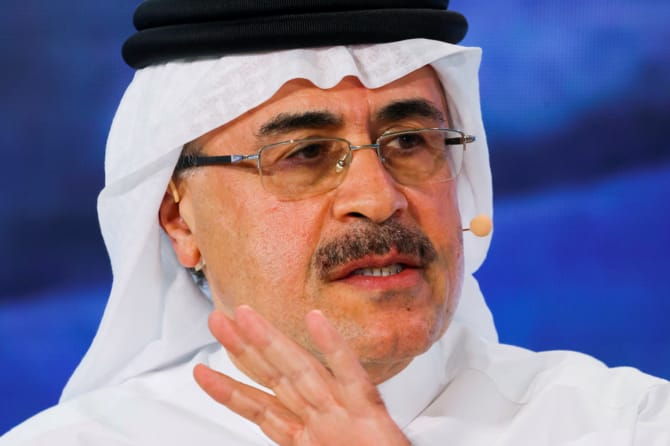
Image: from The Daily CPEC X @TheDailyCPEC
By Open Chronicle Staff March 11, 2026
RIYADH, SAUDI ARABIA — The CEO of Saudi Aramco, Amin Nasser, issued a chilling assessment of the global economy Tuesday, warning that the continued closure of the Strait of Hormuz represents the “largest challenge ever faced” by the regional energy sector. Speaking following the announcement of the company’s 2025 financial results, Nasser cautioned that a prolonged shutdown of the strategic waterway would have “catastrophic consequences” that extend far beyond the price at the pump.
The Strait, which handles approximately 20% of the world’s daily oil and liquefied natural gas (LNG) supply, was effectively closed on March 2 following threats from Iran’s Revolutionary Guard (IRGC). The move was a direct retaliation for “Operation Epic Fury,” a series of joint U.S.-Israeli strikes on Iranian military infrastructure launched in late February.
INVENTORIES AT CRITICAL LOWS
Nasser’s warning comes at a time of extreme market vulnerability. Global oil inventories are currently hovering at five-year lows, leaving virtually no “buffer” to absorb a sustained supply shock.
“While we have faced disruptions in the past, this one by far is the biggest crisis the region’s oil and gas industry has faced,” Nasser told reporters. He noted that if the closure persists, the rapid drawdown of existing reserves could trigger a global energy vacuum.
THE ECONOMIC DOMINO EFFECT
The crisis is already rippling through the global supply chain, with Nasser highlighting several industries facing imminent “domino effects”:
-
Agriculture: A staggering 25% to 33% of global fertilizer raw materials transit the Strait. Egyptian urea prices, a global benchmark, have already surged by more than 25%, threatening crop yields and food security.
-
Aviation & Automotive: Spiraling fuel costs and logistics delays are hampering just-in-time manufacturing and international travel.
-
Shipping: Insurance premiums for the region have been effectively canceled or have reached “unviable” levels, forcing over 700 tankers to anchor and wait on either side of the Strait.
A MARKET IN FLUX
Oil prices have mirrored the geopolitical chaos. Brent crude skyrocketed to nearly $120 per barrel on Monday before retreating to approximately $92 on Tuesday. The volatility followed comments from U.S. President Donald Trump, who suggested the conflict could end “very soon.” However, military analysts remain skeptical given the IRGC’s vow that “not one liter of oil” will leave the region while strikes continue.
In a bid to mitigate the impact, Aramco is utilizing its 7-million-barrel-per-day East-West pipeline to move crude to the Red Sea port of Yanbu, bypassing the Strait. However, experts warn that even these massive bypass routes cannot fully replace the volume traditionally carried through the Hormuz chokepoint.