
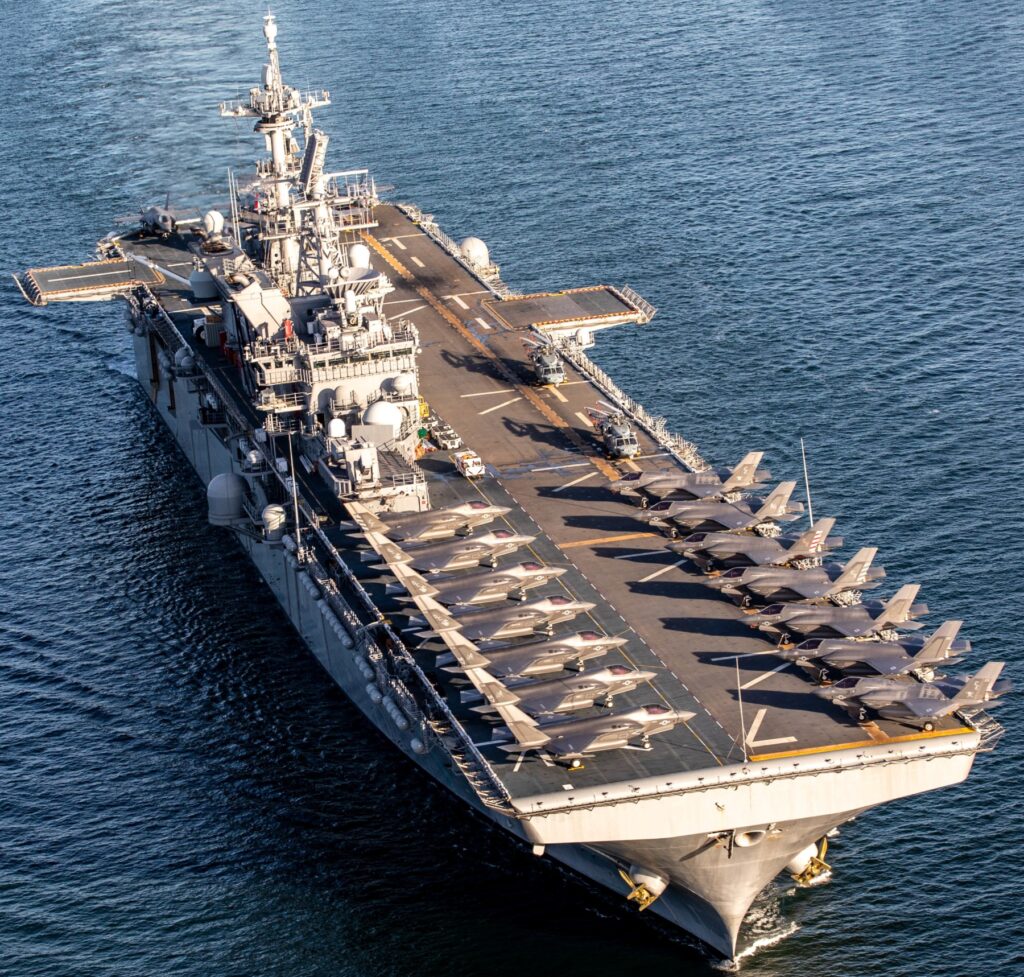
Image: from Egypt’s Intel Observer X @EGYOSINT
By Open Chronicle with Agencies
WASHINGTON — In a move signaling a significant escalation of American military posture in the region, the Pentagon is preparing to deploy additional warships and thousands of Marines to the Middle East. The decision comes as maritime security in the critical Strait of Hormuz faces increasing disruption due to a series of attacks attributed to Iranian forces.
According to reports citing U.S. officials, Defense Secretary Pete Hegseth has greenlit a request from U.S. Central Command (CENTCOM) to dispatch an amphibious ready group and an accompanying Marine Expeditionary Unit (MEU). This reinforcement typically comprises several specialized naval vessels and a force of approximately 5,000 Marines.
Central to this deployment is the USS Tripoli. Currently based in Japan, the big-deck amphibious assault ship and its embarked Marine unit have been ordered to pivot toward the Middle East. These forces will join U.S. personnel already operating in the theater as the conflict involving Iran continues to intensify.
The Strait of Hormuz, a vital artery for global energy supplies, has become the primary flashpoint. Recent data indicate a sharp decline in maritime traffic, with only 77 ships transiting the waterway so far this month, a fraction of the usual volume.
🇺🇸🇮🇷 BREAKING | The Pentagon is moving a Marine expeditionary unit to the Middle East as Iran steps up attacks on the Strait of Hormuz, according to two US officials.
U.S. Defence Secretary Pete Hegseth has approved a request from Central Command for the unit, typically… pic.twitter.com/iHdhRBIyBd
— Visioner (@visionergeo) March 13, 2026
Despite the mounting friction, Secretary Hegseth expressed confidence in the U.S. military’s ability to maintain regional stability. Addressing concerns over a prolonged blockade of the strait, Hegseth described Iran’s actions as born of “sheer desperation.”
“We have a plan for every option here,” Hegseth stated. “That’s not a strait we’re going to allow to remain contested or to see a disruption in the flow of commercial goods.”
While the Pentagon declined to offer specific comments on future troop movements when queried, the deployment of the USS Tripoli underscores a “pivot to power” as Washington seeks to secure international shipping lanes. The move also follows reports of staggering military costs and munitions depletion, as the U.S. maintains its support for operations in an increasingly volatile environment.
As the USS Tripoli steams toward the region, the international community remains on edge, watching whether the arrival of more American “boots on the ground” and hulls in the water will act as a deterrent or further fuel the flames of a widening conflict.