
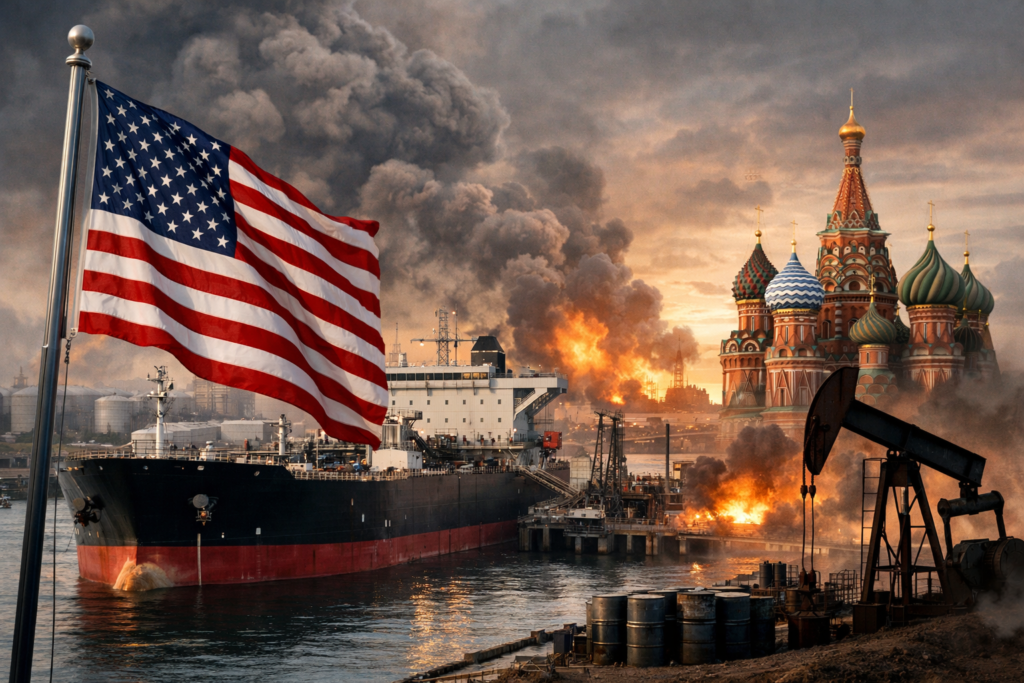
Image Credentials: Image Title: US Eases Sanctions to Unlock Stranded Russian Oil Amid Middle East Crisis Source: (sora.openai) Date: March 2026. Attribution: This image was created using AI-generated imagery
By Open Chronicle with Agencies
HOUSTON — In a pragmatic shift of energy policy necessitated by a deepening global crisis, the United States has announced a temporary exemption to sanctions to allow the purchase of Russian-origin oil currently “stranded at sea.” The move is designed to stabilize soaring global energy markets as the conflict with Iran continues to choke critical supply routes.
U.S. Treasury Secretary Scott Bessent confirmed the decision on Thursday, describing it as a “narrowly tailored, short-term measure.” The authorization specifically targets roughly 124 million barrels of crude oil currently idling across 30 global locations, unable to reach their intended destinations due to the closure of the Strait of Hormuz.
“The temporary increase in oil prices is a short-term disruption that will result in a massive benefit to our nation and economy in the long-term,” Bessent said in a statement.
Energy prices have faced extreme volatility since the outbreak of hostilities in the Middle East. Before the conflict, crude oil traded between $60 and $70 per barrel; this week, prices surged to between $100 and $120. By releasing the stranded Russian supply, estimated to be enough to cover five to six days of global demand, the administration hopes to provide immediate relief to consumers and industries.
Addressing potential criticism regarding the bypass of Russian sanctions, Bessent emphasized that the move would not provide a “significant financial benefit” to Moscow. He argued that the bulk of Russia’s energy revenue is generated through extraction taxes already paid, rather than the sale of oil already in transit.
The exemption marks a notable detour from the strict ban on Russian energy imports enacted in 2022 following the invasion of Ukraine. However, the window for these purchases is tight; the Treasury Department’s authorization is set to expire on April 11.
While the G7 and European Union maintain a price cap of $44.10 on Russian crude and a long-term plan to phase out imports by 2027, the current reality in the Middle East has forced Washington’s hand. With the Strait of Hormuz contested and global reserves under pressure, the “stranded” oil has become a vital strategic asset for a Western economy desperate to avoid a prolonged energy shock.