
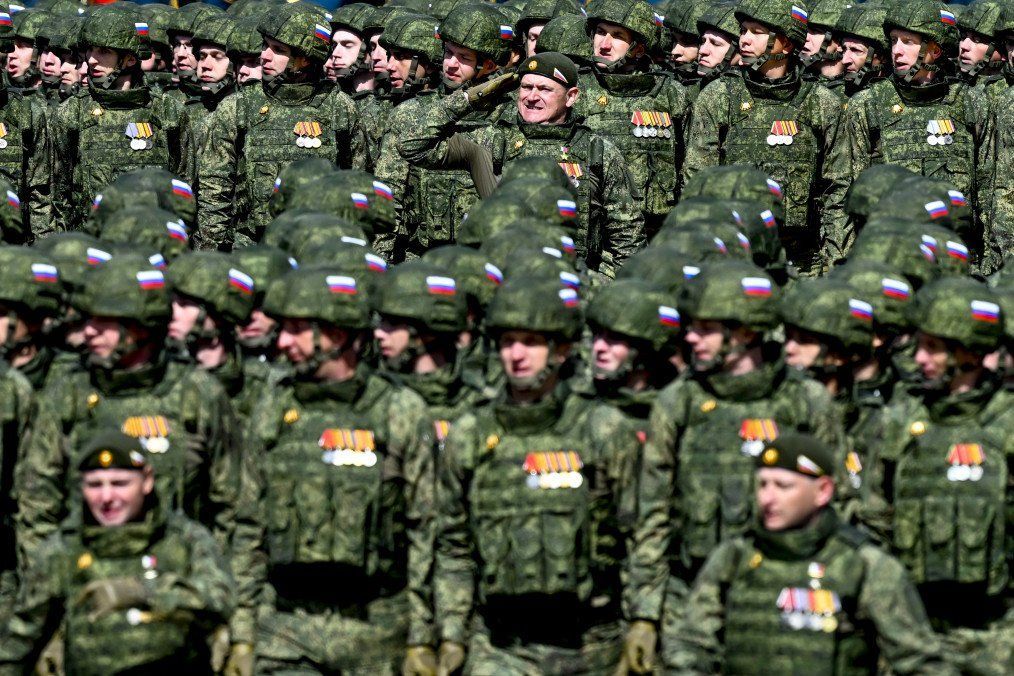
Image: from UNITED24 Media X @United24media
By OPEN CHRONICLE STAFF with Agencies
Law enforcement agencies in Portugal and eight other European Union member states have issued a stark warning regarding a growing security threat, the potential arrival of former Russian soldiers with extensive criminal backgrounds into the Schengen Area.
The collective alarm, raised in a joint intelligence briefing, highlights a burgeoning crisis involving Russian nationals who were recruited from prisons to fight in the ongoing conflict in Ukraine and are now seeking entry into Europe.
🇪🇺 Europe still hasn't banned 🇷🇺 russian soldiers from entering the Schengen Area, this self proclaimed "HERO of russia" is exactly what the EU is allowing to enter, he raped and murdered 🇺🇦 Ukrainians, if there is no 🇷🇺 Visa BAN then YOU, not us will have to face these monsters. pic.twitter.com/MtckBBd4MA
— Richard Woodruff 🇺🇦 (@frontlinekit) March 22, 2026
The “Convicted Combatant” Pipeline. According to the report, thousands of individuals who were granted pardons in exchange for military service in paramilitary groups, such as the Wagner Group and its successors, are now being discharged. Many of these individuals possess “high-risk” criminal profiles, including convictions for violent crimes, organized robbery, and sexual assault.
“We are seeing a new category of migrant,” said a senior official from the Portuguese Judiciary Police (Polícia Judiciária). “These are not just undocumented individuals; these are battle-hardened men with significant criminal expertise and potential psychological trauma, looking to exploit the freedom of movement within the EU.”
A Multi-State Security Coordination Portugal is joined by several frontline and interior EU states—including Poland, the Baltic nations, and Germany—in calling for a more robust vetting process. The “Group of Nine” argues that the current ETIAS (European Travel Information and Authorization System) and the Schengen Information System (SIS) may not be sufficient to track individuals whose criminal records in Russia may have been “wiped” or altered by the Kremlin following their military service.
The intelligence suggests that these individuals are attempting to enter the EU through various routes, often utilizing falsified documentation from third countries or seeking asylum under the guise of being political dissidents or deserters.
The Portuguese Context. For Portugal, the concern is twofold. The country has a significant and well-integrated Eastern European diaspora, which authorities fear could be infiltrated or extorted by these new arrivals. Additionally, the Portuguese “Golden Visa” aftermath and other residency programs have historically made the country an attractive destination for those seeking a foothold in Western Europe.
Internal security forces in Lisbon have reportedly increased surveillance on known human trafficking routes and are coordinating more closely with Europol to identify “Red Notice” individuals who might be masking their combat history.
Calls for Policy Reform. The 8 EU states and their respective police forces are now lobbying the European Commission for an emergency protocol. Proposed measures include:
-
Enhanced Biometric Screening: Mandatory fingerprinting and facial recognition at all external borders, specifically targeting men of military age coming from or through high-risk zones.
-
Database Integration: Direct sharing of “battlefield intelligence” between military agencies and civilian police forces.
-
Stricter Asylum Vetting: A specialized “security fast-track” to verify the military history of Russian nationals seeking protection.
A Looming Shadow: Vatican-style diplomacy and traditional border checks are proving difficult against this unconventional threat. Experts warn that if a coordinated response is not implemented, the EU could face a surge in organized crime activities, ranging from arms trafficking to violent racketeering, led by men who have “nothing left to lose.”
“The war in the East is beginning to cast a very long and dark shadow over the streets of Western Europe,” the briefing concluded.