
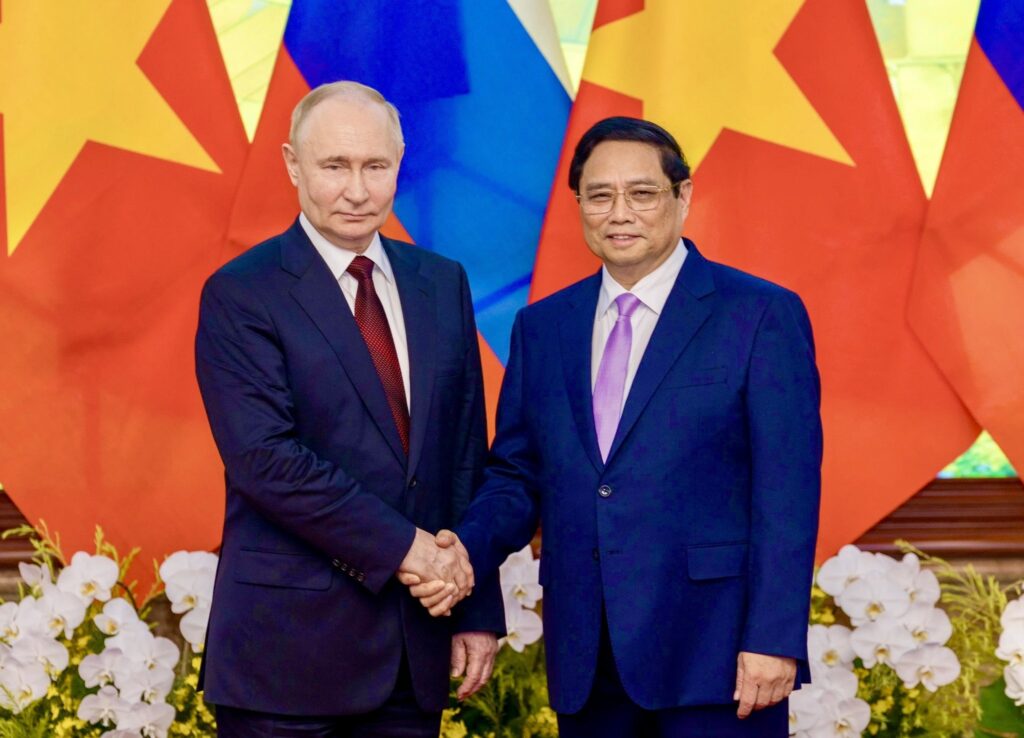
Image: from News Day Mundo X @NewsDayMundo
By OPEN CHRONICLE STAFF with Agencies
HANOI — Vietnam has officially revived its dormant nuclear ambitions, signing a landmark intergovernmental pact with Russia to construct the Ninh Thuan 1 Nuclear Power Plant. The deal, inked during Prime Minister Pham Minh Chinh’s four-day diplomatic mission to Moscow, signals a major shift in Southeast Asia’s energy landscape and places fresh pressure on regional neighbors like Indonesia to finalize their own atomic roadmaps.
The agreement centers on the deployment of two Russian-designed VVER-1200 reactors, boasting a combined capacity of 2,400 megawatts. Rosatom, Russia’s state-owned nuclear energy giant, stated that these units represent the “pinnacle of safety” and comply with the most stringent international requirements.
A Resurrected Dream: The pact breathes new life into a vision that was abruptly mothballed in 2016 due to budgetary constraints and safety concerns following the Fukushima disaster. Now, to have nuclear energy account for 6% to 8% of the national power mix by 2050, Hanoi is looking to Moscow to secure its energy independence.
“This is the foundation for a long-term industrial partnership,” said Rosatom Director General Alexey Likhachev. “It opens up new opportunities for economic growth and shapes our cooperation for decades to come.”
🚨 JUST IN: Russia signs deal with Vietnam to build its first nuclear power plant.#नवरात्रि_पर_जानें_रहस्य#altın#sincerão#DhurandharTheRevengepic.twitter.com/3XeTTXO6TN
— Global Affairs 24 (@GlobalAffair24) March 24, 2026
While the legal framework is now in place, Rosatom has yet to provide a specific construction timeline, leaving analysts to speculate on when the first turbines will actually spin.
The Jakarta Dilemma. As Vietnam moves forward, all eyes have turned to Jakarta. Indonesia, Southeast Asia’s largest economy, has set a target to begin nuclear power generation by 2032. However, unlike Vietnam’s massive 2,400-megawatt commitment, Indonesia is starting smaller, aiming for an initial 250-megawatt capacity.
President Prabowo Subianto has signaled a pragmatic openness to the technology, recently describing nuclear power as the “most affordable and cleanest” option available. However, the President has remained cautious, insisting that safety must be the absolute priority.
“It hinges on what the experts think,” Prabowo told senior journalists in a recent interview. “If we can use it, then why not? But we must ensure it is safe.”
A Global Tug-of-War. While Russia has made “countless pitches” to Jakarta, including personal appeals from President Vladimir Putin, Indonesia appears to be leaning toward Western and Japanese partners for its initial forays.
PLN Indonesia Power is currently collaborating with Oregon-based NuScale and Japanese engineering firm JGC to study the feasibility of Small Modular Reactors (SMRs) in West Kalimantan. Furthermore, a recently signed, though non-binding, agreement with Japan has opened doors for Japanese financing via export credit agencies.
The Regulatory Hurdle. The primary bottleneck for Indonesia remains the establishment of a National Nuclear Energy Program Implementation Organization (NEPIO). Actual construction cannot begin until this watchdog is formed, a move that is currently pending a regulatory framework awaiting President Prabowo’s signature.
As the “Leo Era” of global energy transition intensifies, the race for nuclear supremacy in ASEAN is heating up. With the Philippines also aiming for a 2032 operational date, the region is rapidly moving away from its historical hesitation toward the atom, seeking a balance between rapid industrial growth and ambitious carbon-emission targets.