
Image: from TrendingPolitics.ca X @TrendPolCa
By Open Chronicle Staff with Agencies
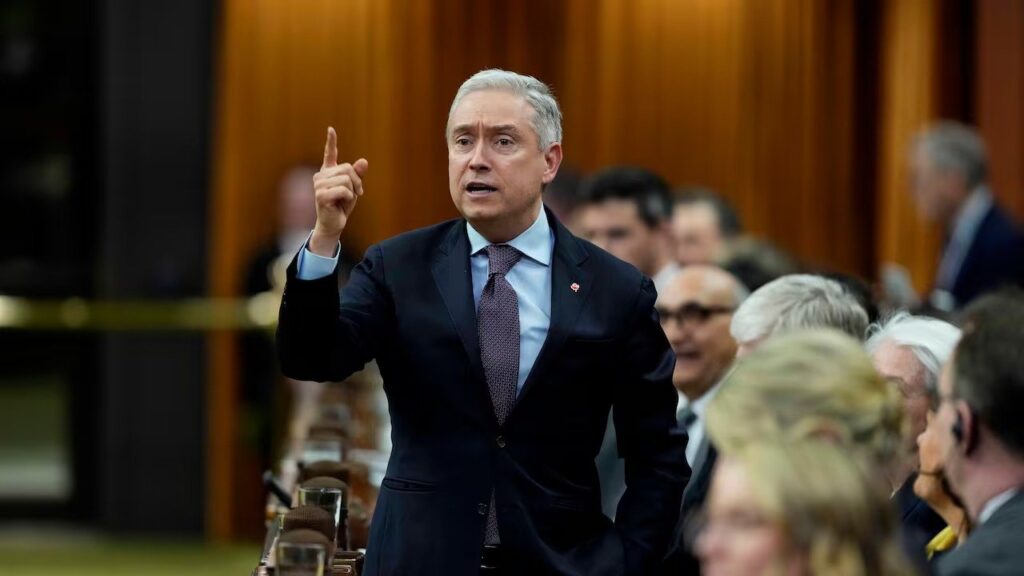
BEIJING – In a significant pivot for Canadian foreign policy, Finance Minister François-Philippe Champagne arrived in China on Wednesday for a four-day diplomatic mission aimed at thawing long-frozen economic ties. The visit, confirmed by both the Canadian government and China’s Ministry of Finance, signals the most concerted effort to normalize relations between the two nations in nearly eight years.
The trip follows a groundbreaking visit by Prime Minister Mark Carney earlier this year, marking a formal end to the diplomatic “deep freeze” that began in 2018.
Champagne is visiting China. In Beijing CBC interviews only cheerleaders
At the end… "And more recently, Prime Minister Mark Carney has had to defend Canada's efforts in keeping any products made with forced labour out of the Canadian supply chain."
What efforts?
CBC has… pic.twitter.com/2eoXOrroqA
— cbcwatcher (@cbcwatcher) April 1, 2026
Resurrecting the Strategic Dialogue
Minister Champagne is in Beijing to serve as the Canadian Co-chair of the Canada-China Economic and Financial Strategic Dialogue. The mechanism, originally launched in 2017, was designed to streamline cooperation in key sectors but was shelved in late 2018 following the arrest of Huawei executive Meng Wanzhou in Vancouver and the subsequent “two Michaels” crisis.
“I am travelling to the People’s Republic of China to re-engage with counterparts, strengthen our economic relationship, and advance priorities on trade and investment,” Champagne stated in a social media post on Wednesday. He noted that the mission seeks to build upon an existing $118.9 billion (CAD) in two-way trade.
Diversification and Resilience
The Canadian government characterized the visit as part of a broader “vision to build a more independent and resilient Canadian economy.” By diversifying trade partnerships, Ottawa hopes to insulate itself from global volatility. This priority has become increasingly urgent as President Trump considers a U.S. withdrawal from NATO and regional conflicts continue to disrupt energy corridors in the Middle East.
Key areas of focus for the four-day visit include:
-
Agriculture and Energy: Expanding market access for Canadian farmers and exploring low-carbon energy partnerships.
-
Financial Services: Re-establishing the agreements reached during the first round of talks in 2018.
-
Aerospace and Tourism: Reinvigorating sectors that were heavily impacted by the years of diplomatic friction.
A Delicate Balancing Act
While the economic incentives are clear, the re-engagement remains politically sensitive. The Canadian delegation must navigate a complex geopolitical landscape, particularly as Japanese-Chinese tensions escalate in the Sea of Japan and the U.S. continues its “maximum pressure” campaign against Iran.
Beijing’s welcoming stance suggests a mutual desire to de-escalate. A statement from the Chinese Finance Ministry emphasized the importance of the “strategic dialogue” in fostering a predictable investment environment. However, analysts suggest that for Ottawa, the challenge will be balancing this renewed trade push with the security concerns of its traditional “Five Eyes” intelligence allies.
Minister Champagne’s visit is scheduled to conclude on Saturday.