
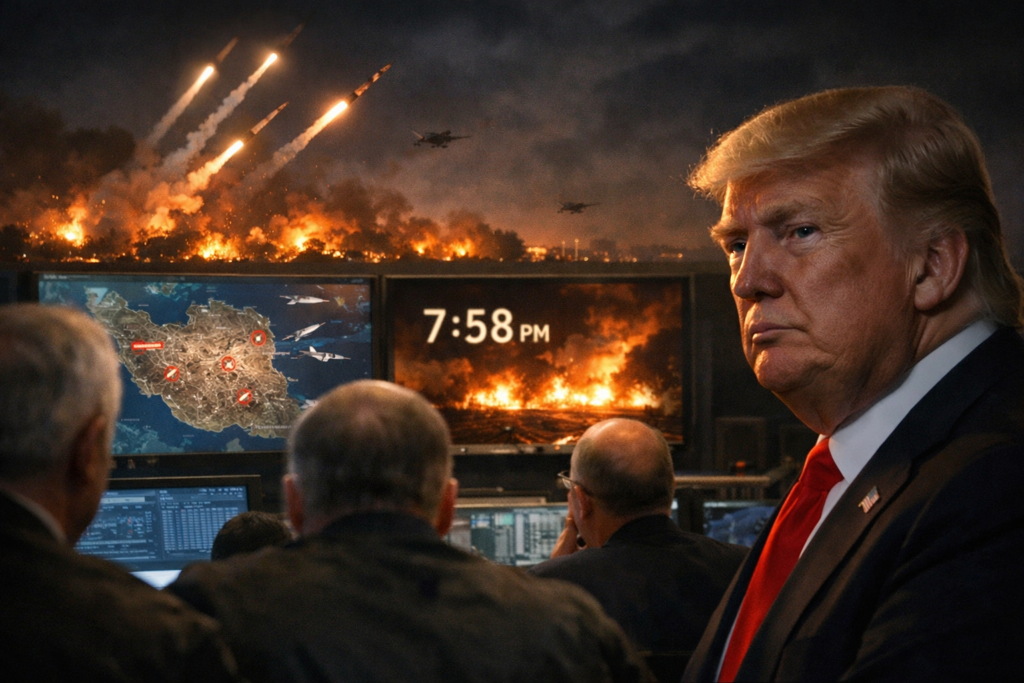
Image Credentials: Image Title: STRATEGIC BLUNDER? TRUMP’S INFRASTRUCTURE ULTIMATUM MAY BOLSTER TEHRAN’S RESOLVE Source: (sora.openai) Date: March 2026. Attribution: This image was created using AI-generated imagery
By Open Chronicle Staff with Agencies
WASHINGTON — As the 8:00 PM EDT deadline looms for what President Donald Trump has described as the “one-night” destruction of Iran, military and political analysts are warning that the administration’s high-stakes gamble may be destined to backfire.
The ultimatum, which demands unrestricted access to the Strait of Hormuz in exchange for sparing Iran’s power plants, water treatment facilities, and bridges, is being characterized by critics not as a masterstroke of “Maximum Pressure” but as a catalyst for Iranian national unity and international isolation for the United States.
The “Rally ‘Round the Flag” Effect
In a stinging analysis published Tuesday by MS NOW, columnist Zeeshan Aleem argued that the threat to target civilian survival systems is historically counterproductive. Rather than forcing a domestic uprising against the Iranian government, such “strategic bombing” typically drives a population into the arms of its leaders.
“Historically, the use of air power in this fashion causes the civilian population to side with a government, even one it dislikes, against a dangerous foreign intruder,” Aleem wrote. “Iran’s government would be a political beneficiary of such a dynamic.”
Furthermore, Aleem noted that the Trump administration’s pattern of “bluffing, extending, and disappearing deadlines” has created a total breakdown in trust. Tehran, he argues, no longer believes the U.S. will honor a ceasefire even if the Strait is opened, making a surrender unlikely.
New Strikes on Kharg Island
While the world awaits the expiration of the 8:00 PM deadline, the conflict remains active. Reports surfaced Tuesday morning of a fresh U.S. attack on Kharg Island, Iran’s primary oil export hub.
According to Axios reporter Barak Ravid, the strike was reportedly limited to “military targets.” This has raised pointed questions in Washington, as the Pentagon had previously claimed to have “totally obliterated” every military asset on the island during a massive bombardment in mid-March. The necessity of a follow-up strike suggests either a failure of initial intelligence or a rapid Iranian effort to reconstitute its coastal defenses.
Legal and Diplomatic Fallout
The threat to target infrastructure essential to civilian life has placed the U.S. in a defensive crouch at the United Nations. Legal experts warn that the systematic destruction of power grids and water supplies, actions Trump promised by Wednesday morning, would likely constitute war crimes under the Geneva Conventions.
-
Global Isolation: Traditional allies in Europe have distanced themselves from the “infrastructure ultimatum,” fearing a permanent refugee crisis and total regional collapse.
-
Energy Volatility: The threat alone has pushed oil prices past $115 per barrel, with traders fearing that a “decimated” Iran would result in a multi-year closure of the Gulf shipping lanes.
As the clock ticks down, the White House remains silent on whether a diplomatic “off-ramp” still exists. For now, the administration appears committed to a path that analysts warn will leave the U.S. more isolated and Tehran more defiant than ever before.