
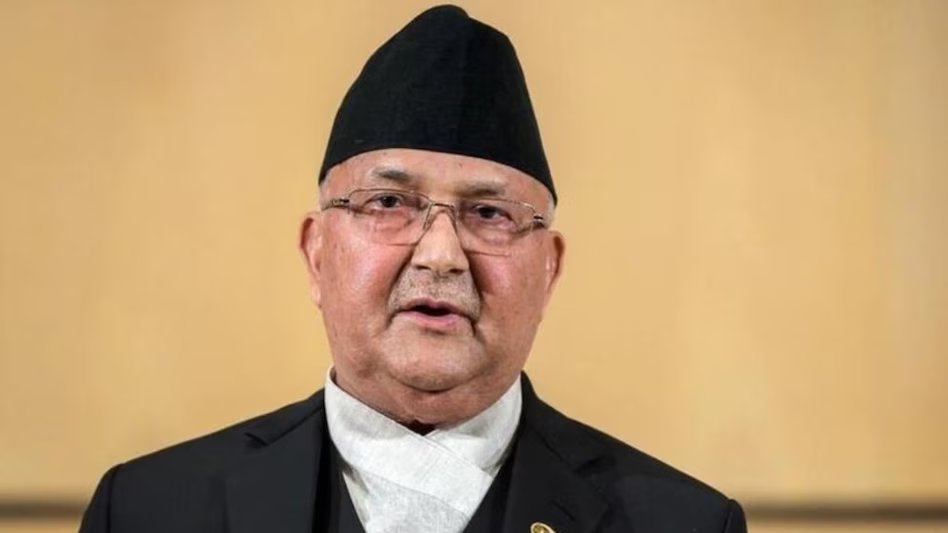
Image: from AajTak X @aajtak
By Open Chronicle Staff with Agencies
Thursday, April 9, 2026
KATHMANDU — Nepal’s former prime minister K.P. Sharma Oli and former interior minister Ramesh Lekhak were released from police custody on Thursday, following nearly two weeks of detention related to their alleged roles in the deadly suppression of protesters during the September 2025 uprising.
The duo was arrested on March 28, just 24 hours after the inauguration of Prime Minister Balendra Shah. Shah assumed office following Nepal’s first general elections since the mass civil unrest that toppled Oli’s administration late last year.
पक्राउ परेको १३औँ दिनमा रिहा भए ओली र लेखक | Shilapatra | pic.twitter.com/FJXbFiT3Hw
— Shilapatra (@Shilapatra) April 9, 2026
Release Under Condition
Kathmandu police spokesman Pawan Kumar Bhattarai confirmed that while neither man has been formally charged, they remain under investigation.
“Both former prime minister K.P. Sharma Oli and the former home minister have been released today on the condition that they will present themselves to the police when required,” Bhattarai told AFP. He added that both men had been handed over to their respective relatives.
The release follows a period of medical uncertainty for the 74-year-old Oli, who was hospitalized shortly after his arrest for heart and kidney complications.
Allegations of “Criminal Negligence”
The initial arrests were triggered by a high-level inquiry commission’s report into the 2025 crackdown. The commission recommended prosecution for Oli and several of his top officials, accusing them of failing to prevent security forces from opening fire on demonstrators.
The report explicitly dismissed claims from the former leaders that they were unaware of the scale of the violence, labeling their statements a “bid to shift responsibility” that amounted to criminal negligence.
Political Fallout and the September Uprising
The political climate in Kathmandu remains volatile. Oli’s party, the CPN-UML, has denounced the detention as a “vengeful act” by the new administration and has repeatedly called for public protests to demand justice for their leader.
The September 2025 uprising, which led to the current political shift, was a watershed moment for the Himalayan nation. What began as a youth-led protest over a social media ban quickly transformed into a nationwide movement fueled by:
-
Widespread Corruption: Deep-seated frustration with the political establishment.
-
Economic Hardship: Rising costs of living and unemployment.
-
Government Overreach: The eventual storming and burning of the Parliament building by protesters.
While the Supreme Court dismissed habeas corpus petitions filed by the wives of the two men on April 6, the court signaled that the investigation must be completed without further extending their detention, leading to today’s release.