
Image: Swedish Armed Forces
By Open Chronicle Staff with Agencies
STOCKHOLM — The Swedish military and maritime authorities have reported a series of high-stakes encounters in the Baltic region this week, involving the interception of a Russian submarine and the detention of two commercial vessels suspected of environmental and regulatory breaches.
Aerial Escort in the Kattegat
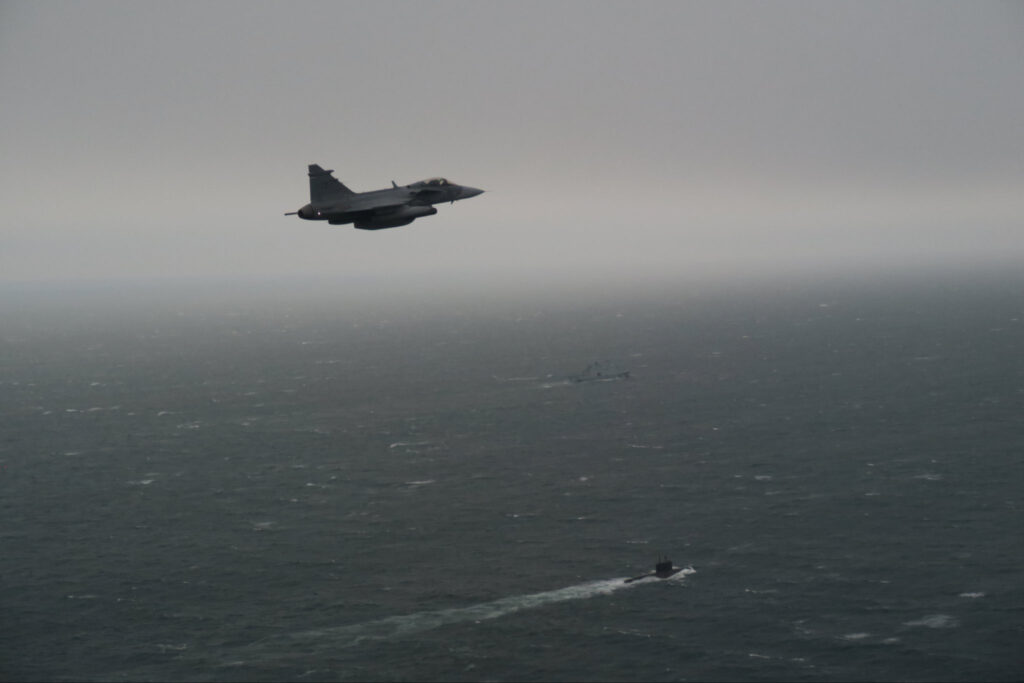
On Friday, April 10, the Swedish Armed Forces scrambled two JAS 39 Gripen fighter jets to escort a Russian Varshavyanka-class submarine through the Kattegat Strait, the critical waterway connecting the North Sea to the Baltic Sea.
Swedish Armed Forces press secretary Per Pilqvist confirmed that the military had been tracking the vessel well before the fighters were deployed. While the submarine remained in international waters—where it is permitted to operate under international law—the Swedish military maintained the escort through Saturday to ensure territorial integrity.
“This is routine activity for us,” Pilqvist told SVT. “We have a clear understanding of the routes and patterns of such movements, and we monitor them as a matter of course.” It is expected that other NATO allies will take over the escort as the submarine proceeds deeper into the Baltic Sea.
Environmental and Sanctions Enforcement
Beyond the submarine encounter, Swedish authorities have been active in policing their economic zone against maritime violations.
-
Bulk Carrier Detained: On Sunday, April 12, Sweden detained the Panamanian-flagged bulk carrier, Hui Yuan. The vessel, traveling from Russia to Las Palmas, Spain, is suspected of illegally dumping coal waste at sea, a direct violation of Sweden’s Environmental Protection Code.
-
Sanctioned Tanker Seized: Earlier this month, the Swedish Coast Guard detained the tanker Flora 1 off the coast of Ystad. The vessel was already under Ukrainian sanctions for transporting Russian oil. Officers boarded the ship following reports of an oil spill east of Gotland.
The Swedish Coast Guard confirmed that the Flora 1 is being held on suspicion of violating environmental regulations within Sweden’s economic zone.
Regional Outlook
These incidents underscore the heightened state of vigilance in Northern Europe. Since the regional conflict escalated earlier this year, the Baltic Sea has become a focal point for both military signaling and the enforcement of international sanctions. Swedish officials emphasized that they will continue to deploy “exquisite technologies” and human assets to monitor all traffic entering their waters.