
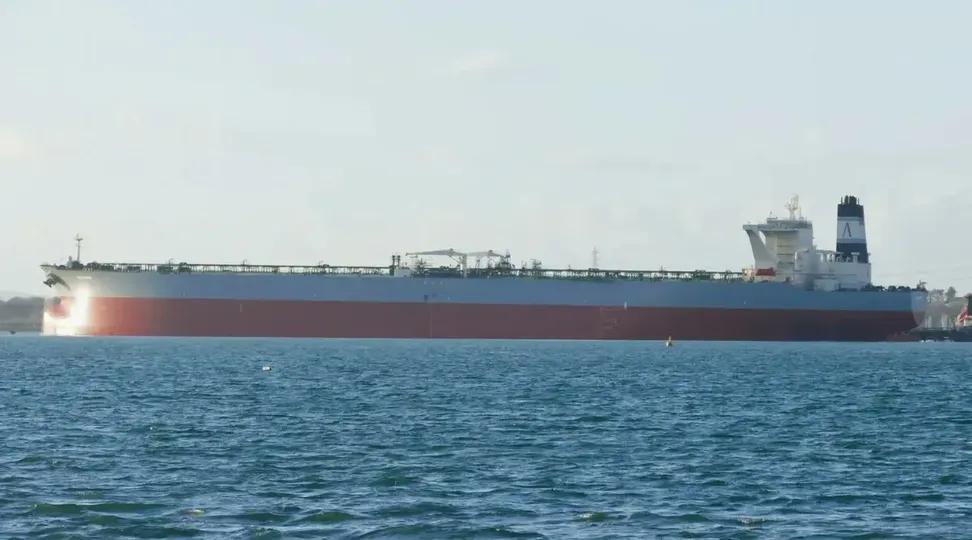
Image: from Rizvana Raza X @Rizvana_Raza
By Open Chronicle Staff with Agencies
DUBAI — A Russian-flagged supertanker entered the Persian Gulf late Thursday, navigating the Strait of Hormuz in a rare transit of the volatile chokepoint currently avoided by much of the world’s commercial shipping.
The Arhimeda, a 2000-built Very Large Crude Carrier (VLCC), was tracked sailing westward through the narrow waterway while empty, according to real-time maritime data from MarineTraffic. The vessel’s movement has drawn significant attention from energy analysts and traders who are closely monitoring the region amid heightened geopolitical tensions involving the U.S., Israel, and Iran.
Uncertain Destination
Earlier in its journey, the Arhimeda had signaled its destination as Kharg Island, Iran’s primary crude oil export terminal. However, as it approached the strait, the vessel updated its AIS (Automatic Identification System) status to “for orders.” In the shipping industry, this designation typically indicates that a vessel is awaiting final instructions for its next port of call or cargo pickup. The shift in status adds a layer of ambiguity to a transit already fraught with risk.
A Strategic Chokepoint Under Pressure
The Strait of Hormuz remains the world’s most critical oil transit corridor. Recent months have seen a sharp decline in overall traffic as the conflict between regional powers has escalated. While many international firms have diverted their fleets to avoid the risk of seizure or strikes, some shipments—particularly those linked to Iranian exports, have persisted.
“The passage of a VLCC of this scale, especially under a Russian flag, is a notable outlier in the current maritime climate,” said one shipping analyst. “It underscores the complex web of energy logistics that continues to operate even as traditional corridors face near-standstills.”
Context of the Conflict
The transit occurs against a backdrop of military activity targeting Iranian energy infrastructure. While Israeli officials have maintained that recent strikes were restricted to military sites rather than energy facilities, the shadow of conflict looms over Kharg Island.
Despite these pressures, Iran has sought to maintain its export volume. The presence of a Russian-flagged vessel in these waters highlights the ongoing, albeit strained, cooperation between Moscow and Tehran in the energy sector.