
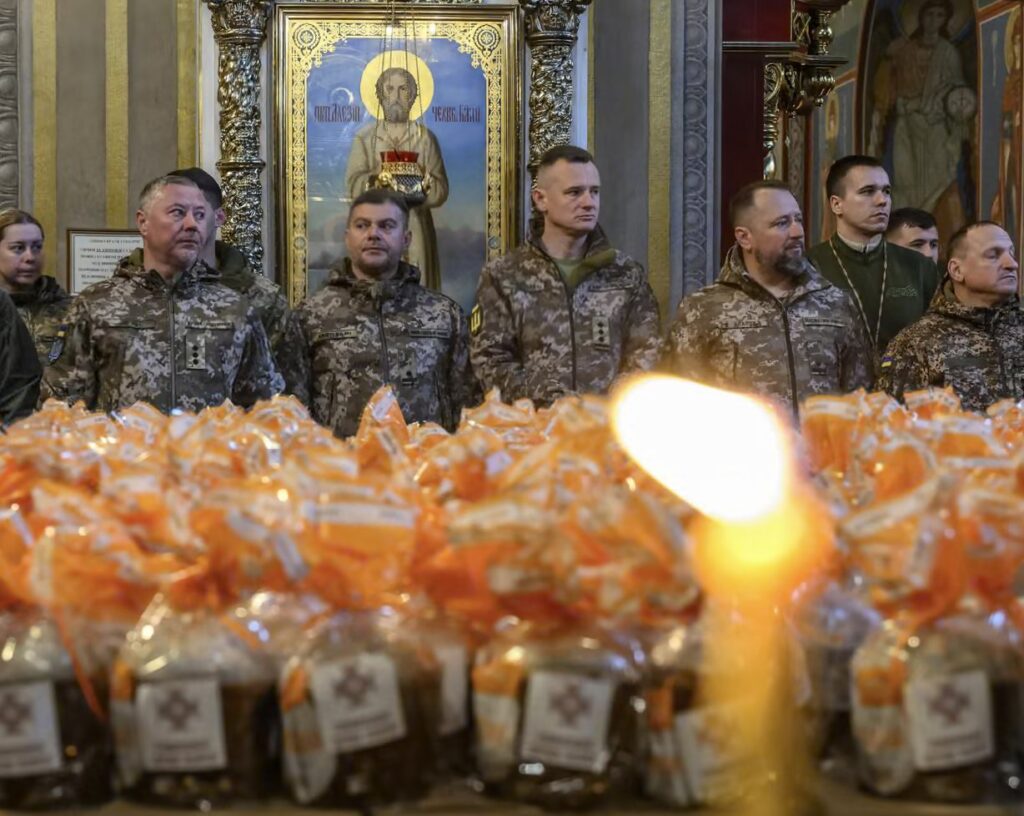
Image: from Tymofiy Mylovanov X @Mylovanov
By Open Chronicle Staff with Agencies
KYIV/MOSCOW — A temporary 32-hour ceasefire between Russian and Ukrainian forces officially took effect at 1:00 p.m. GMT (4:00 p.m. local time) on Saturday, providing a brief window of silence for the Orthodox Easter holiday.
The truce, which is scheduled to last until midnight on Sunday, April 12, follows a proposal originally championed by Ukrainian President Volodymyr Zelenskyy and later decreed by Russian President Vladimir Putin. While both nations have agreed to the pause, the atmosphere remains thick with mutual suspicion, as each side has warned of immediate retaliation should the other violate the “regime of silence.”
“Mirror Nature” of the Truce
Hours before the deadline, President Zelenskyy confirmed that Ukraine would adhere to the ceasefire in a “mirror manner.” In a statement posted to Telegram, he clarified that Ukrainian forces would refrain from strikes as long as Russian aggression ceased.
“The absence of Russian strikes in the air, on land, and at sea will mean the absence of our responses,” Zelenskyy said, adding that he had met with military leadership to coordinate the specific procedures for front-line units. “Ukraine has repeatedly proposed various ceasefire formats… we believe that Easter should be a time of silence and security.”
Zelenskyy also indicated that Kyiv has communicated a desire to potentially extend the ceasefire beyond the holiday, framing the pause as a possible “beginning of real movement toward peace.”
Putin’s Decree and Warning
President Putin’s order, issued Thursday, directed Defense Minister Andrey Belousov and Chief of the General Staff Valery Gerasimov to halt combat operations across all directions. However, the Kremlin coupled the announcement with a stern warning, noting that Russian troops remain “ready to repel any possible provocations” by the Ukrainian military.
This is not the first time a holiday truce has been attempted. A similar pause during Easter in 2025 saw a significant drop in the intensity of fighting, though both sides eventually traded accusations of sporadic violations.
A Backdrop of Global Tension
The Easter ceasefire arrives at a moment of extreme geopolitical complexity. With much of the world’s diplomatic attention currently diverted to the ongoing war between the United States and Iran, and the high-stakes peace talks currently underway in Islamabad, the conflict in Europe has reached what analysts describe as a “near standstill” on several fronts.
“A ceasefire for Easter could also be the beginning of real movement towards peace,” Zelenskyy noted, expressing hope that the brief pause might facilitate a return to the negotiating table.
As millions of Orthodox Christians across both nations prepare to observe the holiday, the world is watching to see if the guns will truly remain silent or if the 32-hour window will be shattered by the same “provocations” both leaders have warned against.