
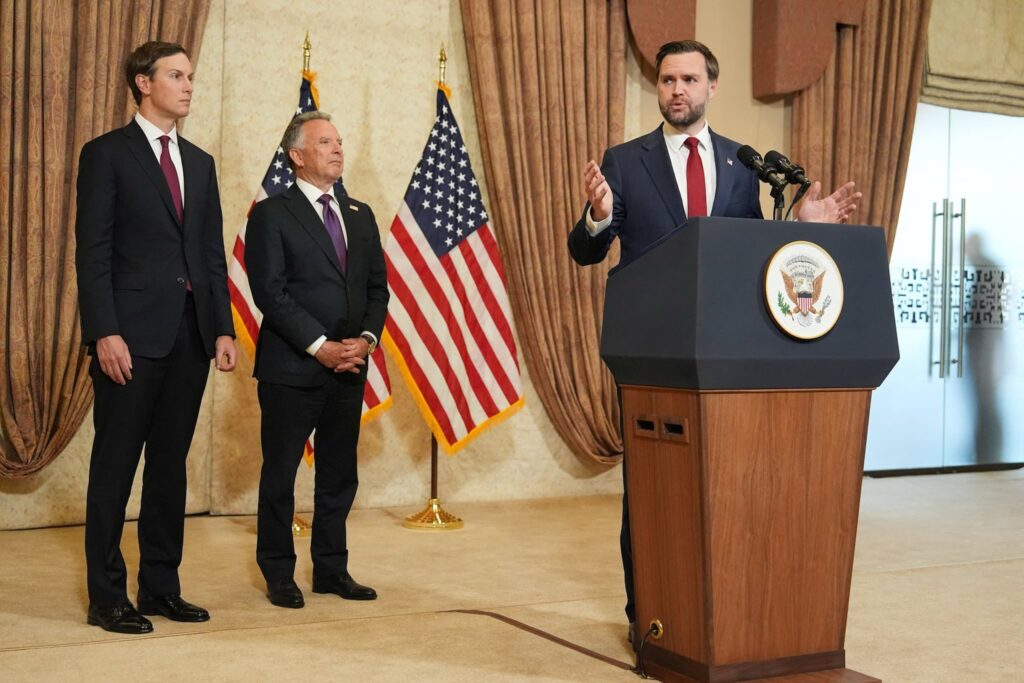
Image: from Sentletse X @Sentletse
By Open Chronicle Staff with Agencies
WASHINGTON / ISLAMABAD — President Donald Trump is confronting a period of acute strategic uncertainty following the collapse of marathon negotiations in Islamabad. The 21-hour diplomatic push, led by Vice President JD Vance, failed to bridge the structural divide between Washington’s demand for a permanent end to Iranian uranium enrichment and Tehran’s insistence on its sovereign rights.
As the April 21 expiration of the current ceasefire looms, the White House is now weighing a high-stakes choice between renewed diplomacy, a sustained military stalemate, or a return to active escalation.
The “Take-It-or-Leave-It” Proposal
According to reports from The New York Times, the American delegation presented a rigid framework centered on the permanent termination of Iran’s enrichment capabilities. In exchange, Washington offered a structured pathway toward sanctions relief.
However, the Iranian delegation rejected the terms. The Iranian Foreign Ministry framed the discussions as a “package deal,” linking nuclear restrictions to:
-
War Reparations: Compensation for damages caused by the 38-day U.S. air campaign.
-
Maritime Security: Guaranteed Iranian control and security roles in the Strait of Hormuz.
-
Sanctions Relief: Immediate and total removal of economic barriers.
“We’ve made very clear what our red lines are,” Vice President Vance told reporters before departing Pakistan. “Iran has chosen not to accept our terms.”
The Toll of 38 Days
The diplomatic deadlock follows a massive U.S. military campaign that reportedly struck more than 13,000 targets across Iran. The Pentagon stated the strikes were designed to degrade missile production and military-industrial infrastructure. While the subsequent ceasefire brought a reprieve to global energy markets, military analysts warn that without a diplomatic breakthrough, the “coercive phase” of the conflict may resume.
The Strait of Hormuz: A Global Chokepoint
The Strait of Hormuz has evolved from a geographic feature into the central axis of the war’s leverage.
-
Iran’s Stance: Tehran views the waterway as its primary defensive and economic shield, demanding a “complete end to the war” as a prerequisite for normalized maritime traffic.
-
U.S. Stance: Washington views the strait as a critical global energy corridor. Disruptions have already fueled global inflation and supply chain volatility, making the “mine-sweeping” operations a priority for the Trump administration, regardless of the outcome in Islamabad.
Three Paths Forward
With the April 21 deadline fast approaching, White House aides indicate the President is considering three primary options:
-
Extended Diplomacy: Stretching the timeline for talks to avoid immediate combat, though critics argue this signals diminished U.S. leverage.
-
Maintenance of the Status Quo: Keeping the ceasefire active while preparing for potential Iranian nuclear advances.
-
Return to Coercion: Resuming air strikes or tightening the naval blockade should Iran refuse to halt enrichment.
A Cycle of Failed Agreements
The current impasse mirrors the collapse of the 2015 nuclear deal (JCPOA). Washington remains committed to the total elimination of Iran’s enrichment capacity—a goal that eluded previous administrations—while Tehran maintains that limited enrichment is protected under the Nuclear Nonproliferation Treaty (NPT).
As the world watches the calendar turn toward April 21, the Middle East’s trajectory remains suspended between a fragile peace and the potential for a significantly larger conflict.