
Image: from New Straits Times X @NST_Online
Open Chronicle | Middle East Politics
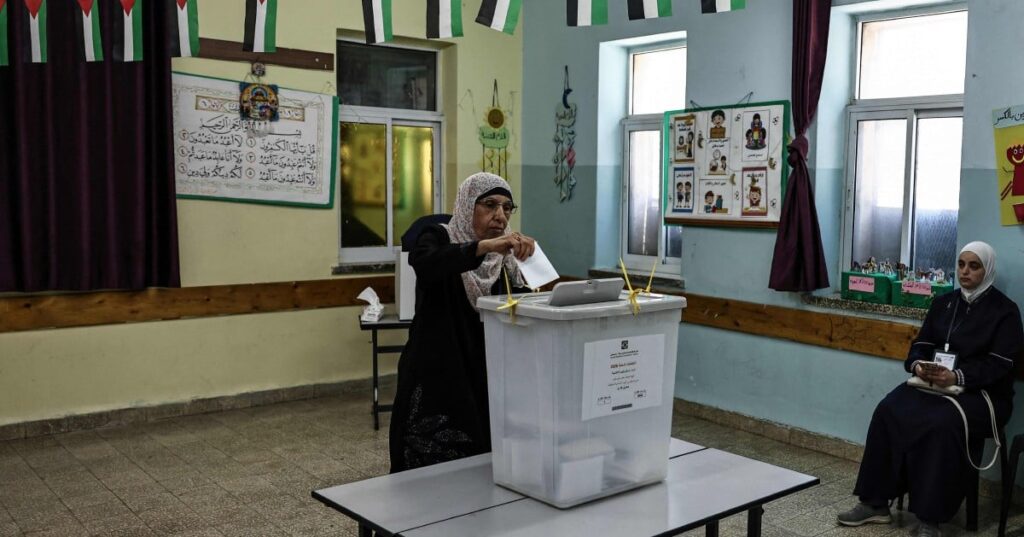
Palestinians have taken part in the first local elections held in parts of the Gaza Strip in more than 20 years, marking a rare moment of civic participation amid ongoing conflict and political fragmentation.
In the central city of Deir al-Balah, thousands of voters gathered at improvised polling stations set up in tents and donated buildings. The vote, described by officials as a symbolic pilot initiative, aims to reconnect governance structures between Gaza and the West Bank, both seen by Palestinians as essential components of any future state.
More than 70,000 people were eligible to vote in Deir al-Balah, a city that has suffered damage from airstrikes but avoided a full-scale ground invasion. Voters cited the collapse of basic services as a key motivation for participating.
Polls open in the 'Israeli'-occupied West Bank area of Al-Bireh, north of Ramallah, as Palestinians begin voting in municipal elections in a first vote since the Gaza war, marked by a narrow political field and widespread disillusionment. pic.twitter.com/gxSoIz0Y4W
— Roya News English (@RoyaNewsEnglish) April 25, 2026
“I came to vote because I have a right to elect members to the municipal council so they can provide us with services,” said resident Ashraf Abu Dan.
Across Gaza and the West Bank, the elections focus on municipal councils responsible for essential services such as water, electricity, and road maintenance. Early turnout figures suggested cautious engagement, with election officials reporting participation at around 24.5 percent by early afternoon.
Despite logistical challenges, the vote proceeded using improvised materials. Election authorities said restrictions prevented the entry of standard supplies, forcing them to rely on wooden ballot boxes and repurposed ink. The process was organized by the Ramallah-based Central Election Commission without direct coordination with Israel or Hamas.
The elections come after years without national voting. The last parliamentary elections, held in 2006, brought victory to Hamas, which later took control of Gaza following a violent split with Fatah, the dominant force within the Palestinian Authority. Hamas did not field candidates in the current municipal vote.
Political analysts say the elections are part of a broader effort by the Palestinian Authority to demonstrate reform and restore a measure of legitimacy after years of stagnation. President Mahmoud Abbas approved electoral changes last year, including new rules on candidate eligibility and voting procedures.
However, the political landscape remains limited. In many cities, including Ramallah and Nablus, elections are uncontested or dominated by Fatah-aligned candidates and independents. Critics argue this reflects declining public confidence in the political system.
“This isn’t transparency. This is chaos,” said Marwan Ennabi, a voter in Qalqilya, where no candidates registered and authorities will appoint a local council.
Despite skepticism, others view the elections as a necessary step. With movement restrictions and ongoing conflict limiting access to regional services, municipal councils have taken on greater importance in daily life.
The vote also carries symbolic weight. It is the first electoral exercise in Gaza since 2006 and comes as discussions continue over the territory’s future governance, including proposals backed by Donald Trump to establish an internationally supported administrative framework.
While the outcome of the elections is unlikely to shift the broader political balance in the short term, they highlight a persistent desire among Palestinians to participate in governance, even under conditions of war, fragmentation, and uncertainty.