
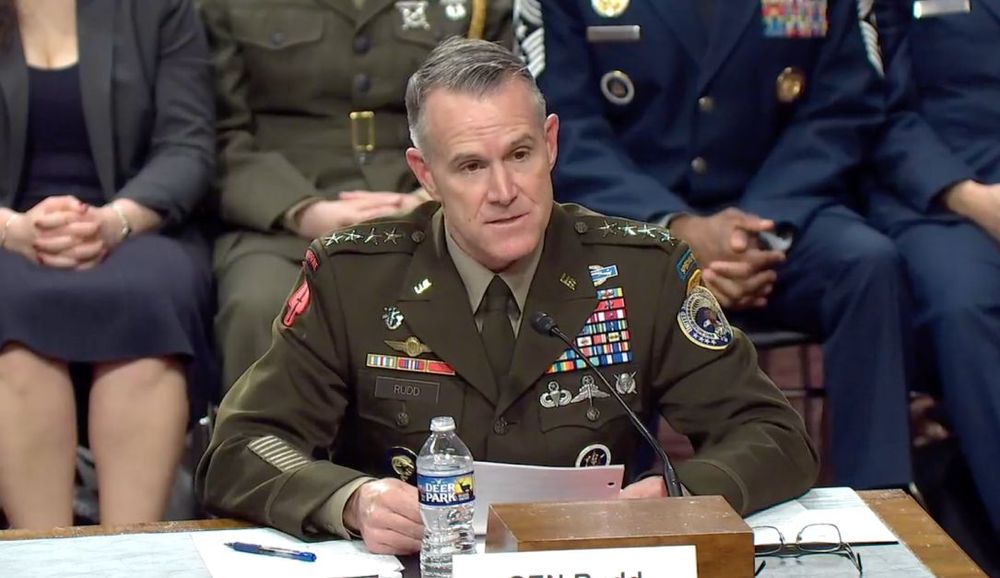
Image: Senate Armed Services Committee
By Open Chronicle with Agencies
The head of U.S. Cyber Command and the National Security Agency has warned that foreign adversaries are likely to attempt interference in the upcoming U.S. midterm elections, echoing concerns that have persisted since 2016.
Testifying before the Senate Armed Services Committee, Joshua Rudd said it was “reasonable to expect” attempts to undermine the electoral process, based on patterns observed in previous election cycles.
“We are always looking for any type of foreign activity that would undermine our democratic process,” he said, emphasizing that U.S. agencies remain prepared to respond and safeguard election integrity.
Prepared but Facing Gaps
Rudd acknowledged uncertainty over whether a dedicated interagency task force, known as the Election Security Group, has been reestablished ahead of the 2026 vote. The group has previously coordinated efforts across agencies to counter cyber threats and disinformation campaigns.
He indicated that forming such a group would be a priority and committed to following up on its status.
In past elections, Cyber Command and the NSA have worked alongside the Cybersecurity and Infrastructure Security Agency, the Federal Bureau of Investigation, and other bodies to monitor threats and, in some cases, conduct offensive cyber operations against hostile actors.
Legacy of Interference
U.S. officials have been on heightened alert since the 2016 election, when intelligence agencies concluded that Russia carried out cyber and disinformation campaigns aimed at influencing the outcome.
Concerns have intensified in recent years, particularly following allegations that Iran-linked hackers targeted political campaigns during the 2024 election cycle.
Debate Over Strategy
Some lawmakers argue that the United States should adopt a more aggressive stance. Senator Dan Sullivan suggested using offensive cyber capabilities to expose foreign leaders who attempt to interfere in American elections.
Others have raised concerns about the current level of preparedness, pointing to changes in federal structures responsible for combating disinformation and protecting electoral systems.
Looking Ahead
As the midterm elections approach, federal and state officials are once again bracing for potential cyberattacks, misinformation campaigns, and other forms of interference.
The challenge lies not only in detecting and countering threats but also in maintaining public confidence in the democratic process. With geopolitical tensions running high, the coming election cycle is expected to test the resilience of U.S. institutions in the digital age.