
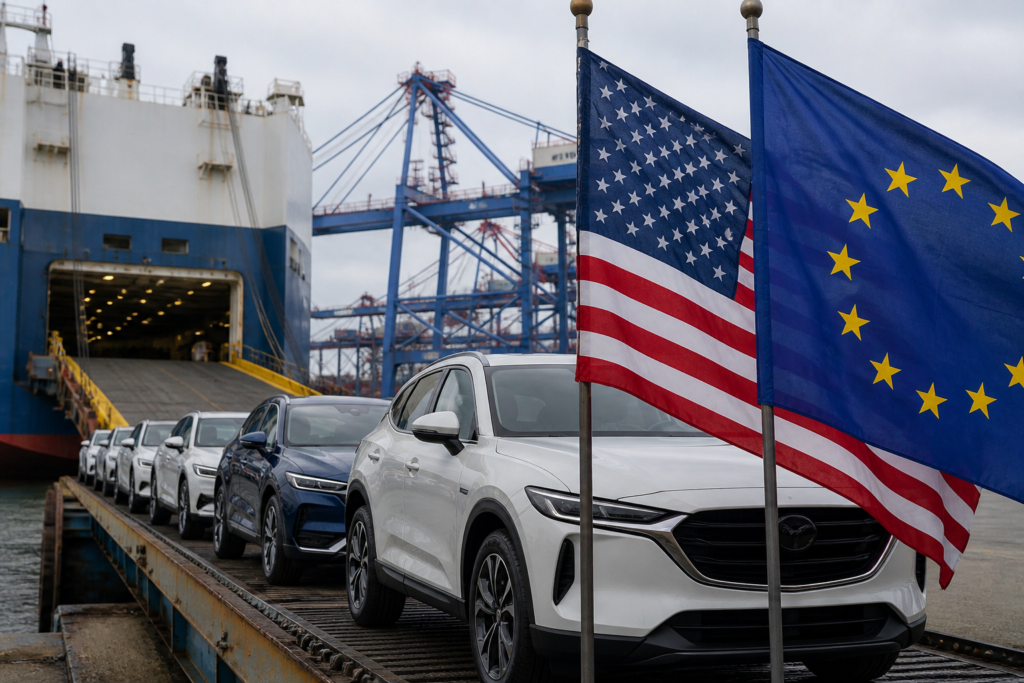
Image Credentials: Image Title: Trump Announces 25% Tariffs on EU Cars, Sparking Transatlantic Trade Tensions Source: (chatgpt.com) Date: May 2026. Attribution: This image was created using AI-generated imagery (chatgpt.com) by Open Chronicle and does not depict a real-world scene.
By Open Chronicle with Agencies
U.S. President Donald Trump has announced plans to impose a 25% tariff on cars and trucks imported from the European Union, accusing the bloc of failing to comply with a previously agreed trade deal.
The decision, revealed in a statement on Friday, marks a significant escalation in trade tensions between Washington and Brussels. The earlier agreement, reached last summer, had capped U.S. tariffs on European automotive imports at 15%, offering a degree of stability for the sector.
Trump argued that the EU had not fulfilled its commitments under the deal, prompting the move to raise tariffs back to 25%. The new measure is expected to take effect as early as next week.
European officials reacted swiftly, warning that the bloc could respond if the tariffs are implemented. A spokesperson for the European Commission said the EU remains committed to its obligations but is prepared to take action to protect its economic interests.
Bernd Lange, who chairs the European Parliament’s international trade committee, sharply criticized the decision, calling it unacceptable and accusing Washington of undermining trust between long-standing partners.
Economists and policymakers across Europe have also raised concerns about the potential economic impact. Marcel Fratzscher urged European leaders to respond firmly, suggesting that retaliatory tariffs and measures targeting U.S. technology firms could be considered to counter the move.
The United States is one of the largest export markets for European vehicles, making the automotive sector particularly vulnerable to tariff increases. Germany, a major exporter of cars to the U.S., is expected to be among the hardest hit if the policy takes effect.
The announcement comes at a sensitive moment in EU-U.S. trade relations, with ongoing negotiations aimed at easing tensions over steel tariffs and other trade barriers. Recent talks involving EU Trade Commissioner Maros Sefcovic had shown signs of progress, but the latest development risks derailing those efforts.
Business groups have also expressed concern about the uncertainty created by shifting tariff policies. Industry representatives warn that unpredictability in trade measures could weigh on investment decisions and disrupt supply chains.
With both sides signaling readiness to defend their interests, the situation raises the prospect of a renewed trade dispute that could have broader implications for the global economy.