
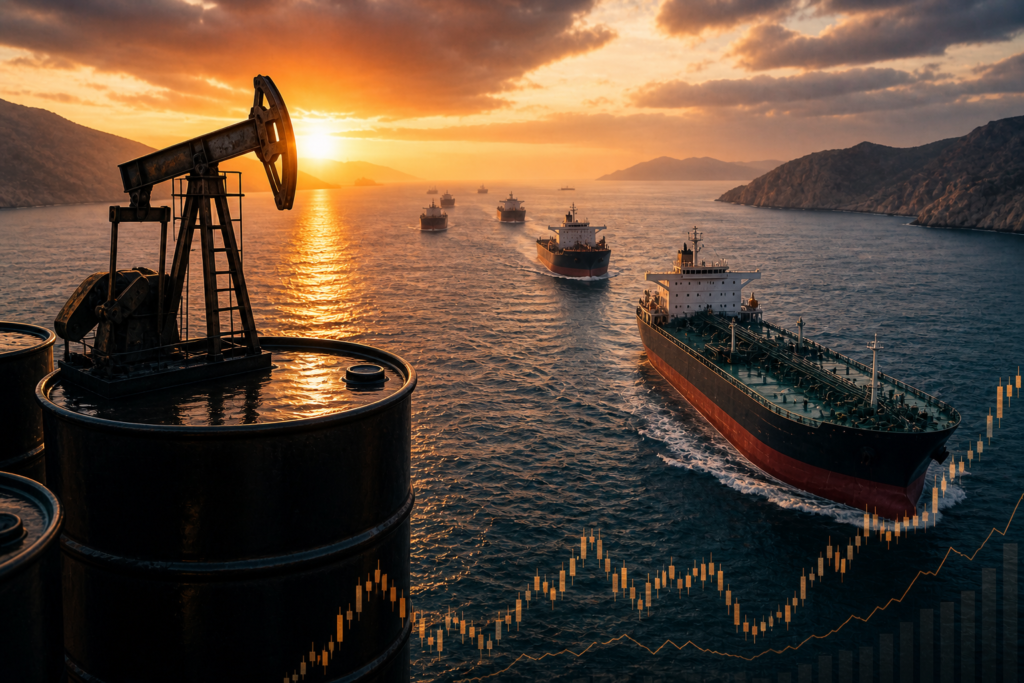
Image Credentials: Image Title: Brent Crude Surges Above $110 as Hormuz Tensions Shake Energy Markets Source: (chatgpt.com) Date: May 2026. Attribution: This image was created using AI-generated imagery (chatgpt.com) by Open Chronicle and does not depict a real-world scene.
By Open Chronicle with Agencies
Global oil prices climbed sharply on Monday, with Brent crude rising above $110 per barrel as escalating security risks in the Strait of Hormuz heightened fears over disruptions to global energy supplies.
Brent futures gained more than 2%, reaching around $110.6 per barrel in early trading, reversing losses from the previous sessions. The surge comes amid renewed instability in one of the world’s most critical oil transit routes.
Concerns intensified following reports from the UK Maritime Trade Operations that a tanker had been struck by unidentified projectiles near Fujairah, close to the entrance of the strait. The incident added to growing unease over the safety of commercial shipping in the region.
The situation has been further complicated by the announcement from Donald Trump of “Project Freedom,” a US-led initiative to escort civilian vessels through the waterway. The operation is intended to help ships stranded by the conflict resume transit, but it has also raised the risk of confrontation.
Iran has issued warnings that any foreign military presence in the strait could be considered a threat, cautioning commercial vessels against operating without coordination with its forces. These warnings have deepened market anxiety and added to volatility in oil prices.
The Strait of Hormuz remains a vital artery for global energy, connecting the Gulf to international markets. Major producers such as Saudi Arabia, Iraq, the United Arab Emirates, Kuwait, Qatar, and Iran rely on the passage to export crude oil, refined products, and liquefied natural gas.
Despite the rising tensions, there are still signs of ongoing diplomatic engagement. Tehran has indicated it is reviewing Washington’s response to its latest proposal aimed at ending the conflict, leaving open the possibility of negotiations.
Energy analysts say the current price surge reflects not only immediate risks but also broader concerns about prolonged instability in the region. With shipping flows under pressure and military activity increasing, markets are factoring in the likelihood of continued disruption.
As the situation evolves, the Strait of Hormuz remains at the center of global attention, with its stability closely tied to both geopolitical developments and the future direction of energy markets.