
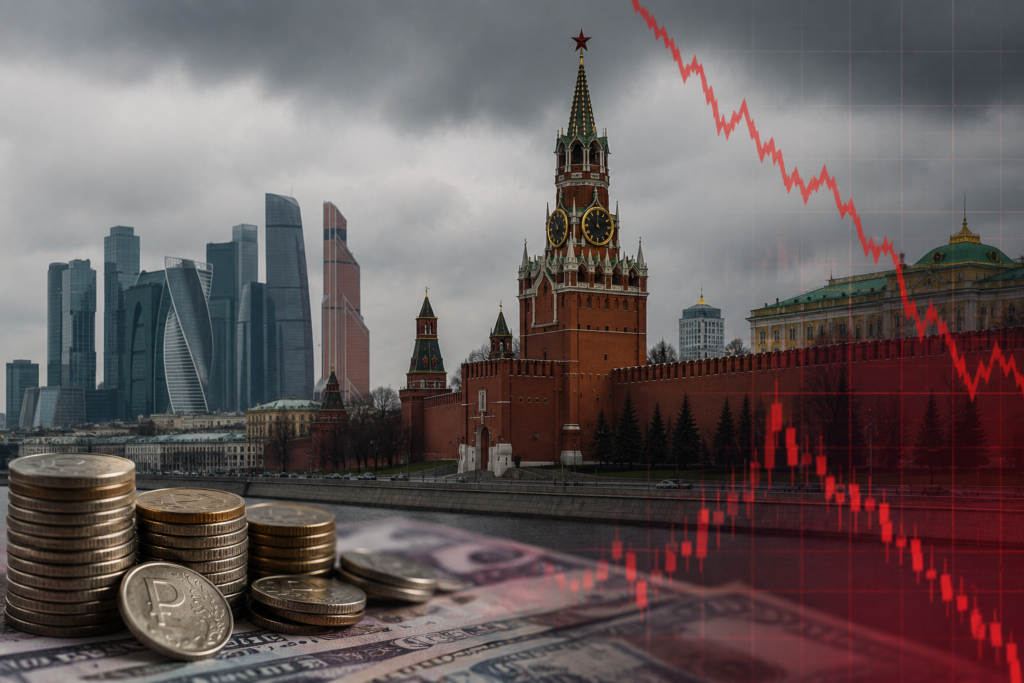
Image Credits: Image Title: Russian Debt Defaults Surge as War Pressures Mount on Moscow’s Economy. Source: (chatgpt.com) Date: May 2026. Attribution: This image was created using AI-generated imagery (chatgpt.com) by Open Chronicle and does not depict a real-world scene.
By Open Chronicle with agencies
Russia is facing mounting financial pressure as debt defaults rise sharply across the country’s corporate bond market, raising new concerns about the long-term sustainability of Moscow’s wartime economy amid the ongoing conflict in Ukraine.
According to recent financial reports, nearly a quarter of Russia’s bond market is now considered at risk of default as high military spending, sanctions, and weakening revenues place a growing strain on the country’s financial system
The developments come as Russian President Vladimir Putin continues prioritizing the war effort while the broader economy faces stagnation, rising inflation, and increasing fiscal pressure.
Wartime Spending Reshapes Russian Economy
Since launching the full-scale invasion of Ukraine in 2022, the Kremlin has dramatically increased defense spending and redirected large parts of the economy toward military production.
Analysts say the strategy initially helped cushion the impact of Western sanctions by stimulating industrial activity tied to the war effort.
However, economists increasingly warn that Russia’s growth model is becoming unsustainable as budget deficits widen and oil revenues decline.
Large sections of the civilian economy are reportedly slowing under the weight of high interest rates, labor shortages, and reduced investment.
Several reports also point to growing stress within Russia’s banking and corporate debt sectors, where companies tied to defense production have accumulated massive off-budget liabilities.
Bond Market Risks Intensify
Financial analysts warn that corporate defaults are accelerating as firms struggle with borrowing costs and reduced access to international financing markets.
Russia already experienced a major sovereign default crisis in 2022 after sanctions disrupted payment systems for foreign creditors.
Now, concerns are shifting toward domestic debt markets and the broader stability of Russia’s financial system.
Reports suggest many Russian banks have been pressured into purchasing government-linked debt instruments to help finance wartime expenditures.
Economists fear this strategy could eventually increase systemic risks across the banking sector if defaults continue spreading through heavily indebted industries.
Oil Revenues and Sanctions Continue to Bite
Russia’s economy remains heavily dependent on energy exports, particularly oil and gas sales.
But Western sanctions and price caps have forced Moscow to sell crude oil at discounted prices, significantly reducing government revenue.
At the same time, military spending continues to consume a growing share of public finances.
Some estimates indicate defense-related expenditures now account for around 40% of government spending, while Russia’s National Wealth Fund reserves have reportedly declined sharply since the early years of the war.
Political Pressure and Uncertainty
The worsening economic climate comes amid growing speculation about tensions within Russia’s political and security establishment.
Recent reports have described increasing paranoia and isolation around the Kremlin leadership as the war drags into its fifth year.
While Putin continues presenting an image of stability and resilience, analysts say the prolonged conflict is placing unprecedented pressure on Russia’s economy, state institutions, and elite power structures.
Despite those challenges, the Kremlin maintains that Russia can continue financing military operations while adapting to sanctions and external pressure.
The war in Ukraine remains the largest conflict in Europe since World War II and continues reshaping global energy markets, geopolitical alliances, and the international financial system.