
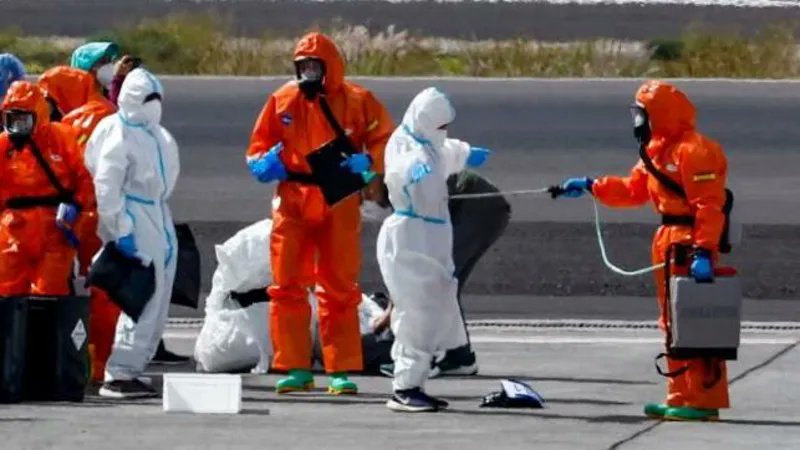
Image: from Said Pulido X @Super_Said
By Open Chronicle with agencies
The final evacuation flights for passengers aboard the MV Hondius cruise ship, which was linked to a deadly hantavirus outbreak, were scheduled to depart on Monday from the Spanish island of Tenerife as international health authorities continued to monitor the situation.
Spanish Health Minister Mónica García confirmed Sunday that 94 passengers had already been evacuated from the vessel following emergency health operations coordinated by Spanish authorities.
According to officials, an Australian repatriation flight was expected to transport six passengers. In contrast, a Dutch evacuation flight would carry 18 people, including travelers from countries that did not organize separate evacuation missions.
Military Quarantine Measures in Spain
The first group evacuated on Sunday included 14 Spanish nationals who were flown aboard a military aircraft to Madrid.
Upon arrival, the passengers were transferred to a military hospital where they entered quarantine and medical observation procedures.
Spanish officials said strict precautionary protocols remain in place as health authorities continue testing and monitoring passengers who may have been exposed to the virus.
The evacuation operation sparked political debate in the Canary Islands after regional officials expressed concern over the handling of the ship’s arrival.
However, Spanish authorities dismissed fears that infected rodents could reach land from the vessel, insisting that the possibility of an Andean rodent reaching the Canary Islands coastline was effectively “zero.”
Rare Andes Strain Raises International Concern
The outbreak involves the rare Andes strain of hantavirus, the only known variant capable of human-to-human transmission through prolonged close contact.
According to the World Health Organization, the outbreak has resulted in five confirmed infections, including three deaths.
Health officials said two passengers who later died had traveled through Argentina, Chile, and Uruguay before boarding the cruise ship.
Medical experts continue emphasizing that hantavirus is typically transmitted through contact with infected rodents or contaminated environments and does not spread easily between humans.
CDC Maintains Emergency Monitoring
The Centers for Disease Control and Prevention classified the situation as a Level 3 emergency response, the agency’s lowest emergency activation level.
CDC officials said exposed passengers will be monitored for approximately six weeks, reflecting the incubation period associated with the virus.
Health authorities across several U.S. states are also tracking travelers who left the vessel before the outbreak was officially identified.
The incident has intensified international discussions about infectious disease monitoring aboard cruise ships and the challenges global public health systems face in responding rapidly to rare virus outbreaks connected to international travel.