
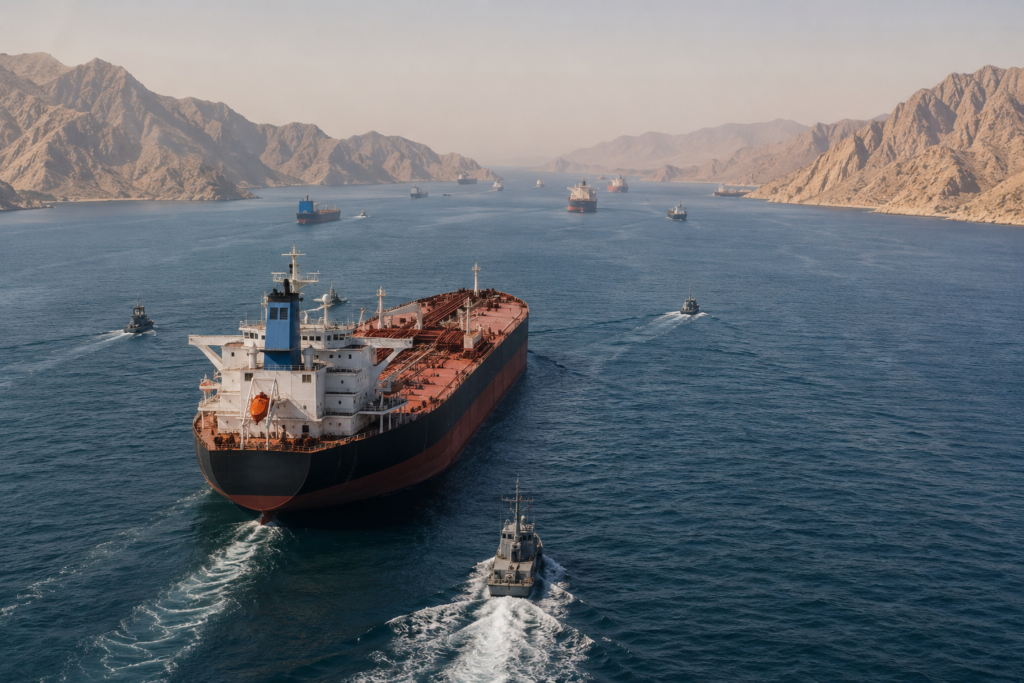
Image Credentials: Image Title: Global News Brief: Key Events and Developments for May 16, 2026. Source: (chatgpt.com) Date: May 2026. Attribution: This image was created using AI-generated imagery (chatgpt.com) by Open Chronicle and does not depict a real-world scene.
By Open Chronicle with agencies
Iran is preparing to introduce a new mechanism to regulate maritime traffic through the Strait of Hormuz, including transit fees for vessels using a designated shipping route, according to a senior Iranian lawmaker.
Ebrahim Azizi, chairman of the Iranian parliament’s National Security and Foreign Policy Committee, said Tehran has finalized plans for a system that would manage commercial passage through the strategically vital waterway.
“In this process, only commercial vessels and parties cooperating with Iran will benefit,” Azizi wrote on social media platform X on Saturday.
He added that Iran would soon formally unveil the mechanism and warned that the route “will remain closed to the operators of the so-called ‘freedom project’.”
The announcement comes amid continuing tensions in the Gulf following the outbreak of war between Iran, the United States, and Israel earlier this year.
The conflict began after US and Israeli strikes targeted Iranian positions on Feb. 28, triggering retaliatory attacks by Tehran against Israel and several American allied interests in the Gulf region. The confrontation also led to major disruptions in maritime traffic through the Strait of Hormuz, one of the world’s most critical energy chokepoints.
A ceasefire mediated by Pakistan took effect on April 8, but negotiations held later in Islamabad failed to establish a permanent settlement between the parties.
Since April 13, the United States has enforced a naval blockade targeting Iranian maritime activity in and around the strait. Washington argued the measures were aimed at ensuring freedom of navigation and protecting international shipping lanes.
Earlier this month, US President Donald Trump announced “Project Freedom,” a proposal involving American naval escorts for commercial vessels transiting the Strait of Hormuz despite Iran’s insistence that passage through the waterway requires prior coordination with Tehran.
Trump later announced that the initiative had been paused, though tensions surrounding maritime access and energy flows remain high.
The Strait of Hormuz is considered one of the most strategically important waterways in the world, with a substantial portion of global oil and liquefied natural gas shipments passing through the narrow channel connecting the Persian Gulf to the Gulf of Oman and the Arabian Sea.
Iranian officials have repeatedly warned that any attempts to bypass Tehran’s authority in the region could lead to further instability and disruptions to global energy markets.
The proposed Iranian transit system could deepen international disputes over navigation rights in the strait, particularly if Tehran attempts to restrict or selectively approve commercial traffic based on political or strategic considerations.