
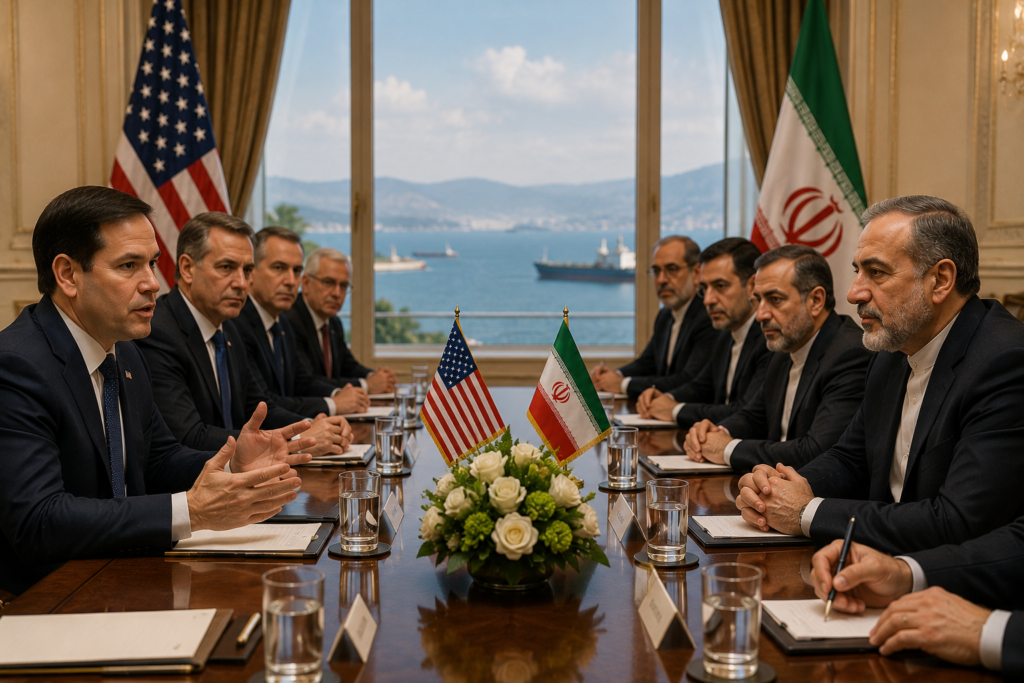
Image Credentials: Image Title: US and Iran Edge Closer to Draft Peace Memorandum as Key Disputes Remain. Source: (chatgpt.com) Date: May 2026. Attribution: This image was created using AI-generated imagery (chatgpt.com) by Open Chronicle and does not depict a real-world scene.
By Open Chronicle with agencies
The United States and Iran are moving closer toward a proposed memorandum of understanding that could transform the current ceasefire into a broader political and security agreement, though several major disputes continue to complicate final negotiations.
According to regional officials familiar with the diplomatic process, the draft framework includes a 60 day extension of the current ceasefire, the reopening of the Strait of Hormuz, commitments to halt military operations across multiple fronts, and new guarantees related to Iran’s nuclear program.
The proposed memorandum comes after months of heightened tensions following the outbreak of direct conflict earlier this year. The confrontation escalated dramatically after US and Israeli strikes targeted Iranian military and political infrastructure, triggering retaliatory actions from Tehran, including restrictions on shipping traffic through the Strait of Hormuz.
The closure of the strategic waterway disrupted nearly 20 percent of global oil and gas supplies, creating sharp volatility in international energy markets and intensifying pressure on world economies already facing inflation and supply chain instability.
Under the current draft proposal, Iran would immediately reopen the Strait of Hormuz and work toward restoring maritime traffic to pre-war conditions within 30 days. In exchange, the United States would gradually lift its naval blockade on Iranian ports and commercial shipping routes.
However, the process remains highly sensitive. Analysts note that even if Iran formally ends all military threats in the strait, restoring confidence among global shipping companies and insurers could take significantly longer, particularly if naval mines or military risks remain in the area.
The draft agreement also contains language calling for a permanent end to military operations “on every front,” including Lebanon. The provision would commit both sides and their allies to refrain from initiating hostilities or threatening military action against one another.
One of the most difficult issues remains Iran’s nuclear program. The United States is seeking firm guarantees that Tehran will never develop nuclear weapons and wants Iran’s stockpile of highly enriched uranium removed under an internationally supervised mechanism still under negotiation.
Iranian officials have not fully accepted those terms. Tehran insists that broader political agreements and war related issues must be settled before entering detailed nuclear negotiations.
Iranian Foreign Ministry spokesman Esmaeil Baqaei acknowledged that differences still remain over several clauses in the memorandum, while criticizing what he described as inconsistent public messaging from Washington during the negotiations.
The question of sanctions relief and frozen Iranian financial assets also remains unresolved. The draft proposal links any future easing of sanctions directly to Iranian compliance with the agreement’s terms, including the reopening of Hormuz and nuclear commitments.
US President Donald Trump has continued to describe the negotiations as constructive, while simultaneously warning that no agreement would be accepted unless it fully protects American and allied security interests.
“Negotiations with the Islamic Republic of Iran are proceeding nicely,” Trump wrote on Truth Social. “It will only be a Great Deal for all or no Deal at all.”
Behind the scenes, diplomacy continues alongside ongoing military preparations. Reports indicate that the Trump administration had prepared potential new military strikes over the weekend before deciding to continue negotiations instead.
Regional mediators, particularly Pakistan, remain deeply involved in facilitating contacts between Washington and Tehran. Pakistani officials have publicly expressed optimism that a durable agreement may still be achievable if both sides can bridge remaining differences.
Despite signs of progress, uncertainty continues to surround the talks. Israeli concerns over concessions to Tehran, disagreements over nuclear inspections, and disputes surrounding sanctions and regional security guarantees all continue to complicate efforts to finalize the memorandum.
If approved, the proposed framework would likely open a new phase of negotiations lasting up to 60 days, focusing specifically on Iran’s nuclear infrastructure, regional security arrangements and long term normalization measures.
For now, diplomats on all sides appear focused on preventing a return to open conflict while attempting to stabilize one of the world’s most strategically important regions.