
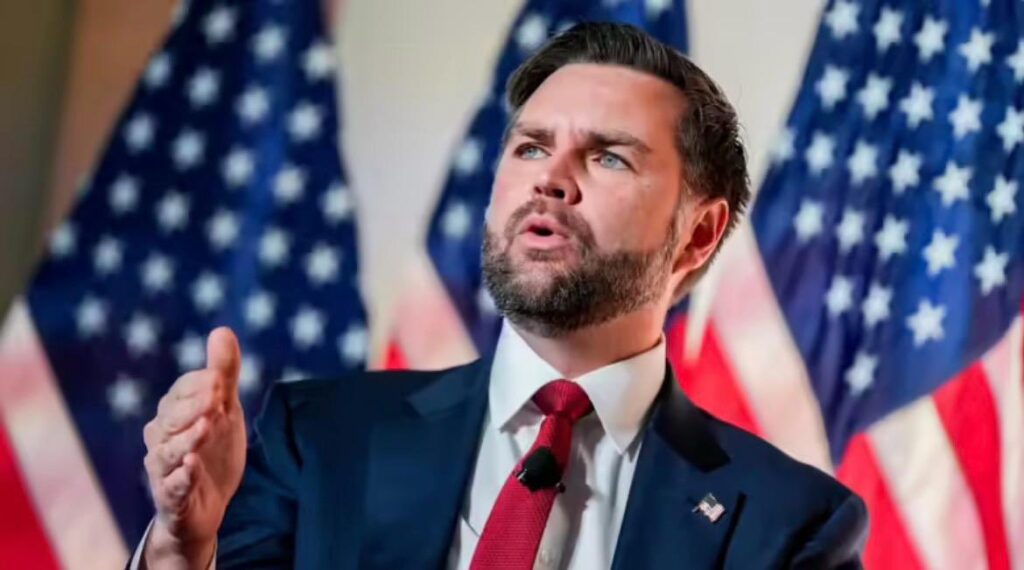
Image: from Global News & Geopolitics X @GlobalNewsGeo
By Open Chronicle with agencies
The United States and Iran have taken a significant step toward de-escalating tensions after reaching a memorandum of understanding (MOU) that includes the return of International Atomic Energy Agency (IAEA) inspectors to Iran and a framework for dismantling the country’s stockpiles of highly enriched uranium.
Speaking in an interview with NBC News on Sunday, U.S. Vice President JD Vance confirmed that the agreement lays the groundwork for renewed international oversight of Iran’s nuclear activities. According to Vance, the IAEA, with support from the United States, will assist Iran in the safe disposal and dismantling of highly enriched nuclear material, a key provision contained in the memorandum.
The agreement is expected to be formally signed in Switzerland on June 19, with the full text scheduled for publication following the ceremony. Vance explained that the delay in releasing the document stems from ongoing work to finalize technical implementation procedures, stressing that the substance of the agreement itself has already been settled.
He also credited Qatar and Pakistan for playing important diplomatic roles in facilitating negotiations and helping bridge differences between Washington and Tehran during the talks.
⚡️🇺🇸🇮🇷 — US Vice President JD Vance confirmed that international nuclear inspectors will "absolutely" be permitted to return to Iran, labeling the decision a central component of the freshly signed US-Iran memorandum of understanding — NBC News.
➡️ Vance specified that "one of…
— MaxOsint Intel (@maxosintintel) June 16, 2026
According to the U.S. administration, IAEA inspections are expected to resume immediately after the signing of the accord. Vance said Iran would receive reciprocal benefits as long as it remains fully compliant with the obligations outlined in the agreement, though specific details of those incentives have yet to be disclosed publicly.
The announcement has already generated political debate in the United States. Former President Barack Obama recently voiced doubts about whether the Trump administration’s agreement would offer stronger guarantees than the 2015 Joint Comprehensive Plan of Action (JCPOA), which was negotiated during his presidency.
Vance rejected that comparison, arguing that the new arrangement differs fundamentally from the earlier nuclear accord. He maintained that while the JCPOA sought to restrain an active Iranian nuclear programme through sanctions relief and diplomatic incentives, the current agreement follows what he described as the effective dismantling of Iran’s nuclear infrastructure and focuses on preventing its future reconstitution.
Another important element of the MOU concerns freedom of navigation through the Strait of Hormuz, one of the world’s most critical maritime trade routes. Vance confirmed that the agreement guarantees unrestricted commercial passage during a 60-day negotiation period intended to finalize a broader and more permanent settlement.
He dismissed concerns over Iranian proposals to impose transit fees on vessels using the waterway, describing such statements as domestic political messaging by factions within Iran rather than a serious obstacle to the implementation of the accord.
Iranian President Masoud Pezeshkian adopted a more cautious tone in his own comments, describing the memorandum as an important first step toward ending hostilities and opening the door to sustained diplomatic engagement. Writing on the social media platform X, he emphasized that while the agreement represents meaningful progress, negotiations toward a comprehensive and lasting settlement are still ongoing.
The planned return of IAEA inspectors is likely to be closely watched by the international community, as it could mark the beginning of a renewed period of transparency over Iran’s nuclear activities while reducing the risk of further confrontation in an already volatile region.