
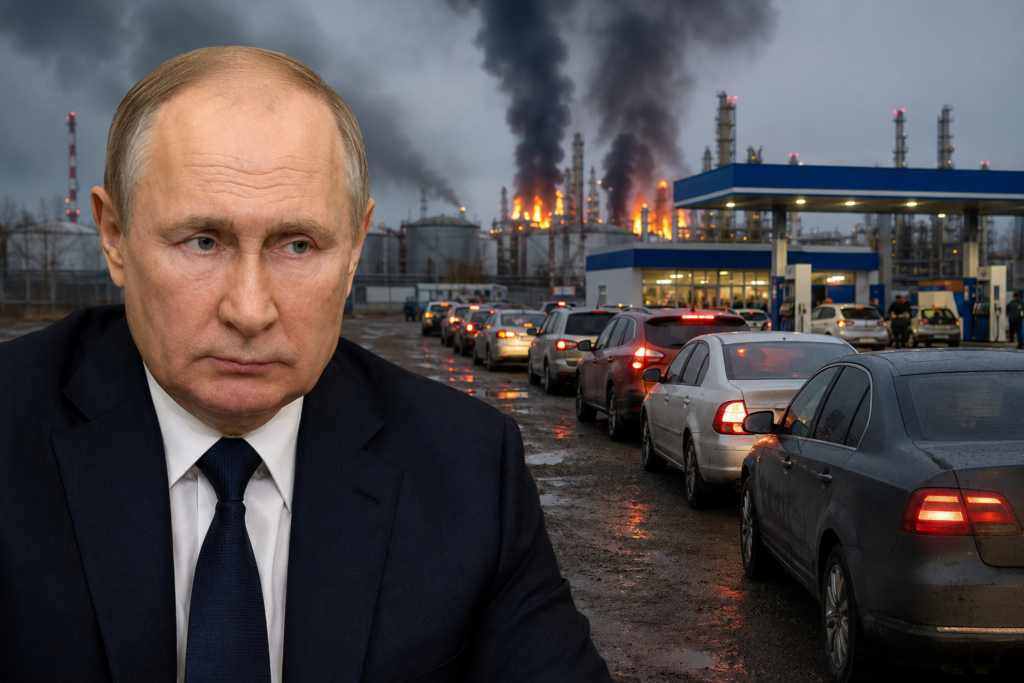
Image Credentials: Image Title: Putin Acknowledges Fuel Shortages as Ukrainian Strikes Increase Pressure on Russia’s Energy Sector. Source: (chatgpt.com) Date: June 2026. Attribution: This image was created using AI-generated imagery (chatgpt.com) by Open Chronicle and does not depict a real-world scene.
By Open Chronicle News Desk with Agencies
Russian President Vladimir Putin has publicly acknowledged growing fuel supply problems across Russia, admitting that motorists are facing queues at petrol stations and shortages of certain grades of gasoline as Ukrainian long-range strikes continue targeting the country’s energy infrastructure.
Speaking during a meeting with energy sector officials on June 28, Putin said the disruptions have become increasingly visible, affecting both consumers and key sectors of the economy.
“Unfortunately, there are still lines at gas stations, and the right grade of gasoline isn’t always available,” Putin said, adding that agricultural producers are also experiencing difficulties during the busy summer season.
Fuel reserves under pressure
Putin confirmed that Russia has begun drawing on its strategic fuel reserves, which he said have fallen by approximately four percent compared with the same period last year.
To stabilize domestic supplies, the Kremlin has already introduced temporary bans on gasoline and jet fuel exports, while officials are also considering restricting diesel exports if shortages worsen.
According to Putin, authorities are working to increase refinery output and strengthen fuel distribution in an effort to offset the impact of repeated attacks on energy facilities.
“We are now observing a certain deficit, but not critical,” he said, describing the situation as manageable despite ongoing operational challenges.
Energy infrastructure remains a target
The Russian leader acknowledged that protecting critical infrastructure has become an increasingly important military priority.
He said Moscow must accelerate the production and deployment of air defense systems and other military equipment designed to shield refineries, fuel depots, and strategic facilities from drone and missile attacks.
“The speed of their production and delivery to the troops or to cover objects of critical infrastructure is essential,” Putin stated.
He also revealed that Crimea currently holds fuel reserves sufficient for only a few more days, although he insisted supplies would continue through overland and maritime logistics routes.
Ukraine expands long-range campaign
The comments came as Ukraine continues to intensify strikes against Russian oil refineries, fuel storage sites, and military infrastructure deep inside Russian territory.
Ukrainian President Volodymyr Zelensky confirmed that overnight operations targeted refinery facilities in Krasnodar Krai and Yaroslavl Oblast, describing the campaign as part of Kyiv’s strategy to weaken Russia’s ability to sustain its military operations.
Ukrainian officials argue that targeting the energy sector reduces logistical support for Russian forces while increasing economic pressure on Moscow.
Kremlin insists situation remains under control
Despite acknowledging fuel shortages and increased reliance on reserves, Putin maintained that Ukrainian attacks would not alter the overall course of the war.
He argued that Kyiv’s strategy is aimed at improving its negotiating position rather than changing conditions on the battlefield.
“We will not give them such a chance,” Putin said, insisting the strikes have “no effect on the situation at the front.”
Even so, the Kremlin confirmed that damaged energy facilities continue to require repairs and that additional measures are being considered to safeguard domestic fuel supplies as attacks on Russia’s energy infrastructure persist.