
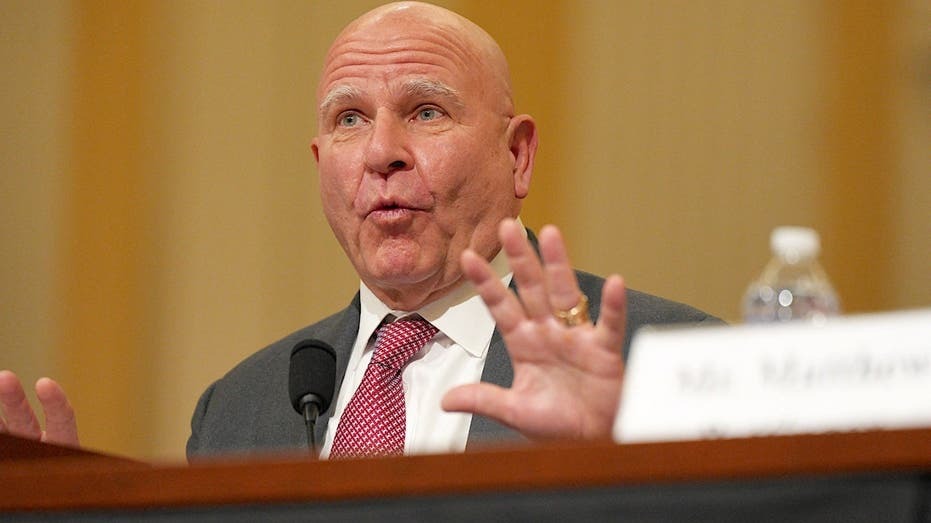
Image: from Drew Grimaldi X @Grimillionaire
By Open Chronicle News Desk with Agencies
A former senior Trump administration official has issued a stark warning that the United States is allowing its counterintelligence capabilities to deteriorate, arguing that the country has drifted away from the vigilance established after the September 11, 2001 terrorist attacks.
Speaking about what he described as growing security vulnerabilities, the former White House official said the United States has become “extraordinarily negligent” in addressing foreign espionage, influence operations and other national security threats, urging policymakers to renew investment in counterintelligence and interagency coordination.
Concerns over declining vigilance
The warning comes as U.S. intelligence agencies continue to identify espionage and influence campaigns conducted by foreign governments seeking to obtain sensitive military, technological and economic information.
According to the former official, the intense focus on counterterrorism that followed the 9/11 attacks gradually evolved into broader intelligence reforms, but many of those hard-earned lessons are now at risk of being forgotten.
He argued that adversaries have become increasingly sophisticated while American institutions have not kept pace with the evolving threat environment.
Foreign espionage remains a growing challenge
Officials have repeatedly warned that countries such as China, Russia, Iran and North Korea continue to pursue aggressive intelligence collection efforts targeting U.S. government agencies, defense contractors, research institutions and critical infrastructure.
These activities include cyber intrusions, recruitment of insiders, intellectual property theft, economic espionage and disinformation campaigns designed to influence public opinion and policymaking.
Security experts note that modern espionage increasingly combines traditional human intelligence with cyber operations and artificial intelligence, making counterintelligence more complex than ever before.
Lessons from the post-9/11 era
Following the September 11 attacks, the United States implemented sweeping intelligence reforms aimed at improving information sharing between federal agencies.
The creation of the Office of the Director of National Intelligence (ODNI), expanded cooperation between the FBI, CIA and Department of Homeland Security, and increased investment in intelligence analysis significantly reshaped the country’s national security architecture.
The former Trump official argued that maintaining those capabilities requires continuous adaptation rather than assuming existing systems remain sufficient against rapidly changing threats.
Need for stronger national security policies
The remarks also highlighted concerns over protecting sensitive technologies, government networks and research institutions from foreign intelligence services.
Analysts have increasingly warned that economic competition, technological innovation and national security are becoming more closely interconnected, particularly in sectors such as artificial intelligence, semiconductors, quantum computing and advanced defense technologies.
Strengthening counterintelligence, experts say, involves not only improving intelligence collection but also enhancing cybersecurity, vetting procedures, public awareness and cooperation between government and the private sector.
Calls for renewed investment
The former official urged lawmakers and national security leaders to treat counterintelligence as a long-term strategic priority rather than reacting only after major security incidents.
He argued that the United States should continue modernizing its intelligence capabilities, expand efforts to identify foreign influence operations and ensure federal agencies possess the resources necessary to confront increasingly sophisticated adversaries.
As geopolitical competition intensifies, security specialists widely agree that counterintelligence will remain a central element of protecting national security, safeguarding critical infrastructure and defending sensitive information against foreign espionage.